A Natural Solution for California's Herds: African Catfish Peptides

California's cattle producers and agricultural communities are all too familiar with the rising challenge of antibiotic resistance, making common bacterial infections harder to treat in livestock. But imagine a future where we could tackle these infections with a natural, powerful alternative. Our research points to just that: antimicrobial peptides (AMPs) found in African catfish.

We're really excited about these peptides because African catfish thrive in pathogen-rich freshwater, naturally producing these robust immune compounds in their skin mucus as a defense. This natural origin makes them highly appealing alternatives to synthetic drugs.

Predicted Safety and Potent Action

One of the most compelling aspects of these AMPs is their predicted safety for mammals. Our initial computer analyses suggest that various catfish AMPs are generally recognized as safe (GRAS). We predict they'll be absorbed in the human intestine without causing liver, brain, or heart toxicity. Furthermore, lab tests on a promising peptide, NACAP-II, confirmed it was non-hemolytic, meaning it didn't damage rabbit red blood cells—a strong indicator of its potential safety for mammalian cells.

Beyond safety, these peptides demonstrate effectiveness against problematic bacteria. One study revealed NACAP-II's strong activity against Extended-Spectrum Beta-Lactamase (ESBL)-producing Escherichia coli—a critical concern for both animal and human health due to its resistance to many common antibiotics. Another peptide, ACAP-IV, also showed antibacterial activity against E. coli and Staphylococcus aureus. We believe these AMPs work by directly disrupting bacterial cell membranes, a mechanism that makes it harder for bacteria to develop resistance compared to how they resist traditional antibiotics.
Primary Image
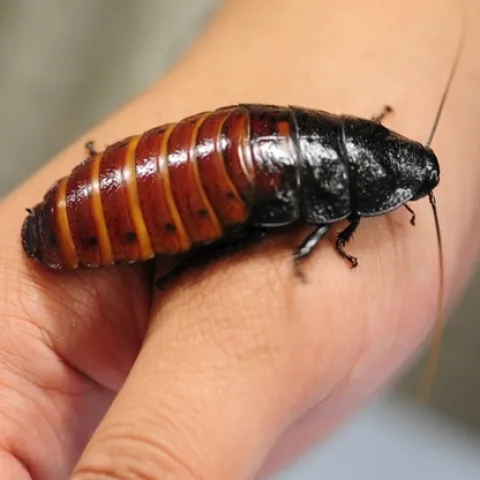
A female carpenter bee, Xylocopa sonorina, also known as the Valley carpenter bee, forages on showy milkweed, Asclepias speciosa. This is one of the bees that the Rachel Vannette lab studied. (Photo by Kathy Keatley Garvey)
Bug Squad: Article

Innovative Research by RSPIB Scholar: Surprising Find About Carpenter Bees

November 17, 2022
By Kathy Keatley Garvey
When Professors Jay Rosenheim, Joanna Chiu and Louie Yang of the UC Davis Department of Entomology and Nematology launched the Research Scholars Program in Insect Biology (RSPIB) to give undergraduates closely mentored research experiences in biology, the innovative projects have simply been outstan...
View Article
Primary Image
This is a female Xylocopa sonorina, also known as a Valley carpenter bee. It's foraging on a native milkweed, Asclepias speciosa. (Photo by Kathy Keatley Garvey)
Entomology & Nematology News: Article

UC Davis RSPIB Scholar: Surprising Find About Gut Bacteria in Carpenter Bees

November 17, 2022
By Kathy Keatley Garvey
Newly published research by UC Davis scientists on the gut bacteria of two carpenter bee species shows a surprising find: their gut bacteria is more similar to social bees like honey bees and bumble bees than to solitary bees, even to closely related bee species.
View Article
Primary Image
Male turkey toms roaming a neighborhood. Credit: Karey Windbiel-Rojas.
Pests in the Urban Landscape: Article

Turkey Time

November 17, 2022
By Lauren Fordyce
With many people thinking about turkey this time of year, we thought we would provide some interesting facts about wild turkeys for you to share during your holiday gatherings! Turkeys are not native to California but were introduced by European settlers.
View Article
Primary Image
Clematis Seedheads. photo by Melinda Nestlerode
Under the Solano Sun: Article

Mystery Plant Identification

November 17, 2022
A couple of years ago, I was in need of a flowering vine which could handle morning shade and afternoon sun. I selected a Cobaea scandens from Annie's Annuals and Perennials. I was enchanted by the photos on the description of the plant, as well as it's whimsical common name, Cup and Saucer Vine.
View Article
Primary Image
The UC Davis Entomology Games Team of doctoral candidates: Madison Hendrick, Jill Oberski, Erin "Taylor" Kelly and Zach Griebenow. (Photo by Geoffrey Attardo, UC Davis faculty)
Bug Squad: Article

Congrats, UC Davis Bug Team!

November 16, 2022
By Kathy Keatley Garvey
"In 1973 Dr. David Gibby of the Washington State University Extension Center started a program to meet the demand for urban horticulture and gardening advice, which has since expanded to all 50 states and 8 Canadian provinces.
View Article
UC Master Gardener Program of Contra Costa County: Article

Hopeful, Happy, Cold, Rainy, and Wet Fall and Winter to You!

November 16, 2022
A garden is the way that the land says, I love you. Braiding SweetgrassRobin Wall Kimmerer Thats not the normal salutation, but it is the wishful thinking found deep in our bones. Our plants and trees so need a deep watering, as do our souls.
View Article
Primary Image
Co-Leads Greg Doyle and Terri Takusagawa look on as CoCoMG Bob Archer talks with the public at the San Ramon Farmers Market. Photo by Harv Singh.
UC Master Gardener Program of Contra Costa County: Article

AAMG Wraps Up the 2022 Season and Looks at 2023!

November 16, 2022
The 2022 Ask A Master Gardener Season was outstanding! We straddle two fiscal years, so the numbers below represent our contacts from April-October 2022.
View Article