A Natural Solution for California's Herds: African Catfish Peptides

California's cattle producers and agricultural communities are all too familiar with the rising challenge of antibiotic resistance, making common bacterial infections harder to treat in livestock. But imagine a future where we could tackle these infections with a natural, powerful alternative. Our research points to just that: antimicrobial peptides (AMPs) found in African catfish.

We're really excited about these peptides because African catfish thrive in pathogen-rich freshwater, naturally producing these robust immune compounds in their skin mucus as a defense. This natural origin makes them highly appealing alternatives to synthetic drugs.

Predicted Safety and Potent Action

One of the most compelling aspects of these AMPs is their predicted safety for mammals. Our initial computer analyses suggest that various catfish AMPs are generally recognized as safe (GRAS). We predict they'll be absorbed in the human intestine without causing liver, brain, or heart toxicity. Furthermore, lab tests on a promising peptide, NACAP-II, confirmed it was non-hemolytic, meaning it didn't damage rabbit red blood cells—a strong indicator of its potential safety for mammalian cells.

Beyond safety, these peptides demonstrate effectiveness against problematic bacteria. One study revealed NACAP-II's strong activity against Extended-Spectrum Beta-Lactamase (ESBL)-producing Escherichia coli—a critical concern for both animal and human health due to its resistance to many common antibiotics. Another peptide, ACAP-IV, also showed antibacterial activity against E. coli and Staphylococcus aureus. We believe these AMPs work by directly disrupting bacterial cell membranes, a mechanism that makes it harder for bacteria to develop resistance compared to how they resist traditional antibiotics.
Article

Nominate UCCE academics for service awards by April 15

March 17, 2022
By Pamela S Kan-Rice
Nominations are being accepted for the 2022 ANR Distinguished Service Awards, which are sponsored by UC Agriculture and Natural Resources and the Academic Assembly Council. Take advantage of this wonderful opportunity to recognize outstanding achievement by yourself or your colleagues.
View Article
Soils and Nutrients: Article

Spring 2022

March 17, 2022
*Upcoming Events *Cover Crop Field Day *Cover Crop and Soil Health Field Day...
View Article
Primary Image
Principal investigator (PI) Marc Johnson (far right) led the team with co-PI Rob Ness (far left), second author; and doctoral student James Santangelo (center), first author, all of the University of Toronto. The research was published in the journal Science on St. Patrick's Day (Johnson's birthday anniversary), with the official publication set March 18 (Ness' birthday anniversary).
Bug Squad: Article

Clover Research Published on St. Pat's Day: Luck o' the Irish?

March 17, 2022
By Kathy Keatley Garvey
When evolutionary ecologist Marc Johnson, a professor of biology at the University of Toronto, Mississauga, and his team published their Global Urbanization Drives Adaptation in the Plant White Clover research today (March 17, St.
View Article
Primary Image
Two women wearing facemasks stand in a garden behind trays of long green beans, bittermelon, plums, peaches and other fresh produce.
Food Blog: Article

For stress relief, food access, people turned to gardening during pandemic

March 17, 2022
By Pamela S Kan-Rice
More green spaces and urban farming opportunities could be helpful in future disasters People who turned to gardening during the COVID-19 pandemic did so to relieve stress, connect with others and grow their own food in hopes of avoiding the virus, according to a survey conducted by researchers at t...
View Article
Primary Image
properly selected and placed urban trees cool urban heat islands. Prioritize water use for them over annuals and other shorter-lived plants.
Landscape Horticulture Updates for Southern California: Article

The Top Ten Ways to Conserve Water in Your Landscape and Garden in San Bernardino County

March 17, 2022
By Janet S Hartin
1. Select drought-resistant plants that grow well in your climate zone and microclimate (sun, shade, etc.). Try these search engines: SelecTree: A Tree Selection Guide (calpoly.edu) Plant Search Database Plant Search Database - Water Use Classification of Landscape Species (WUCOLS IV) (ucanr.
View Article
Primary Image
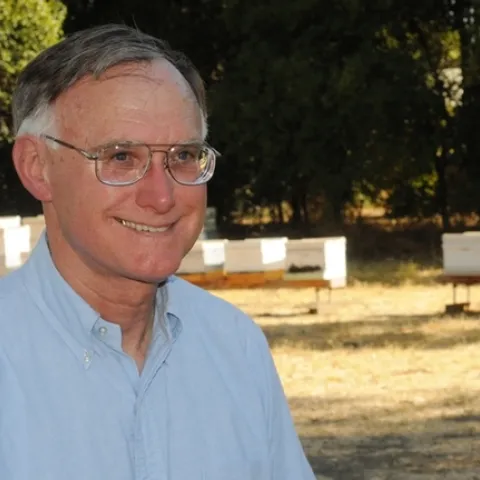
Biology professor Marc Johnson (right) of the University of Toronto, Mississauga, served as the principal investigator (PI) of the white clover project. With him are assistant professor Rob Ness (far left), co-PI and second author; and doctoral student James Santangelo, first author.
Entomology & Nematology News: Article

Global Research Project Shows Strong Evolutionary Adaptation of White Clover

March 17, 2022
By Kathy Keatley Garvey
A newly published global study of white clover shows its strong evolutionary adaptation in urban environments despite human encroachment, tough conditions and climate change, according to a Global Urban Evolution (GLUE) Project team led by evolutionary ecologist Marc Johnson, a professor of biology...
View Article
Glenn County: Article

Sacramento Valley Almond Newsletter - March & April 2022

March 17, 2022
In This Issue Almond Orchard Management Consideration Potted tree irrigation after planting: Getting the first year right Protecting Young Almond Trunks with Cartons Late Winter to Early Spring is the Most Effective Time for Gopher Management Weed management in young almond orchards 2022 Almond Fung...
View Article