A Natural Solution for California's Herds: African Catfish Peptides

California's cattle producers and agricultural communities are all too familiar with the rising challenge of antibiotic resistance, making common bacterial infections harder to treat in livestock. But imagine a future where we could tackle these infections with a natural, powerful alternative. Our research points to just that: antimicrobial peptides (AMPs) found in African catfish.

We're really excited about these peptides because African catfish thrive in pathogen-rich freshwater, naturally producing these robust immune compounds in their skin mucus as a defense. This natural origin makes them highly appealing alternatives to synthetic drugs.

Predicted Safety and Potent Action

One of the most compelling aspects of these AMPs is their predicted safety for mammals. Our initial computer analyses suggest that various catfish AMPs are generally recognized as safe (GRAS). We predict they'll be absorbed in the human intestine without causing liver, brain, or heart toxicity. Furthermore, lab tests on a promising peptide, NACAP-II, confirmed it was non-hemolytic, meaning it didn't damage rabbit red blood cells—a strong indicator of its potential safety for mammalian cells.

Beyond safety, these peptides demonstrate effectiveness against problematic bacteria. One study revealed NACAP-II's strong activity against Extended-Spectrum Beta-Lactamase (ESBL)-producing Escherichia coli—a critical concern for both animal and human health due to its resistance to many common antibiotics. Another peptide, ACAP-IV, also showed antibacterial activity against E. coli and Staphylococcus aureus. We believe these AMPs work by directly disrupting bacterial cell membranes, a mechanism that makes it harder for bacteria to develop resistance compared to how they resist traditional antibiotics.
Primary Image
A newly emerged Western tiger swallowtail, Papilio rutulus, an image taken in 2021. (Photo by Kathy Keatley Garvey)
Bug Squad: Article

What's in a Name? Western Tiger Swallowtail

March 16, 2022
By Kathy Keatley Garvey
It's not "officially" spring until we see--and photograph--the spectacular Western tiger swallowtail, Papilio rutulus. That's what I posted April 2, 2021 on Bug Squad after seeing one land March 30 on a white lilac bush in a Vacaville park.
View Article
Primary Image
Large fruit tree with yellow fruit in a lawn.
The Stanislaus Sprout: Article

Growing Citrus in Your Garden

March 16, 2022
By Anne E Schellman
The UCCE Stanislaus County Master Gardeners are excited to bring you our very first class about citrus! We are holding this class on Zoom so we can record it and post it to our YouTube Channel. Citrus trees are one of the most popular fruit trees grown in California.
View Article
Nutrition Policy Institute News: Article

Comprehensive California and US-based COVID-19 policy database characterizes the landscape of safety net programs and policies during the COVID-19 pandemic

March 16, 2022
By Danielle Lee
The COVID-19 pandemic resulted in a massive change to daily life on a global scale and further exacerbated pre-existing racial and socioeconomic disparities in health with racial/ethnic minorities and individuals with low-income more likely to be infected, die, or suffer economic consequences.
View Article
Primary Image
avocado frosted flower
Topics in Subtropics: Article

Just a Little Bit of Frost Damage

March 16, 2022
By Ben A Faber
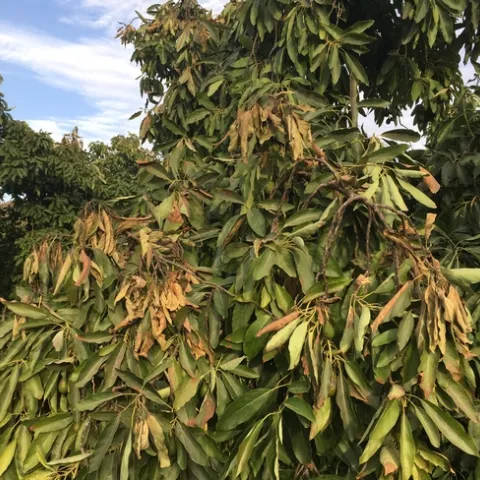
Calls have come in - "What is the browning on the avocado leaves? Thrips damage? Salt damage? Dothiorella?" Nope, Frost Damage. From the end of February to the first week of March, Santa Paula had one night of 30 deg F, and 3 nights of 33 and a few nights around 35..
View Article
Primary Image
Very nice looking pack of the newly released vertically grown berries. I'm looking at not just the fun, colored presentation, but also the size, which is half of our typical clear plastic clamshell.
Strawberries and Caneberries: Article

Vertical Farming of Strawberries Taking Off

March 16, 2022
By Mark P Bolda
Interesting article unearthed during this morning's Twitter scroll on how a company in Newark will be starting commercial production of strawberries vertically farmed in a warehouse.
View Article
Primary Image
The Mediterranean Fruit fly will be the topic of UC Davis Distinguished Professor James R. Carey's presentation on Wednesday, May 25. (Photo by Jack Kelly Clark)
Entomology & Nematology News: Article

Spring Quarter Seminars Announced

March 15, 2022
By Kathy Keatley Garvey
The list of spring quarter seminars hosted by the UC Davis Department of Entomology and Nematology has been announced by coordinator Shahid Siddique, assistant professor of nematology. The seminars will take place at 4:10 p.m. on Wednesdays, beginning March 30 and continuing through June 1.
View Article