A Natural Solution for California's Herds: African Catfish Peptides

California's cattle producers and agricultural communities are all too familiar with the rising challenge of antibiotic resistance, making common bacterial infections harder to treat in livestock. But imagine a future where we could tackle these infections with a natural, powerful alternative. Our research points to just that: antimicrobial peptides (AMPs) found in African catfish.

We're really excited about these peptides because African catfish thrive in pathogen-rich freshwater, naturally producing these robust immune compounds in their skin mucus as a defense. This natural origin makes them highly appealing alternatives to synthetic drugs.

Predicted Safety and Potent Action

One of the most compelling aspects of these AMPs is their predicted safety for mammals. Our initial computer analyses suggest that various catfish AMPs are generally recognized as safe (GRAS). We predict they'll be absorbed in the human intestine without causing liver, brain, or heart toxicity. Furthermore, lab tests on a promising peptide, NACAP-II, confirmed it was non-hemolytic, meaning it didn't damage rabbit red blood cells—a strong indicator of its potential safety for mammalian cells.

Beyond safety, these peptides demonstrate effectiveness against problematic bacteria. One study revealed NACAP-II's strong activity against Extended-Spectrum Beta-Lactamase (ESBL)-producing Escherichia coli—a critical concern for both animal and human health due to its resistance to many common antibiotics. Another peptide, ACAP-IV, also showed antibacterial activity against E. coli and Staphylococcus aureus. We believe these AMPs work by directly disrupting bacterial cell membranes, a mechanism that makes it harder for bacteria to develop resistance compared to how they resist traditional antibiotics.

Primary Image
photos by Erin Mahaney
Under the Solano Sun: Article

Surprise Succulent Blooms

September 1, 2021
Succulents have a reputation for being tough plants that need little care or water. Even so, it was a delightful surprise recently to find some long-abandoned cuttings blooming. Earlier this spring, I repotted a plant that had grown from a cutting given to me by my mother.
View Article
Primary Image
UC Davis graduate student measures photosynthesis on cabernet sauvignon grapevines
Food Blog: Article

Coastal grape growers can use less water during drought

September 1, 2021
By Michael Hsu
Study finds using less doesn't compromise quality California grape growers in coastal areas can use less water during times of drought and cut irrigation levels without affecting crop yields or quality, according to a new study out of the University of California, Davis.
View Article
Primary Image
A lady beetle, aka ladybug, munches on an aphid, as another aphid looks as if it's waiting its turn to be eaten. (Photo by Kathy Keatley Garvey)
Bug Squad: Article

All Hail the Lady Beetles!

September 1, 2021
By Kathy Keatley Garvey
Step right up, folks! I'm a lady beetle, aka ladybug, and it's lunch time. Or maybe it's snack time, I don't know. I don't talk when my mouth is full. What I do know is this: aphids are tasty and they line up to be eaten.
View Article
Colusa County: Article

Podcast

August 31, 2021
Hey everyone, have you heard of our podcast? The UC Master Gardener Program of Colusa County records a monthly gardening podcast! We have 10 different broadcast to hear. A podcast is like a radio show that is recorded.
View Article
Primary Image
crop land prices
Topics in Subtropics: Article

Farm Land Prices!!!!!!

August 31, 2021
By Ben A Faber
The United States farm real estate value, a measurement of the value of all land and buildings on farms, averaged $3,380 per acre for 2021, up $220 per acre (7.0 percent) from 2020. The United States cropland value averaged $4,420 per acre, an increase of $320 per acre (7.
View Article
Primary Image
photos by Tina Paris
Under the Solano Sun: Article

Project Produce

August 31, 2021
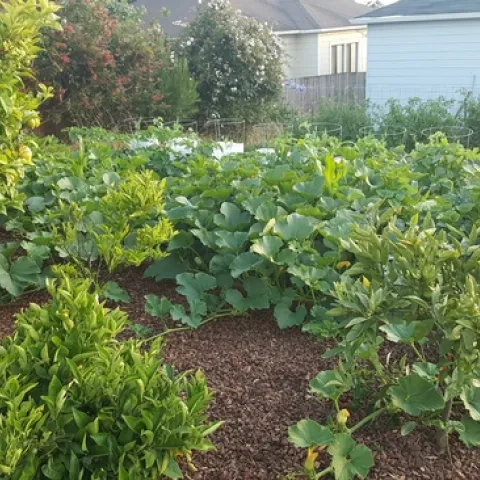
This is the time of the year when all the fruits of our gardening labors come blossoming into wonderful produce. At first, we're so elated to see the first few zucchinis, peaches, or tomatoes appear and feel like such successful gardeners.
View Article