A Natural Solution for California's Herds: African Catfish Peptides

California's cattle producers and agricultural communities are all too familiar with the rising challenge of antibiotic resistance, making common bacterial infections harder to treat in livestock. But imagine a future where we could tackle these infections with a natural, powerful alternative. Our research points to just that: antimicrobial peptides (AMPs) found in African catfish.

We're really excited about these peptides because African catfish thrive in pathogen-rich freshwater, naturally producing these robust immune compounds in their skin mucus as a defense. This natural origin makes them highly appealing alternatives to synthetic drugs.

Predicted Safety and Potent Action

One of the most compelling aspects of these AMPs is their predicted safety for mammals. Our initial computer analyses suggest that various catfish AMPs are generally recognized as safe (GRAS). We predict they'll be absorbed in the human intestine without causing liver, brain, or heart toxicity. Furthermore, lab tests on a promising peptide, NACAP-II, confirmed it was non-hemolytic, meaning it didn't damage rabbit red blood cells—a strong indicator of its potential safety for mammalian cells.

Beyond safety, these peptides demonstrate effectiveness against problematic bacteria. One study revealed NACAP-II's strong activity against Extended-Spectrum Beta-Lactamase (ESBL)-producing Escherichia coli—a critical concern for both animal and human health due to its resistance to many common antibiotics. Another peptide, ACAP-IV, also showed antibacterial activity against E. coli and Staphylococcus aureus. We believe these AMPs work by directly disrupting bacterial cell membranes, a mechanism that makes it harder for bacteria to develop resistance compared to how they resist traditional antibiotics.
Primary Image
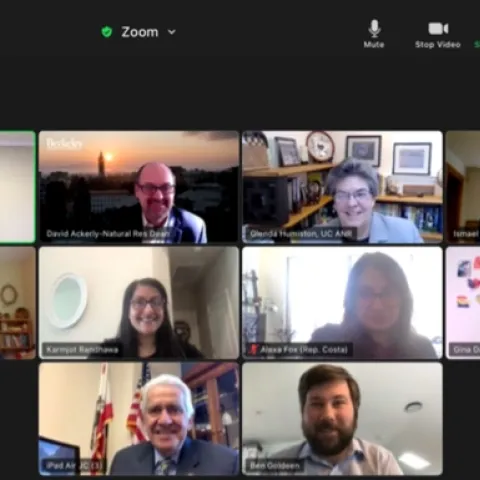
Zoom gallery shot of Congressman Costa and CARET reps.
ANR Employee News: Article

Virtual CARET visits with congressional staff productive

April 30, 2021
By Pamela S Kan-Rice
Vice President Glenda Humiston led a delegation representing California to the virtual annual joint meeting of the Council for Agricultural Research, Extension and Teaching (CARET) and the Administrative Heads Section (AHS) of the Association of Public and Land-grant Universities, March 1-4.
View Article
Healthy Central Sierra: Article

New & Noteworthy this April

April 30, 2021
Visit these links for a round-up of recent health and nutrition news, information, and events. For general healthy eating information based on an expert analysis of nutrition research, visit ChooseMyPlate.gov. For individual questions, consult a registered dietitian or medical provider.
View Article
Primary Image
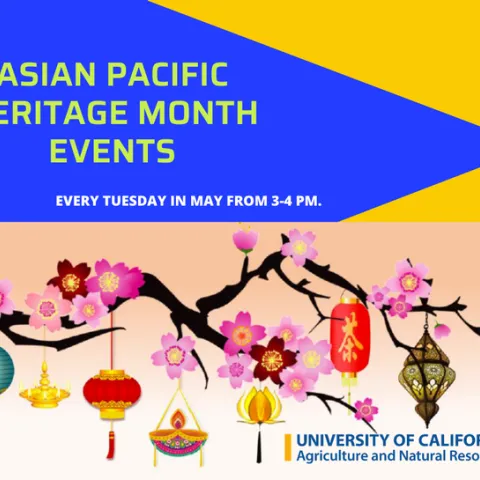
FB graphic - Asian Pacific Heritage Month Events
ANR Employee News: Article

Celebrate Asian Pacific Heritage Month in May

April 30, 2021
By Pamela S Kan-Rice
Everyone in the UC ANR community is invited to join virtual events to learn, share, support and celebrate Asian Pacific Heritage Month every Tuesday in May from 3 to 4 p.m.
View Article
Primary Image
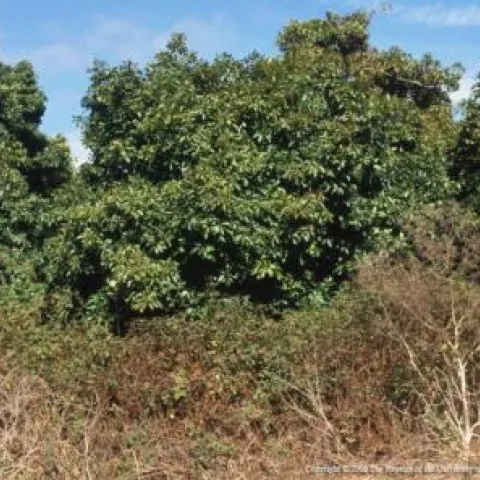
weeds bordering avocado orchard
Topics in Subtropics: Article

Glyphosate Impacts on Orchard Crops

April 30, 2021
By Ben A Faber
Article also published in California Weed Science Society Journal (March 2021 issue) -Brad Glyphosate is one of the most commonly used herbicides in orchard crops in California both in terms of treated acres and amount of active ingredient applied.
View Article
ANR Adventures: Article

UC ANR Walks

April 29, 2021
By Wendy Powers
The first half of each week seems to go by slowly, then all of a sudden we are at the end of another week. I don't know how or why that happens! Perhaps I am alone in experiencing this. UC ANR has had some nice call outs in the press.
View Article
Primary Image
Ranch Water Quality Planning Instructor’s Guide and Lesson Plan
ANR Employee News: Article

ANR team wins ANREP educational materials award

April 29, 2021
By Pamela S Kan-Rice
The Ranch Water Quality Planning Instructor's Guide and Lesson Plan won the Association of Natural Resource Extension Professionals bronze award in the category of Book or Comprehensive Program Curriculum.
View Article
Primary Image
A honey bee and a lygus bug sharing a batchelor button in the UC Davis Ecological Garden. (Photo by Kathy Keatley Garvey)
Bug Squad: Article

The Bee and the Lygus Bug

April 29, 2021
By Kathy Keatley Garvey
Ever seen a beneficial insect and a pest sharing the same blossom? At a recent visit to the UC Davis Ecological Garden at the Student Farm, we watched a honey bee, Apis mellifera, and a lygus bug nymph, Lygus hesperus, foraging on a batchelor button, Centaurea cyanus. The bee: the beneficial insect.
View Article