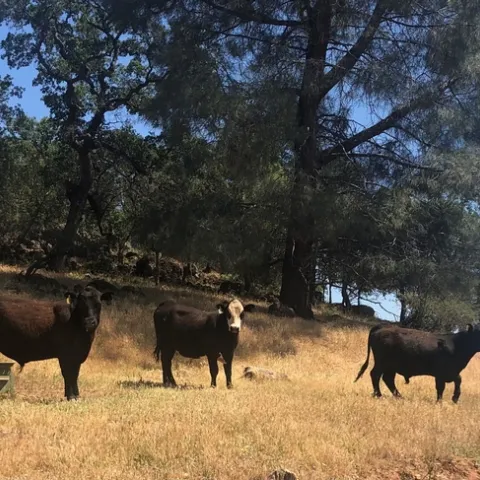
A Natural Solution for California's Herds: African Catfish Peptides

California's cattle producers and agricultural communities are all too familiar with the rising challenge of antibiotic resistance, making common bacterial infections harder to treat in livestock. But imagine a future where we could tackle these infections with a natural, powerful alternative. Our research points to just that: antimicrobial peptides (AMPs) found in African catfish.

We're really excited about these peptides because African catfish thrive in pathogen-rich freshwater, naturally producing these robust immune compounds in their skin mucus as a defense. This natural origin makes them highly appealing alternatives to synthetic drugs.

Predicted Safety and Potent Action

One of the most compelling aspects of these AMPs is their predicted safety for mammals. Our initial computer analyses suggest that various catfish AMPs are generally recognized as safe (GRAS). We predict they'll be absorbed in the human intestine without causing liver, brain, or heart toxicity. Furthermore, lab tests on a promising peptide, NACAP-II, confirmed it was non-hemolytic, meaning it didn't damage rabbit red blood cells—a strong indicator of its potential safety for mammalian cells.

Beyond safety, these peptides demonstrate effectiveness against problematic bacteria. One study revealed NACAP-II's strong activity against Extended-Spectrum Beta-Lactamase (ESBL)-producing Escherichia coli—a critical concern for both animal and human health due to its resistance to many common antibiotics. Another peptide, ACAP-IV, also showed antibacterial activity against E. coli and Staphylococcus aureus. We believe these AMPs work by directly disrupting bacterial cell membranes, a mechanism that makes it harder for bacteria to develop resistance compared to how they resist traditional antibiotics.


Primary Image
Michael Mendez at the Port of Long Beach. Photo by Keith Carlsen.
The Confluence: Article

From the Ground Up: Climate Change and Environmental Justice in California

March 15, 2021
by Faith Kearns. Michael Mendez is an assistant professor in the School of Social Ecology at UC Irvine, and has spent time doing public policy work as an advisor, senior legislative consultant, lobbyist, and as a gubernatorial appointee during the passage of California's internationally acclaimed climate…
View Article
UCCE in Santa Barbara County: Article

Spring 2021

March 15, 2021
This issue of our quarterly newsletter, "The Santa Barbara County Bounty", brings you: Registration information for our April offering of the popular 4-class series, "Victory Vegetable Gardening for True Beginners" Spring planting tips A FREE guide for retrofitting residential property to protect ag...
View Article
Kern County: Article

Kern UCCE/DWR Weekly Crop Water Use Report 03-15-2021

March 15, 2021
Please see below link to access "How To Use Weekly Crop Water Use (ET) Reports to Assist Farm Water Management" How To Use Weekly Crop Water Use Report Please see below link to access "Weekly ET Report 03-15-2021" ET Report 03-15-2021 Please see disclaimer link below: University of California Divisi...
View Article
Primary Image
A honey bee on honeycomb. (Photo by Kathy Keatley Garvey)
Bug Squad: Article

Honey, What's Going On with the Honey?

March 15, 2021
By Kathy Keatley Garvey
Honey, what's going on with the honey? If you're a beekeeper, a food retailer, in honey production or just want to know more about honey adulteration and food authenticity and what you can do about it, this one's for you.
View Article
Kern County: Article

In a Nutshell - March 2021

March 15, 2021
Budbreak, Bloom, and Pollination Events Mark the Start of the Walnut Season Online Resource for Information on Whole Orchard Recycling (WOR) Phytophthora-Not Just a Root and Crown Disease in Almond Implementing Best Management Practices for Nitrogen Fertilization in Almonds 2021 Virtual UCCE Statewi...
View Article
Primary Image
Lady beetle larva on top of yellow and green inflorescence.
Pests in the Urban Landscape: Article

Register Now: What is IPM Webinar

March 15, 2021
Have you registered for UCIPM Urban & Community Program's first open webinar? This Thursday, March 18 from 1:00-2:00pm PDT we will cover What is Integrated Pest Management? Click here to register. This week's webinar is the first of a new monthly webinar series that is free and open to the public.
View Article
Article

Creating a Saltgrass Landscape

March 15, 2021
By Dustin W Blakey
One of the current projects being undertaken by the Inyo-Mono County Master Gardeners is assisting in the revitalization, renewal and maintenance of the landscape at the Eastern Sierra Visitors Center (ESVC) in Lone Pine.
View Article
Primary Image
AvaBlogPost
Placer/Nevada 4-H Blog: Article

Staying Engaged in 4-H During Covid By Ava Mattia

March 15, 2021
Hi, my name is Ava Mattia and I am 14 and in Miners Ravine 4-H Club. I am the Communications Officer and in the pygmy goat, poultry, and alpaca projects. This year has been rough, to say the least, in all parts of my life.
View Article
Primary Image
Pink feathery muhly grass
The Coastal Gardener : Article

Pink Muhly Grass

March 15, 2021
By Sherida J Phibbs
Muhlenbergia capillaris (Pink Muhly Grass) has offered a delightful sight, to visitors, through the fall and winter in the Moss Family Temperate Woodland Garden. It is planted near Berberis thunbergii Gold Ring', which has a strong burgundy color in its leaves and through winter in its naked stems.
View Article
Primary Image
Little Bit - cute little brown terrier dog
The Coastal Gardener : Article

Little Bit

March 15, 2021
By Sherida J Phibbs
My recycling spot is a large bin in my neighborhood. It's at the local fire station. The walk lets me get to know all of the people and animals, and that is where I met Little Bit. He was a brown terrier mix breed that lived near the mailbox with his owners. Little bit is small.
View Article