A Natural Solution for California's Herds: African Catfish Peptides

California's cattle producers and agricultural communities are all too familiar with the rising challenge of antibiotic resistance, making common bacterial infections harder to treat in livestock. But imagine a future where we could tackle these infections with a natural, powerful alternative. Our research points to just that: antimicrobial peptides (AMPs) found in African catfish.

We're really excited about these peptides because African catfish thrive in pathogen-rich freshwater, naturally producing these robust immune compounds in their skin mucus as a defense. This natural origin makes them highly appealing alternatives to synthetic drugs.

Predicted Safety and Potent Action

One of the most compelling aspects of these AMPs is their predicted safety for mammals. Our initial computer analyses suggest that various catfish AMPs are generally recognized as safe (GRAS). We predict they'll be absorbed in the human intestine without causing liver, brain, or heart toxicity. Furthermore, lab tests on a promising peptide, NACAP-II, confirmed it was non-hemolytic, meaning it didn't damage rabbit red blood cells—a strong indicator of its potential safety for mammalian cells.

Beyond safety, these peptides demonstrate effectiveness against problematic bacteria. One study revealed NACAP-II's strong activity against Extended-Spectrum Beta-Lactamase (ESBL)-producing Escherichia coli—a critical concern for both animal and human health due to its resistance to many common antibiotics. Another peptide, ACAP-IV, also showed antibacterial activity against E. coli and Staphylococcus aureus. We believe these AMPs work by directly disrupting bacterial cell membranes, a mechanism that makes it harder for bacteria to develop resistance compared to how they resist traditional antibiotics.

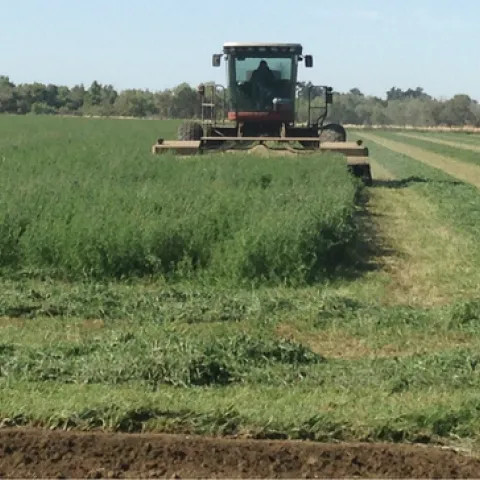
Primary Image
With a value of $6.1 billion, California accounted for over half of U.S. fresh vegetable production in 2018. Photo by Shermain Hardesty,

Will California remain leader in U.S. agricultural production?

March 5, 2021
By Pamela S Kan-Rice
New book shows how California has led the nation in farm sales since 1948 and explores future challenges "California Agriculture: Dimensions and Issues" by the Giannini Foundation of Agricultural Economics details the past, present and future of many of California's major agricultural commodities, i...
View Article
Primary Image
Photo by Alissa Bright
UC Master Gardeners- Diggin' it in SLO: Article

Nasturtium

March 5, 2021
Nasturtium By Alissa Bright UCCE Master Gardener Nasturtiums Tropaeolum majus /Tropaeolum minor Planting Area: USDA zones 2-11 Size: Parasol leaves grow to 6 in diameter, while majus vines can sprawl up to 20'. Minor stems are more compact and bushy; ideal for pots.
View Article
Primary Image
Photo by Polly Nelson
UC Master Gardeners- Diggin' it in SLO: Article

Banksea Rose

March 5, 2021
Banksea Rose By Polly Nelson UCCE Master Gardener Common Name: Lady Banks Rose Scientific Name: Rosa Banksiae Planting Area: Sunset zones 4-24 Size: 20 feet or more if allowed Bloom Season: Early to late spring Exposure: Full sun or light shade Pruning needs: Depends on placement, at least annually...
View Article
Primary Image
Photo by Jutta Thoerner
UC Master Gardeners- Diggin' it in SLO: Article

Apricots

March 5, 2021
Apricots By Jutta Thoerner UCCE Master Gardener Prunus armeniacum Size of Tree: 6 to 35 feet high, depending on rootstock Bloom description and season: Apricot blossoms have five bright white petals that can sometimes be tinged with pink. Blooming time is in the spring.
View Article
Livestock, Range and Natural Resources: Article

Verano-Otoño 2020

March 5, 2021
En este nmero: *Algas verde-azules *Dos plantas nativas y txicas *Seminarios en la preparacin para emergencias *Publicaciones gratis...
View Article
UC Cooperative Extension Imperial County: Article

March 2021

March 5, 2021
VEGETABLE CROPS AND IPM WEBINAR GROUNDBREAKING RESEARCH SHOWS PROMISE FOR SPINACH GROWERS GROWERS REFINE DATE PALM IRRIGATION WITH UC ANR RESEARCH DRIP CURBS DOWNY MILDEW IN SPINACH GREETINGS FROM THE IPM ADVISOR VIRAL DISEASE ON LETTUCE IRRIGATION MANAGEMENT TOOLS AND TECHNOLOGIES WEBINAR SAVE THE...
View Article
Primary Image
Photo by Tami Reece
UC Master Gardeners- Diggin' it in SLO: Article

Broth

March 5, 2021
Making Broth By Carol Michael, UCCE Master Food Preserver It is cold and gloomy outside. We need something to brighten our days. What do you recommend? Nora S., Paso Robles A favorite activity is preparing chicken bone broth. Make a stockpot or slow cooker full.
View Article
Primary Image
Photo by Andrea Peck
UC Master Gardeners- Diggin' it in SLO: Article

Guava Trees

March 5, 2021
Guava Trees By Andrea Peck UCCE Master Gardener Guava Tree Psidium guajava Planting Area: Full Sun, USDA Zones 8-11 Size: up to 20' in height Bloom Season: Fall Fruit Season: Fall/Winter Exposure: Sensitive to frost/freeze. Pruning Needs: Yearly. Water Needs: Medium.
View Article
Primary Image
glyphosate plus inseason broad
UC Weed Science (weed control, management, ecology, and minutia): Article

Research Summary: Pre-plant Weed Management Followed by Mechanical or Chemical Control Improves Alfalfa Stand and Yield

March 5, 2021
By Sarah E Light
Good stand establishment is important for alfalfa production and can impact crop productivity for years. Weed competition during stand establishment may be irreversible because it impedes root growth, results in thinner alfalfa stands, and can lower forage quality.
View Article