A Natural Solution for California's Herds: African Catfish Peptides

California's cattle producers and agricultural communities are all too familiar with the rising challenge of antibiotic resistance, making common bacterial infections harder to treat in livestock. But imagine a future where we could tackle these infections with a natural, powerful alternative. Our research points to just that: antimicrobial peptides (AMPs) found in African catfish.

We're really excited about these peptides because African catfish thrive in pathogen-rich freshwater, naturally producing these robust immune compounds in their skin mucus as a defense. This natural origin makes them highly appealing alternatives to synthetic drugs.

Predicted Safety and Potent Action

One of the most compelling aspects of these AMPs is their predicted safety for mammals. Our initial computer analyses suggest that various catfish AMPs are generally recognized as safe (GRAS). We predict they'll be absorbed in the human intestine without causing liver, brain, or heart toxicity. Furthermore, lab tests on a promising peptide, NACAP-II, confirmed it was non-hemolytic, meaning it didn't damage rabbit red blood cells—a strong indicator of its potential safety for mammalian cells.

Beyond safety, these peptides demonstrate effectiveness against problematic bacteria. One study revealed NACAP-II's strong activity against Extended-Spectrum Beta-Lactamase (ESBL)-producing Escherichia coli—a critical concern for both animal and human health due to its resistance to many common antibiotics. Another peptide, ACAP-IV, also showed antibacterial activity against E. coli and Staphylococcus aureus. We believe these AMPs work by directly disrupting bacterial cell membranes, a mechanism that makes it harder for bacteria to develop resistance compared to how they resist traditional antibiotics.
Primary Image
Apps to help manage stress
ANR Adventures: Article

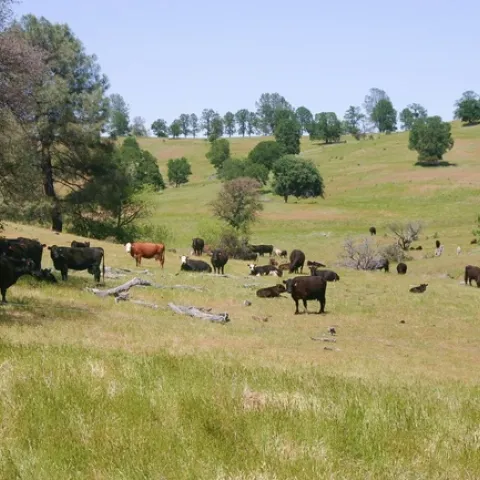
Livestock at the forefront

November 9, 2020
By Wendy Powers
It seemed everyone had some level of anxiety over the 2020 Presidential Election; much of the anxiety may have dissolved for many.
View Article
Primary Image
UC Davis doctoral student Clara Stuligross by her blue orchard bee nests in the spring of 2018. (Photo by Kathy Keatley Garvey)
Bug Squad: Article

UC Davis Research: A Double Punch to the Blue Orchard Bee

November 9, 2020
By Kathy Keatley Garvey
In a first-of-its-kind study, UC Davis research shows that the double punch of pesticide exposure and food scarcity drastically affects the reproduction of the blue orchard bee, Osmia lignaria, a wild bee known for pollinating early spring bloom, including almonds.
View Article
Kern County: Article

Kern UCCE/DWR Weekly Crop Water Use Report 11-09-2020

November 9, 2020
Please see below link to access "How To Use Weekly Crop Water Use (ET) Reports to Assist Farm Water Management" How To Use Weekly Crop Water Use Report Please see below link to access "Weekly ET Report 11-09-2020" ET Report 11-09-2020 Please see disclaimer link below: University of California Divisi...
View Article
Primary Image
Nine people stand on a wood chip covered garden path, behind a post, engraved vertically with the words welcome home.” A small American flag is mounted atop the post. One person holds garden shears, poised to cut through a translucent red ribbon being held by eight other gardeners.
UC Master Gardener Program Statewide Blog: Article

Honoring our Veteran Gardeners

November 9, 2020
By Melissa G Womack
On November 11, we recognize Veterans Day (originally known as Armistice Day), the end of World War I, and the armed forces' contributions. The stories below profile UC Master Gardener Program projects in Northern and Southern California that make a difference to those in the veteran community.
View Article
Primary Image
An area near Shaver Lake where the 2020 Creek Fire burned most of the living vegetation and old tree stumps. (Photo: Jeannette Warnert)

Wildfires are devastating to the soil

November 9, 2020
By Jeannette Warnert
After another record year for California wildfire, concern is now turning to the soil impacted by firestorms, reported Sarah Klearman in the Napa Valley Register.
View Article
Primary Image
2020-8-14 Alfalfa photo
SJC and Delta Field Crops: Article

Alfalfa IPM Virtual Workshop

November 9, 2020
By Michelle M Leinfelder-Miles
UC Cooperative Extension will offer a virtual Alfalfa IPM Workshop on December 3rd and 4th. The workshop will run from 9am to 12pm on each day. Registration is required, and there is a $25 fee to help cover our costs of delivering a workshop virtually. Continuing education credits will be offered.
View Article
Primary Image
Harvested pistachios
Food Blog: Article

Storing and preserving fresh nuts

November 9, 2020
By Susan Mosbacher
One of the many wonderful things about California's climate is that in many regions of the state you'll find orchards of walnut, almond, pecan, pistachio or chestnut trees. You may be growing or planning to grow one or more of these trees in your yard so you can enjoy consuming the nuts.
View Article