A Natural Solution for California's Herds: African Catfish Peptides

California's cattle producers and agricultural communities are all too familiar with the rising challenge of antibiotic resistance, making common bacterial infections harder to treat in livestock. But imagine a future where we could tackle these infections with a natural, powerful alternative. Our research points to just that: antimicrobial peptides (AMPs) found in African catfish.

We're really excited about these peptides because African catfish thrive in pathogen-rich freshwater, naturally producing these robust immune compounds in their skin mucus as a defense. This natural origin makes them highly appealing alternatives to synthetic drugs.

Predicted Safety and Potent Action

One of the most compelling aspects of these AMPs is their predicted safety for mammals. Our initial computer analyses suggest that various catfish AMPs are generally recognized as safe (GRAS). We predict they'll be absorbed in the human intestine without causing liver, brain, or heart toxicity. Furthermore, lab tests on a promising peptide, NACAP-II, confirmed it was non-hemolytic, meaning it didn't damage rabbit red blood cells—a strong indicator of its potential safety for mammalian cells.

Beyond safety, these peptides demonstrate effectiveness against problematic bacteria. One study revealed NACAP-II's strong activity against Extended-Spectrum Beta-Lactamase (ESBL)-producing Escherichia coli—a critical concern for both animal and human health due to its resistance to many common antibiotics. Another peptide, ACAP-IV, also showed antibacterial activity against E. coli and Staphylococcus aureus. We believe these AMPs work by directly disrupting bacterial cell membranes, a mechanism that makes it harder for bacteria to develop resistance compared to how they resist traditional antibiotics.
Primary Image
Bat hanging from a limb
The Coastal Gardener : Article

Predators of the Night - Scary Yet Beneficial

September 3, 2020
By Sherida J Phibbs
When I think of Halloween and the decorations displayed, bats always come to my mind. Why, I wonder? Perhaps it is the Vampire bat and the fictional character Dracula the Vampire, both which have the common diet of blood. Thankfully, Vampire bats are not found in the USA and Dracula is fictional.
View Article
Sacramento Valley Field Crops: Article

Soil Health Connection

September 3, 2020
By Sarah E Light
UC Cooperative Extension and Colusa RCD Launch Soil Health Connection University of California Cooperative Extension (UCCE) and Colusa County Resource Conservation District announce the launch of the Soil Health Connection, an informative outreach YouTube channel.
View Article
Primary Image
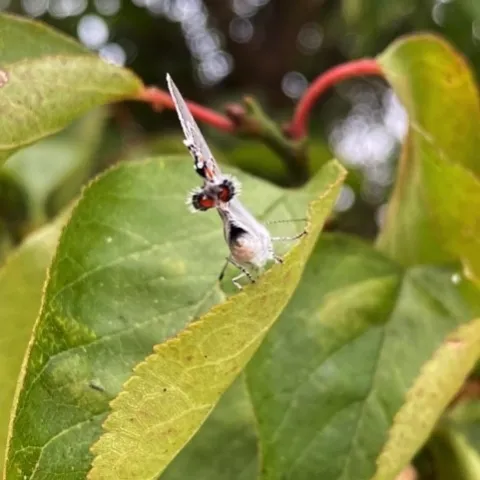
A cuckoo bee, Xeromelecta californica, rests on a leaf in a Vacaville pollinator garden. (Photo by Kathy Keatley Garvey)
Bug Squad: Article

Ever Seen a Cuckoo Bee?

September 3, 2020
By Kathy Keatley Garvey
Ever seen a cuckoo bee? They're also called parasitic bees or "kleptoparasites" or "cleptoparasitises." They cannot carry pollen (no apparatus) and do not construct their nests. They lay their eggs in the nests of their hosts and then eat the food meant for the hosts.
View Article
The Stanislaus Sprout: Article

Fall Vegetable Garden YouTube Available Now!

September 3, 2020
By Anne E Schellman
Planning to get your fall garden started? If you missed our live presentation of the Fall Vegetable Gardening class, you can now watch it on our YouTube Channel! Fall Vegetable Gardening was recorded on August 25, 2020.
View Article
Primary Image
Figure 3. Bean plant with poor pod set. The arrows indicate where flowers did not set pods. The pictured, opened pod shows no lygus stings, suggesting that heat (and not lygus) caused poor pod set at this field.
SJC and Delta Field Crops: Article

Lima Bean Heat Stress

September 3, 2020
By Michelle M Leinfelder-Miles, Rachael Long
Last week, I visited a baby lima field in the southwest part of San Joaquin County that had overall poor pod set. Pods were filling lower in the canopy, but flowers had not set higher on the plants.
View Article
Primary Image
Figure 3. Bean plant with poor pod set. The arrows indicate where flowers did not set pods. The pictured, opened pod shows no lygus stings, suggesting that heat (and not lygus) caused poor pod set at this field.
UC Dry Bean Blog: Article

Lima Bean Heat Stress

September 3, 2020
By Rachael Long, Michelle M Leinfelder-Miles
Last week, I visited a baby lima field in the southwest part of San Joaquin County that had overall poor pod set. Pods were filling lower in the canopy, but flowers had not set higher on the plants.
View Article