A Natural Solution for California's Herds: African Catfish Peptides

California's cattle producers and agricultural communities are all too familiar with the rising challenge of antibiotic resistance, making common bacterial infections harder to treat in livestock. But imagine a future where we could tackle these infections with a natural, powerful alternative. Our research points to just that: antimicrobial peptides (AMPs) found in African catfish.

We're really excited about these peptides because African catfish thrive in pathogen-rich freshwater, naturally producing these robust immune compounds in their skin mucus as a defense. This natural origin makes them highly appealing alternatives to synthetic drugs.

Predicted Safety and Potent Action

One of the most compelling aspects of these AMPs is their predicted safety for mammals. Our initial computer analyses suggest that various catfish AMPs are generally recognized as safe (GRAS). We predict they'll be absorbed in the human intestine without causing liver, brain, or heart toxicity. Furthermore, lab tests on a promising peptide, NACAP-II, confirmed it was non-hemolytic, meaning it didn't damage rabbit red blood cells—a strong indicator of its potential safety for mammalian cells.

Beyond safety, these peptides demonstrate effectiveness against problematic bacteria. One study revealed NACAP-II's strong activity against Extended-Spectrum Beta-Lactamase (ESBL)-producing Escherichia coli—a critical concern for both animal and human health due to its resistance to many common antibiotics. Another peptide, ACAP-IV, also showed antibacterial activity against E. coli and Staphylococcus aureus. We believe these AMPs work by directly disrupting bacterial cell membranes, a mechanism that makes it harder for bacteria to develop resistance compared to how they resist traditional antibiotics.
UC Oaks: Article

Top Pruning Improves Field Performance of Blue Oak Seedlings

September 6, 2025
By Michael Jones
 by Doug McCreary and Jerry TecklinOaks ‘n Folks – Volume 7, Issue 2 – September 1992Many of the native oak seedlings produced in California are grown in small containers or “liners” and transplanted to the field when they are one year old. While in the container, their root growth is severely…
View Article
UC Oaks: Article

Effects of Tree Shelters and Weed Control on Blue Oak Growth and Survival

September 6, 2025
By Michael Jones
by Doug McCreary and Jerry TecklinOaks ‘n Folks – Volume 7, Issue 4 – May, 1992Blue oak (Quercus douglasii) is one of several species of native California oaks that is reported to be regenerating poorly in some locations. Recent studies have indicated that two of the most important factors limiting both…
View Article
UC Oaks: Article

Artificially Regenerating Native Oaks in California

September 6, 2025
By Michael Jones
by Doug McCrearyOaks ‘n Folks – Volume 6, Issue 3 – December 1991IntroductionIn California today there is evidence that several species of native oaks, including blue oak (Quercus douglasii) and valley oak (Quercus lobata), are not regenerating well in certain areas of the state. In…
View Article
UC Oaks: Article

Growing Bareroot Blue Oak Seedlings

September 6, 2025
By Michael Jones
by Bill Krell and Doug McCrearyOaks ‘n Folks – Volume 5, Issue 2 – November 1990IntroductionAs interest and concern about native California oaks increase throughout the state, there is greater and greater demand for oak seedlings for restoration plantings and other artificial regeneration programs. To date,…
View Article
UC Oaks: Article

Oak Seedling Regeneration on California Rangelands

September 6, 2025
By Michael Jones
by Neil K. McDougald, P.B. Sands, T.E. Adams, W.H. WeitkampOaks ‘n Folks – Volume 5, Issue 2 – November 1990IntroductionPoor regeneration of blue oak (Quercus douglasii) and valley oak (Q. lobata) in many locations on California hardwood rangelands has encouraged examination of factors suspected to be…
View Article
UC Oaks: Article

How to Grow California Oaks

September 6, 2025
By Michael Jones
by Doug McCrearyOaks ‘n Folks – Volume 4, Issue 2 – December, 1989IntroductionNative oaks are a vital and important component of the vegetation of California. They grow in a wide variety of habitats and help provide a distinctive character to the landscape. Not only are they beautiful to look at, but they…
View Article
UC Oaks: Article

Rooting Out Oak Radicles

September 6, 2025
By Michael Jones
by Jerry TecklinOaks ‘n Folks – Volume 5, Issue 1 – June, 1990IntroductionBlue oak acorns readily germinate once they fall from the tree. Unlike some acorns, such as the black oaks which require a cool, moist resting period to trigger germination, blue oak acorns can start sprouting the initial…
View Article
UC Oaks: Article

Oak Regeneration by Artificial Means

September 6, 2025
By Michael Jones
IntroductionOak trees are an important California natural resource, but in many areas they are not regenerating naturally. In addition, clearing land for economic reasons is reducing existing stands in many locations.Artificially regenerating oaks is one way to help conserve this important natural resource…
View Article
Preservation Notes - San Joaquin Master Food Preservers: Article

Meet UCCE Master Food Preserver Maricarmen Anaya-Rodriguez

September 6, 2025
By Sherida J Phibbs
 by Sherida Phibbs, UCCE Master Food PreserverWhen you meet Maricarmen Anaya-Rodriguez, her enthusiasm for food preservation and community connection shines through immediately. Since becoming a UC Master Food Preserver in 2018, she has been dedicated to learning and sharing safe, research-based…
View Article
Event Primary Image
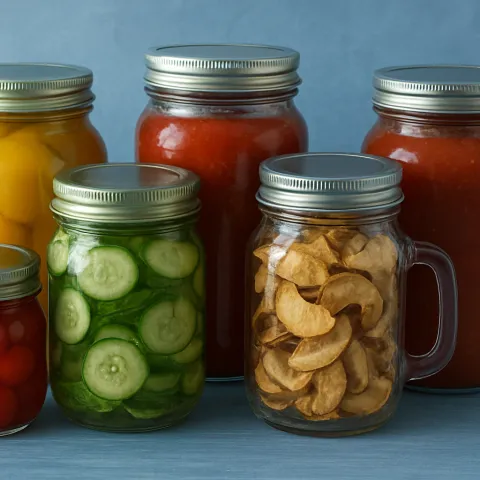
jars of preserved veggies & fruit on a blue background
UC Master Gardeners of Monterey & Santa Cruz Counties: Event

Preserving Your Harvest!

Event Date
Sep 27, 2025

Late summer and fall harvests are some of the most bountiful times in the home garden. Join Bridget Matz, Master Gardener and Master Food Preserver, for an introductory overview on food preservation techniques that will help you enjoy the fruits of your garden labor for many months to come.
UC Master Gardeners of Monterey & Santa Cruz Counties
View Event