A Natural Solution for California's Herds: African Catfish Peptides

California's cattle producers and agricultural communities are all too familiar with the rising challenge of antibiotic resistance, making common bacterial infections harder to treat in livestock. But imagine a future where we could tackle these infections with a natural, powerful alternative. Our research points to just that: antimicrobial peptides (AMPs) found in African catfish.

We're really excited about these peptides because African catfish thrive in pathogen-rich freshwater, naturally producing these robust immune compounds in their skin mucus as a defense. This natural origin makes them highly appealing alternatives to synthetic drugs.

Predicted Safety and Potent Action

One of the most compelling aspects of these AMPs is their predicted safety for mammals. Our initial computer analyses suggest that various catfish AMPs are generally recognized as safe (GRAS). We predict they'll be absorbed in the human intestine without causing liver, brain, or heart toxicity. Furthermore, lab tests on a promising peptide, NACAP-II, confirmed it was non-hemolytic, meaning it didn't damage rabbit red blood cells—a strong indicator of its potential safety for mammalian cells.

Beyond safety, these peptides demonstrate effectiveness against problematic bacteria. One study revealed NACAP-II's strong activity against Extended-Spectrum Beta-Lactamase (ESBL)-producing Escherichia coli—a critical concern for both animal and human health due to its resistance to many common antibiotics. Another peptide, ACAP-IV, also showed antibacterial activity against E. coli and Staphylococcus aureus. We believe these AMPs work by directly disrupting bacterial cell membranes, a mechanism that makes it harder for bacteria to develop resistance compared to how they resist traditional antibiotics.

UC Oaks: Article

Black Oak Planting Project Near Grass Valley

September 8, 2025
By Michael Jones
by Doug McCrearyOaks ‘n Folks – Volume 11, Issue 1 – June, 1996As part of an effort to reduce wildfire hazard at the Empire Mine State Park near Grass Valley, California, crews have been cutting and removing dense thickets of large, old manzanita. This material is subsequently placed into piles and burned…
View Article
UC Master Gardeners of Placer County: Article

Fall 2017 Curious Gardener

September 8, 2025
In this issue: Attracting Pollinators, How to Grow Garlic, Citrus Quarantine, Replanting After Conifers Die, Why Are My Oranges Splitting, All-Stars for Hummingbirds, Multi-Purpose Herb Garden, Events Calendar
View Article
Primary Image
Dill (Anethum graveolens)
UC Marin Master Gardeners: Article

Invite the good guys into your garden

September 8, 2025
By Bonnie A Nielsen
 Insects – they’re everywhere! With nearly a million named species, they make up about 90% of all species of animals on the planet and more than half of all living things on Earth. Yet it is estimated that only about one to three percent are truly harmful. Most insects go about their daily business…
View Article
Primary Image
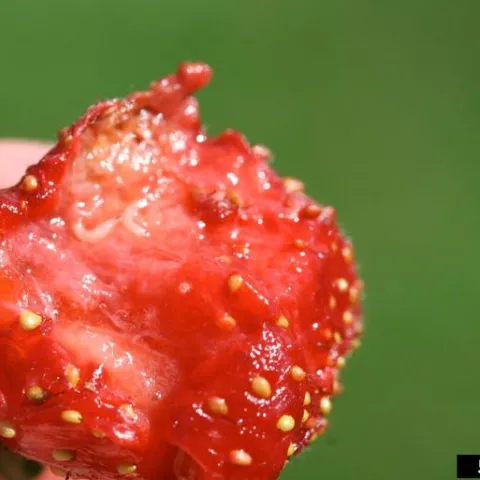
A bright red strawberry with a damaged, mushy section that has a tiny, white, worm-like maggot on it.
Pests in the Urban Landscape: Article

Is That a Maggot in My Berry?

September 8, 2025
By Cherie Shook
 A little red-eyed fly is trending on social media for all the wrong reasons. Why? Because people are finding maggots in some of their berries! Sounds gross, but what is it?   This small fly, called spotted-wing drosophila (SWD), love soft-skinned fruits such as cherries, blueberries,…
View Article
UC Oaks: Article

Techniques to Enhance Oak Regeneration Studied

September 7, 2025
By Michael Jones
by Theodore E. AdamsOaks ‘n Folks – Volume 9, Issue 1 – April, 1994IntroductionExamination of factors suspected of contributing to poor seedling regeneration of blue oak (Quercus douglasii) and valley oak (Q. lobata) was initiated in 1985 at 6 locations statewide, including the Hopland Research and Extension…
View Article
UC Oaks: Article

Tree Shelters for the Birds

September 6, 2025
By Michael Jones
by Jerry TecklinOaks ‘n Folks – Volume 8, Issue 1 – March, 1993 With the increased use of rigid tree shelters for oak seedling planting projects, it is worthwhile to take a moment to look at this new protective device from the point of view of our native birds. Four-foot tall plastic protectors in open…
View Article
UC Oaks: Article

Tree Shelters Protect Oak Seedlings from Cattle

September 6, 2025
By Michael Jones
by Doug McCrearyOaks ‘n Folks – Volume 8, Issue 1 – March, 1993One of the major obstacles preventing successful planting and establishment of oak seedlings on rangelands is browsing by herbivores such as rabbits, deer, and livestock. While screen cages have been used to protect seedlings from rabbits and…
View Article