A Natural Solution for California's Herds: African Catfish Peptides

California's cattle producers and agricultural communities are all too familiar with the rising challenge of antibiotic resistance, making common bacterial infections harder to treat in livestock. But imagine a future where we could tackle these infections with a natural, powerful alternative. Our research points to just that: antimicrobial peptides (AMPs) found in African catfish.

We're really excited about these peptides because African catfish thrive in pathogen-rich freshwater, naturally producing these robust immune compounds in their skin mucus as a defense. This natural origin makes them highly appealing alternatives to synthetic drugs.

Predicted Safety and Potent Action

One of the most compelling aspects of these AMPs is their predicted safety for mammals. Our initial computer analyses suggest that various catfish AMPs are generally recognized as safe (GRAS). We predict they'll be absorbed in the human intestine without causing liver, brain, or heart toxicity. Furthermore, lab tests on a promising peptide, NACAP-II, confirmed it was non-hemolytic, meaning it didn't damage rabbit red blood cells—a strong indicator of its potential safety for mammalian cells.

Beyond safety, these peptides demonstrate effectiveness against problematic bacteria. One study revealed NACAP-II's strong activity against Extended-Spectrum Beta-Lactamase (ESBL)-producing Escherichia coli—a critical concern for both animal and human health due to its resistance to many common antibiotics. Another peptide, ACAP-IV, also showed antibacterial activity against E. coli and Staphylococcus aureus. We believe these AMPs work by directly disrupting bacterial cell membranes, a mechanism that makes it harder for bacteria to develop resistance compared to how they resist traditional antibiotics.
Primary Image
 Learn to start tomato plants from seed at the Spring Garden Talk. Kristina Thompson
Blog

The Real Dirt

The Real Dirt blog covers regional gardening issues from soil health to planting for pollinators; from fire resistant landscaping to attracting wildlife. Read all about it!
View Blog
Blog

ANR News Releases

News releases share the latest updates on Extension activities and impact by scientists and staff across UC Agriculture and Natural Resources.
View Blog
2025 Camp Photo Landscape
Site

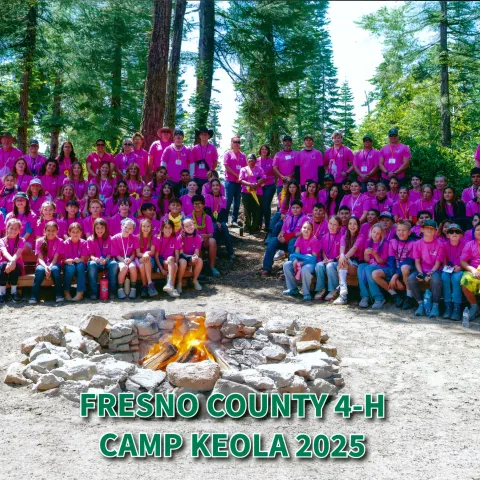
Fresno County 4-H

4-H- The Power of Youth The 4-H Youth Development Program is an informal educational opportunity where youth, ages 5-19, learn by doing from skilled adult volunteers in project areas like science, health, agriculture, & citizenship.
View Site
Brightly colored vegetables and flowers.
Site - Statewide Program

California EFNEP

As a core Community Nutrition and Health statewide program, the Expanded Food and Nutrition Education Program (EFNEP) provides community education classes which promote nutrition and physical activity for income-eligible youth and adults as a means of maintaining a healthy lifestyle free from chroni...
View Site
Primary Image
Vegetable and herb transplants at a retailer
Fresno Gardening Green: Article

Prepare transplants for the hot summer ahead

April 1, 2026
Weather forecasters are predicting a gradual shift beginning this month of the La Niña weather pattern in the Pacific Ocean to an El Niño pattern, with warmer temperatures and little if no rainfall in the Central Valley for most of 2026.  We may well have already received all of the rainfall for this…
View Article
Primary Image
Fire blight inhibits fruit development on pear. J. Alosi
The Real Dirt: Article

It’s Fire Blight Season!

April 1, 2026
If you are noticing droopy, dried-out flower clusters on your pears, Asian pears, quince, apples or crabapples, fire blight may be the cause. Fire blight is caused by a bacterium and is a common and frequently destructive disease that usually shows up in April and May, but during dry spell, it may appear in…
View Article
Primary Image
White heirloom roses
Fresno Gardening Green: Article

Rosie's corner: Caring for April roses

April 1, 2026
 April fertilizing and deadheading After your roses have completed their first bloom, it will be time to deadhead and feed them. You should get a nice second bloom about six weeks after fertilizing. Remember, deadheading is not the same as pruning. There are two steps to deadheading. When the…
View Article

Names in the News

March 31, 2026
By Pamela S Kan-Rice
Summer Cortez, Ben Baldi, Lauren Hale, Carrie Brown and Evan Talmage joined UC ANR or took new positions within UC ANR recently.
View Article
Primary Image
Honey bee eclosing

'The Little Things That Run the World'

March 31, 2026
By Kathy Keatley Garvey
 "The little things run the world," mused entomologist, biologist, naturalist and ecologist E. O. Wilson (1929-2023).He was referring to "the disproportionate role that they and other invertebrates play in food webs, ecosystem services, and generating and maintaining biological diversity," according to…
View Article
UC Master Gardeners of San Mateo & San Francisco Counties: Article

Tomato Disease Resistance Codes

March 31, 2026
By Cathrin Callas
Disease Resistance CodesSome tomato varieties are developed to be resistant to certain diseases and pests. Codes may be listed with the tomato information. Here is a list of some codes that you may see. For more details about some that may apply to our area, see the article Decoding Tomato Disease Resistance…
View Article
Thrips/TSWV status in Yolo & Colusa: Article

2026 First Report--March 31st

March 31, 2026
By Patricia A Lazicki, Neil McRoberts
With a dryer-than-average winter, warm nighttime temperatures, and record-breaking high daytime temperatures in March, 2026 is off to a warm start.   Figure 1. Recorded temperatures (blue bars) between 10/01/2025 and 10/23/2026 for Davis, CA, compared to our normal temperature range (beige…
View Article
Event Primary Image
UC Master Gardeners of Santa Clara County: Event

PADG Grow Your Best Summer Garden: Tomatoes, Peppers, and More - Palo Alto

Event Date
May 9, 2026

It's time to plant and care for your summer jewels, your warm-season vegetables, your most tasty tomatoes, peppers and more! Do they need pollinators, support, protection? Come and learn the secrets to growing tomatoes, peppers and more summer veggies.
UC Master Gardeners of Santa Clara County
View Event