A Natural Solution for California's Herds: African Catfish Peptides

California's cattle producers and agricultural communities are all too familiar with the rising challenge of antibiotic resistance, making common bacterial infections harder to treat in livestock. But imagine a future where we could tackle these infections with a natural, powerful alternative. Our research points to just that: antimicrobial peptides (AMPs) found in African catfish.

We're really excited about these peptides because African catfish thrive in pathogen-rich freshwater, naturally producing these robust immune compounds in their skin mucus as a defense. This natural origin makes them highly appealing alternatives to synthetic drugs.

Predicted Safety and Potent Action

One of the most compelling aspects of these AMPs is their predicted safety for mammals. Our initial computer analyses suggest that various catfish AMPs are generally recognized as safe (GRAS). We predict they'll be absorbed in the human intestine without causing liver, brain, or heart toxicity. Furthermore, lab tests on a promising peptide, NACAP-II, confirmed it was non-hemolytic, meaning it didn't damage rabbit red blood cells—a strong indicator of its potential safety for mammalian cells.

Beyond safety, these peptides demonstrate effectiveness against problematic bacteria. One study revealed NACAP-II's strong activity against Extended-Spectrum Beta-Lactamase (ESBL)-producing Escherichia coli—a critical concern for both animal and human health due to its resistance to many common antibiotics. Another peptide, ACAP-IV, also showed antibacterial activity against E. coli and Staphylococcus aureus. We believe these AMPs work by directly disrupting bacterial cell membranes, a mechanism that makes it harder for bacteria to develop resistance compared to how they resist traditional antibiotics.
Primary Image
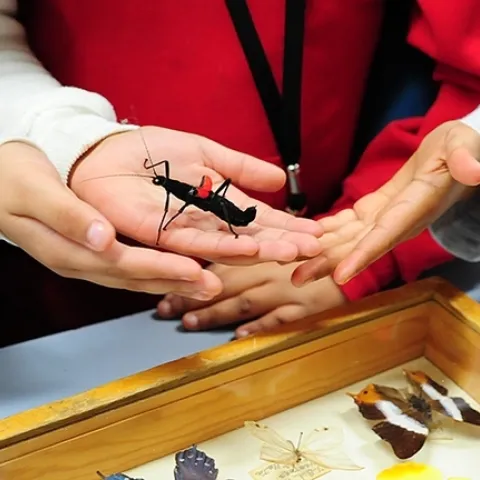
The California State Fair's Insect Pavilion is home to multiple displays borrowed from the Bohart Museum of Entomology, UC Davis. (Photo by Kathy Keatley Garvey)
Bug Squad: Article

If You Were a Bug, What Would You Be?

July 22, 2019
By Kathy Keatley Garvey
"If you were a bug, what would you be?" That sign greets visitors to the California State Fair's Insect Pavilion. It's a good conservation starter. The Insect Pavilion showcases insect specimens and insects from the Bohart Museum of Entomology at the University of California, Davis.
View Article
Primary Image
Solarizing planting beds in a garden. (Karey Windbiel-Rojas, UC IPM)
The Stanislaus Sprout: Article

Use the Sun's Heat to Clean up Garden Pests

July 22, 2019
By Anne E Schellman
Soil solarization is a simple technique that you can use in your home garden to reduce or eliminate many soil-inhabiting pests. Solarization works by heating up the soil in the presence of moisture to temperatures that are high enough to kill many fungi, nematodes, weeds and weed seeds.
View Article
Primary Image
Non-native Bromus species, such as ripgut brome, grow fast and dry out quickly, becoming highly flammable.
Green Blog: Article

California’s bad romance with Bromus fuels wildfire

July 22, 2019
By Pamela S Kan-Rice
When wildfires burn in California, people often call them forest fires or brushfires, but the odds are high that an invasive weed is an unrecognized fuels component, says a UC Agriculture and Natural Resources scientist.
View Article
Primary Image
Lilliana Ruiz (left), Jeff Mitchell, and Sophia Garcia, following the video presentation by Ruiz and Garcia to twenty staff members of the Kearney Agricultural Research and Extension Center in Parlier, CA, July 19, 2019
Conservation Agriculture: Article

Wonderful Company Interns wrap up summer program at KARE!

July 22, 2019
By Jeffrey P Mitchell
July 19, 2019 Two junior-year students at Washington Union High School in Easton, CA, Sophia Garcia and Lilliana Ruiz, successfully completed their two-week internship with the Wonderful Company at UC ANR's Kearney Agricultural Research and Extension Center.
View Article