A Natural Solution for California's Herds: African Catfish Peptides

California's cattle producers and agricultural communities are all too familiar with the rising challenge of antibiotic resistance, making common bacterial infections harder to treat in livestock. But imagine a future where we could tackle these infections with a natural, powerful alternative. Our research points to just that: antimicrobial peptides (AMPs) found in African catfish.

We're really excited about these peptides because African catfish thrive in pathogen-rich freshwater, naturally producing these robust immune compounds in their skin mucus as a defense. This natural origin makes them highly appealing alternatives to synthetic drugs.

Predicted Safety and Potent Action

One of the most compelling aspects of these AMPs is their predicted safety for mammals. Our initial computer analyses suggest that various catfish AMPs are generally recognized as safe (GRAS). We predict they'll be absorbed in the human intestine without causing liver, brain, or heart toxicity. Furthermore, lab tests on a promising peptide, NACAP-II, confirmed it was non-hemolytic, meaning it didn't damage rabbit red blood cells—a strong indicator of its potential safety for mammalian cells.

Beyond safety, these peptides demonstrate effectiveness against problematic bacteria. One study revealed NACAP-II's strong activity against Extended-Spectrum Beta-Lactamase (ESBL)-producing Escherichia coli—a critical concern for both animal and human health due to its resistance to many common antibiotics. Another peptide, ACAP-IV, also showed antibacterial activity against E. coli and Staphylococcus aureus. We believe these AMPs work by directly disrupting bacterial cell membranes, a mechanism that makes it harder for bacteria to develop resistance compared to how they resist traditional antibiotics.
Primary Image
Queen and her court. (Photo by Kathy Keatley Garvey)
Entomology & Nematology News: Article

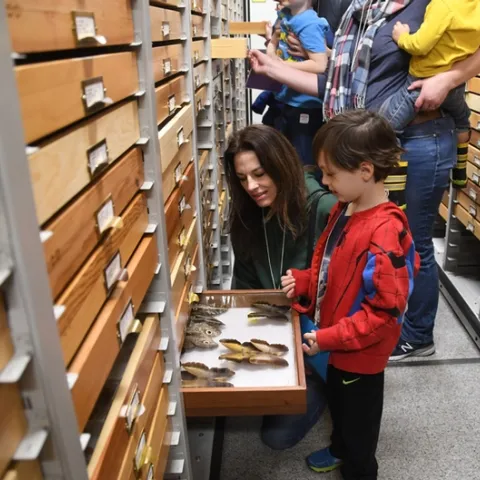
'Beekeeping and Management' Track on Feb. 10 at Vet Med

December 26, 2018
By Kathy Keatley Garvey
"Beekeeping and Management" will be part of the two-day UC Davis School of Veterinary Medicine's 2019 winter conference presented by its Center for Continuing Education in February 2019. The conference, covering several vet med topics or tracks, is set for Saturday and Sunday, Feb. 9-10.
View Article
Primary Image
A yellow-faced bumble bee, Bombus vosnesenskii, heading toward California poppy,Eschscholzia californica. (Photo by Kathy Keatley Garvey)
Bug Squad: Article

The Big 43: The California Native Plants, Plus One, Studied in UC Davis Research

December 25, 2018
By Kathy Keatley Garvey
When pollination ecologists from the Neal Williams lab at the University of California Davis--Ola Lundin, Kimiora Ward and Professor Williams--recently published their research in the Journal of Applied Ecology on "Identifying Native Plants for Coordinated Habitat Management of Arthropod Pollinators...
View Article
Primary Image
A honey bee heads toward a tower of jewels, Echium wildpretii. (Photo by Kathy Keatley Garvey)
Bug Squad: Article

Merry Buzzworthy Christmas!

December 25, 2018
By Kathy Keatley Garvey
Feeling the buzz on Christmas Day? Bugs on your Christmas tree? You may have overlooked another "present": eggs of the invasive spotted landernfly may be on your tree.
View Article
Primary Image
A cabbage white butterfly, Pieris rapae, nectaring on catmint in Vacaville, Calif. (Photo by Kathy Keatley Garvey)
Entomology & Nematology News: Article

Art Shapiro Sponsoring 'Beer for a Butterfly' Contest

December 24, 2018
By Kathy Keatley Garvey
Suds for a bug? A pitcher of beer for a butterfly? It's all in the interest of science. Beginning Jan. 1, Art Shapiro, distinguished professor of evolution and ecology at the University of California, Davis, is sponsoring his annual Beer for a Butterfly Contest.
View Article
Primary Image
A monarch chrysalis hangs like an ornament. (Photo by Kathy Keatley Garvey)
Bug Squad: Article

'Twas the Night Before Chrysalis...

December 24, 2018
By Kathy Keatley Garvey
'Twas the night before Christmas when all through the house Not a creature was stirring, not even a mouse --Clement Clarke Moore We never tire of hearing that immortal poem, but this year let's offer another version: 'Twas the night before chrysalis when all through the land Not a monarch was stirri...
View Article
Primary Image
Aurtz Avocado akd <br>Persea americana "Wurtz"
HOrT COCO-UC Master Gardener Program of Contra Costa: Article

Selecting and Planting a New Avocado Tree

December 24, 2018
Updated Version of 12/24/18 blog to correct errors Advice for the Home Gardener from the Help Desk UC Master Gardener Program of Contra Costa County Client's Request: I would like to plant an avocado tree that has the following specifications: I live in West County where it is cool and foggy and I w...
View Article
Primary Image
Codling moth larvae inside a fruit. [Credit: Jack Kelly Clark, UC IPM]

Reduce Garden Pests by Eliminating Overwintering Sites

December 23, 2018
By Anne E Schellman
Many gardeners are interested in knowing how winter temperatures affect garden pests. The hope is that following a cold wintersuch as this yearfewer pests will survive to plague the garden. Unfortunately, both insect pests and plant diseases have ways of surviving our harshest winters.
View Article