A Natural Solution for California's Herds: African Catfish Peptides

California's cattle producers and agricultural communities are all too familiar with the rising challenge of antibiotic resistance, making common bacterial infections harder to treat in livestock. But imagine a future where we could tackle these infections with a natural, powerful alternative. Our research points to just that: antimicrobial peptides (AMPs) found in African catfish.

We're really excited about these peptides because African catfish thrive in pathogen-rich freshwater, naturally producing these robust immune compounds in their skin mucus as a defense. This natural origin makes them highly appealing alternatives to synthetic drugs.

Predicted Safety and Potent Action

One of the most compelling aspects of these AMPs is their predicted safety for mammals. Our initial computer analyses suggest that various catfish AMPs are generally recognized as safe (GRAS). We predict they'll be absorbed in the human intestine without causing liver, brain, or heart toxicity. Furthermore, lab tests on a promising peptide, NACAP-II, confirmed it was non-hemolytic, meaning it didn't damage rabbit red blood cells—a strong indicator of its potential safety for mammalian cells.

Beyond safety, these peptides demonstrate effectiveness against problematic bacteria. One study revealed NACAP-II's strong activity against Extended-Spectrum Beta-Lactamase (ESBL)-producing Escherichia coli—a critical concern for both animal and human health due to its resistance to many common antibiotics. Another peptide, ACAP-IV, also showed antibacterial activity against E. coli and Staphylococcus aureus. We believe these AMPs work by directly disrupting bacterial cell membranes, a mechanism that makes it harder for bacteria to develop resistance compared to how they resist traditional antibiotics.

Primary Image
Spaghettilike stems of Japanese dodder growing on a tree. (Credit: Vince Guise)
Pests in the Urban Landscape: Article

Invasive Spotlight: Japanese Dodder

June 6, 2018
By Anne E Schellman
When people think of parasites, often what comes to mind are blood-sucking insects like bed bugs, head lice, and fleas or other bodily invaders on or in humans and other animals. But plants can have parasites too.
View Article
Article

Garden Beet Newsletter Summer 2018

June 6, 2018
Day trippers have a calendar full of garden-related excursions in the county including the iconic OC Fair. For staycationers, there are summer garden helpline quandaries to discuss with friends over your next herb-seasoned BBQ.
View Article
Primary Image
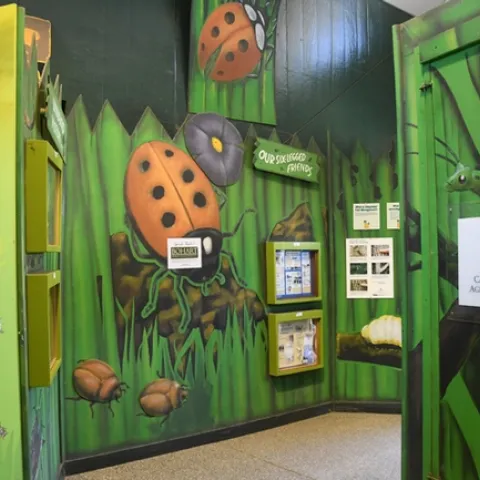
The Biological Orchard and Gardens (BOG) sign features floral and insect designs. It's located by the Mann Laboratory, UC Davis campus. (Photo by Kathy Keatley Garvey)
Bug Squad: Article

This BOG in the Heart of UC Davis Is a Treasure

June 6, 2018
By Kathy Keatley Garvey
"A bog is a wetland that accumulates peat, a deposit of dead plant materialoften mosses, and in a majority of cases, sphagnum moss."--Wikipedia. Not so with the Biological Orchard and Gardens (BOG) on the University of California, Davis, campus.
View Article
Notes in the Margins: Agronomy and Weed Science Musings: Article

Dust and glyphosate performance

June 6, 2018
It's getting hot and dry in the Central Valley and the movement of equipment in and out of fields/orchards/vineyards has the potential to stir up a significant amount of dust. Among its other impacts to agriculture (soil erosion, tissue damage, reduced photosynthesis, etc...
View Article
Notes in the Margins: Agronomy and Weed Science Musings: Article

Upcoming UAV Field Day in Merced County: June 2018

June 6, 2018
UC Cooperative Extension in Merced County and Bowles Farming are hosting the 2nd Annual Unmanned Aerial Vehicle (UAV), Drone, Field Day on Tuesday, June 26, 2018. The event will run from 8:30-11:30 am and will be held at Bowles Farming headquarters in Los Banos (11069 Hereford Road).
View Article
Primary Image
emitter performance from ITRC
Topics in Subtropics: Article

Irrigation Emitters - Do They Operate as Advertized?

June 6, 2018
By Ben A Faber
The Irrigation Training & Research Center (ITRC) of Cal Poly San Luis Obispo tested 28 different pressure-compensating models of microirrigation emitting devices from a total of nine manufacturers in order to compare independent laboratory testing with manufacturer specifications.
View Article
Lake County: Article

June 2018

June 6, 2018
4-H Council Elections- Nominees needed!!, 2018-2019 4-H Program Year Information, 2018 Lake County Fair Information, 4-H Banner Photo Contest, Big Valley Baking Project Update, 2018-2019 4-H Enrollment Instructions, Calendar of Events.
View Article
Primary Image
photos by Michelle Davis
Under the Solano Sun: Article

Lavender

June 6, 2018
Lavender has for as long as I can remember been one of my favorite scents and favorite plants. I enjoy brushing my hand through the blossoms when I walk by just to stir up the scent. Bees and butterflies are attracted as much as I am.
View Article
BLP's in OC: Article

Invasive species - what's the all the hoopla?

June 6, 2018
By Tamara J Majcherek
Original blog found at 'Pests in the Urban Landscape' Invasive Spotlight: Invasive Plants Published on: June 5, 2018 The flowers of French broom are attractive, but this invasive plant is not a good choice for landscapes.
View Article