A Natural Solution for California's Herds: African Catfish Peptides

California's cattle producers and agricultural communities are all too familiar with the rising challenge of antibiotic resistance, making common bacterial infections harder to treat in livestock. But imagine a future where we could tackle these infections with a natural, powerful alternative. Our research points to just that: antimicrobial peptides (AMPs) found in African catfish.

We're really excited about these peptides because African catfish thrive in pathogen-rich freshwater, naturally producing these robust immune compounds in their skin mucus as a defense. This natural origin makes them highly appealing alternatives to synthetic drugs.

Predicted Safety and Potent Action

One of the most compelling aspects of these AMPs is their predicted safety for mammals. Our initial computer analyses suggest that various catfish AMPs are generally recognized as safe (GRAS). We predict they'll be absorbed in the human intestine without causing liver, brain, or heart toxicity. Furthermore, lab tests on a promising peptide, NACAP-II, confirmed it was non-hemolytic, meaning it didn't damage rabbit red blood cells—a strong indicator of its potential safety for mammalian cells.

Beyond safety, these peptides demonstrate effectiveness against problematic bacteria. One study revealed NACAP-II's strong activity against Extended-Spectrum Beta-Lactamase (ESBL)-producing Escherichia coli—a critical concern for both animal and human health due to its resistance to many common antibiotics. Another peptide, ACAP-IV, also showed antibacterial activity against E. coli and Staphylococcus aureus. We believe these AMPs work by directly disrupting bacterial cell membranes, a mechanism that makes it harder for bacteria to develop resistance compared to how they resist traditional antibiotics.
Primary Image
Brazilian Spinach front with Okinawa Spinach behind.
The Backyard Gardener: Article

An Experiment with Brazilian and Okinawa Spinach

April 16, 2018
In the constant search for green leafy vegetables that will do well in a hot climate I stumbled upon Brazilian Spinach (Alternanthera sissoo) and Okinawa Spinach (Gynura crepioides), and although a tropical plants I decided to give them a try in our dry high desert climate.
View Article
Primary Image
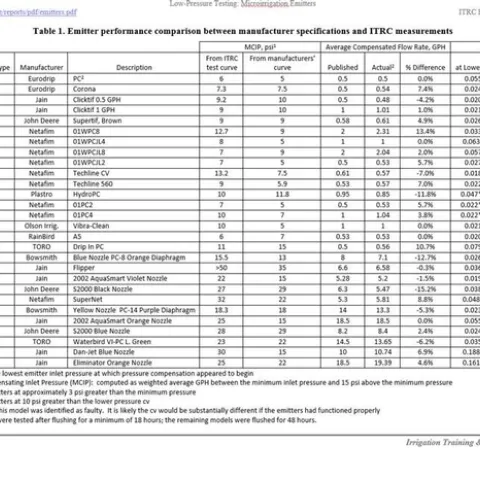
Table - Jim Correll
Salinas Valley Agriculture: Article

Denomination of Pfs: 17, a new race of downy mildew in spinach

April 16, 2018
A new race of the downy mildew pathogen (Peronospora farinosa f. sp. spinaciae = P. effusa) on spinach was first identified in 2014 in Yuma, Arizona, U.S. This race was able to overcome the resistance of important spinach varieties.
View Article
Primary Image
agapanthus
Under the Solano Sun: Article

Portrait of Blooms

April 16, 2018
It's not every day that horticulture is represented in an Official Presidential Portrait. In fact, the recently unveiled portrait of President Barack Obama may be the first ever.
View Article
Primary Image
Missing from photo are Sue Manglallan and Kali Trzesniewski.
ANR Adventures: Article

Tackling the post-conference 'to-do' list

April 16, 2018
By Wendy Powers
The conference was hectic. The INTJ in me came out when I went back to my room to grab my bag before checkout; a part of me just wanted to sit in the dark for a bit and process everything. But I didn't.
View Article
Primary Image
no chill peach
Topics in Subtropics: Article

What Winter? Not Cold Enough for Apricot, Too Warm for Valencia

April 16, 2018
By Ben A Faber
So, there are peach trees right now that are flower-less and leaf-less. Wisteria which should have flowered in February is bare. The Royal apricot next door has no flower. The Lombardy poplars and birch in Oxnard don't have leaves.
View Article
Primary Image
Japanese Maple (Acer spp) w/ "mushroom fungus"
HOrT COCO-UC Master Gardener Program of Contra Costa: Article

Help!! My Japanese Maple is Dying Back!!

April 16, 2018
Advice for the Home Gardener from the Help Desk of the UC Master Gardener Program of Contra Costa County Client's Request: My 20 year old Japanese maple (Acer spp) did not return this year. I need help identifying what the problem is and how to resolve it.
View Article
Strawberries and Caneberries: Article

Wittgenstein's Lion and Machine Learning

April 14, 2018
By Mark P Bolda
I wouldn't assume many of the readers of this space are enthusiasts of the game of Go, a game popular in Asia that has some pretty simple rules but is remarkably complex partly because of the large board and consequently a huge number of possible moves.
View Article