A Natural Solution for California's Herds: African Catfish Peptides

California's cattle producers and agricultural communities are all too familiar with the rising challenge of antibiotic resistance, making common bacterial infections harder to treat in livestock. But imagine a future where we could tackle these infections with a natural, powerful alternative. Our research points to just that: antimicrobial peptides (AMPs) found in African catfish.

We're really excited about these peptides because African catfish thrive in pathogen-rich freshwater, naturally producing these robust immune compounds in their skin mucus as a defense. This natural origin makes them highly appealing alternatives to synthetic drugs.

Predicted Safety and Potent Action

One of the most compelling aspects of these AMPs is their predicted safety for mammals. Our initial computer analyses suggest that various catfish AMPs are generally recognized as safe (GRAS). We predict they'll be absorbed in the human intestine without causing liver, brain, or heart toxicity. Furthermore, lab tests on a promising peptide, NACAP-II, confirmed it was non-hemolytic, meaning it didn't damage rabbit red blood cells—a strong indicator of its potential safety for mammalian cells.

Beyond safety, these peptides demonstrate effectiveness against problematic bacteria. One study revealed NACAP-II's strong activity against Extended-Spectrum Beta-Lactamase (ESBL)-producing Escherichia coli—a critical concern for both animal and human health due to its resistance to many common antibiotics. Another peptide, ACAP-IV, also showed antibacterial activity against E. coli and Staphylococcus aureus. We believe these AMPs work by directly disrupting bacterial cell membranes, a mechanism that makes it harder for bacteria to develop resistance compared to how they resist traditional antibiotics.
UC Master Gardeners of Solano County: Article

Spring 2018

April 12, 2018
Turkey Tail Fungus-An Intriguingly Beautiful Pernicious Invader Preservation Pointers-Green is Good in Asian Food UCCE Master Gardener Garden Tour Seeds or Starts? Inviting Butterflies to Your Garden Water Saving Gardening-Drought or No Drought Garden Journals Got Weeds?
View Article
Primary Image
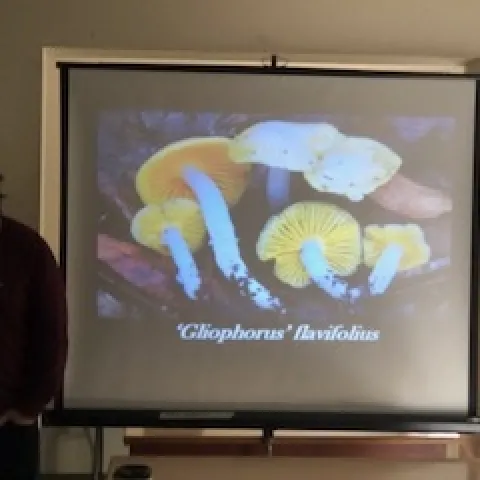
white rot fungi
Topics in Subtropics: Article

Oil and Fungal Evolution?

April 12, 2018
By Ben A Faber
Like most of us, trees don't want to be eaten alive. To prevent this gruesome fate, they developed extremely tough cell walls around 400 million years ago. For millions of years, nothing could break down lignin, the strongest substance in those cell walls.
View Article
Primary Image
a
UC Weed Science (weed control, management, ecology, and minutia): Article

Was That Weed?

April 12, 2018
By Ben A Faber
Occasionally plants show up in our office for identification and no one in the office knows what it is. So it's sent off to others who might know. This was the case of a perennial amaranth, also called goosefoot for some reason. This is Chenopodium californicum, also known as Blitum californicum.
View Article
ANR Adventures: Article

Statewide conference is coming to a close

April 11, 2018
By Wendy Powers
So far, so good in Ontario. I have some homework as a result of the PAC meeting that was held on Monday, but it was something I really needed to do anyway. My responsibilities' for the statewide conference 2018 are over.
View Article
Primary Image
A black-tailed bumble bee, Bombus melanopygus with a thick load of resin on her thorax. She had just visited a nototribic flower. (Photo by Kathy Keatley Garvey)
Bug Squad: Article

Word of the Day: Nototribic

April 11, 2018
By Kathy Keatley Garvey
The black-tailed bumble bee wasn't flying very well. You wouldn't, either, if you were trying to fly with a backpack on your back. Except this wasn't a backpack but sticky pollen.
View Article
Primary Image
F18 TSC logo 2
San Joaquin County 4-H: Article

Spring Paper Clover with Tractor Supply Company is here!

April 11, 2018
Twice a year the Tractor Supply Company sells Paper Clovers for $1 at all of their stores. The proceeds go to each store's local county 4-H program and is used to help youth go to 4-H camps and leadership conferences.
View Article
Primary Image
Artist-entomologist Diane Ullman with a tomato sculpture.
Entomology & Nematology News: Article

Diane Ullman to Present Seminar on Bridging Art and Science

April 11, 2018
By Kathy Keatley Garvey
Professor Diane Ullman of the UC Davis Department of Entomology and Nematology will speak on Winds of Change: Bridging Art and Science at a seminar hosted by the UC Davis Wildlife, Fish and Conservation Biology on Wednesday, April 25 in Meyer Hall. The seminar will take place from 3:45 to 5 p.m.
View Article
UCCE in the County of San Luis Obispo: Article

Avocado Seminar April 2018

April 11, 2018
April issue of Avocado Notes - Old and New Smart Agriculture. See attached flyer for meeting details. Please note the alternate meeting location for the San Luis Obispo meeting: Cal Poly Crops Unit, Building 17, Room 101/102; corner of Highland and Mt.
View Article
Primary Image
Stunted discolored plant. Excavation and partitioning of the crown gave no sign of disease.
Strawberries and Caneberries: Article

Root Asphyxiation in Strawberry

April 11, 2018
By Mark P Bolda
Interesting farm call here that at first piqued my attention as a possibly serious disease situation but in the end turned out to not be. See the photos below. Affected strawberry plants presented with discolored leaves and stunted growth typical of nutrient deficiency or viral infection.
View Article
Primary Image
photos by Betty Homer
Under the Solano Sun: Article

Mission Heirloom Garden Cafe

April 11, 2018
Some months ago, I was reading about the opening of a cafe/restaurant in San Francisco which served Paleo-oriented, non-GMO, and mostly grain-free cuisine, and that article referenced Mission Heirloom Garden Cafe in Berkeley, CA, as being the only other restaurant of its kind in the Bay Area.
View Article