A Natural Solution for California's Herds: African Catfish Peptides

California's cattle producers and agricultural communities are all too familiar with the rising challenge of antibiotic resistance, making common bacterial infections harder to treat in livestock. But imagine a future where we could tackle these infections with a natural, powerful alternative. Our research points to just that: antimicrobial peptides (AMPs) found in African catfish.

We're really excited about these peptides because African catfish thrive in pathogen-rich freshwater, naturally producing these robust immune compounds in their skin mucus as a defense. This natural origin makes them highly appealing alternatives to synthetic drugs.

Predicted Safety and Potent Action

One of the most compelling aspects of these AMPs is their predicted safety for mammals. Our initial computer analyses suggest that various catfish AMPs are generally recognized as safe (GRAS). We predict they'll be absorbed in the human intestine without causing liver, brain, or heart toxicity. Furthermore, lab tests on a promising peptide, NACAP-II, confirmed it was non-hemolytic, meaning it didn't damage rabbit red blood cells—a strong indicator of its potential safety for mammalian cells.

Beyond safety, these peptides demonstrate effectiveness against problematic bacteria. One study revealed NACAP-II's strong activity against Extended-Spectrum Beta-Lactamase (ESBL)-producing Escherichia coli—a critical concern for both animal and human health due to its resistance to many common antibiotics. Another peptide, ACAP-IV, also showed antibacterial activity against E. coli and Staphylococcus aureus. We believe these AMPs work by directly disrupting bacterial cell membranes, a mechanism that makes it harder for bacteria to develop resistance compared to how they resist traditional antibiotics.
Primary Image
Hopland REC oaks

Hopland REC calls for proposals

April 2, 2018
By Pamela S Kan-Rice
The Hopland Research and Extension Center is soliciting proposals for new and continuing research projects for the period July 1, 2018, through June 30, 2019. Hopland REC encompasses more than 5,300 acres of oak woodland, grasslands, and chaparral rangeland in southeastern Mendocino County.
View Article
Primary Image
Fremontia 1
UC Master Gardeners- Diggin' it in SLO: Article

Fremontia

April 2, 2018
California fremontia By Jackie Woods UCCE Master Gardener Planting areas: does well in dry, well-drained sandy soils as well as chalky, nutritionally poor soil. Size: can grow as tall as 20 feet and as wide as 20 feet under ideal conditions. Bloom season: late spring to summer.
View Article
Primary Image
Robovator directed by little computers that scan lettuce rows cuts weeds. Photo taken by Petr Kosina during 2016 specialty crops tour.
ANR Employee News: Article

ANR invited to California specialty crops tour Aug. 6–9

April 2, 2018
By Pamela S Kan-Rice
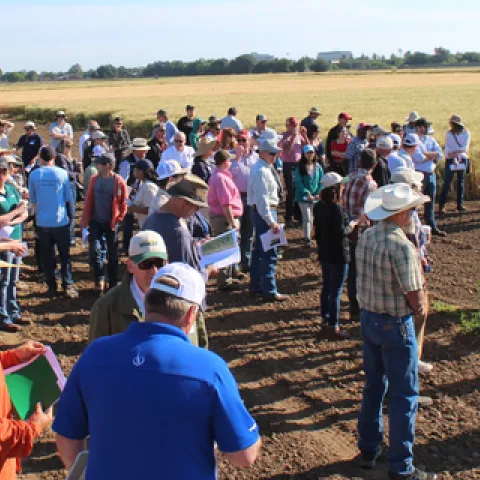
ANR members are invited to participate in the California Specialty Crops Council's 2018 educational tour of specialty crop production and pest management in California. The tour will start on Monday, Aug. 6 in Visalia and will conclude in Sacramento in late afternoon Thursday, Aug. 9.
View Article
Article

Spring 2018

April 2, 2018
Screen Free Week; Research Show Benefits of Reduced Screen Time; Older Children are Also at Risk from Excessive Screen Time; Teachers, Promote Screen Free Week; Program Opportunities...
View Article
Colusa County: Article

April 2018

April 2, 2018
Book of the Month - 100 Flowers and How They Got Their Names Ornamental Plant of the Month - Grow this "Orchid" Outdoors Edible Plant of the Month - Landscaping with Edibles Recipe of the Month - Herb Stuffed Leg of Lamb with Mint Gremolata Events Plant Clinic, April 7 Monarch Butterflies & Milkweed...
View Article
Kern County: Article

Give Big Kern Fundraiser

April 2, 2018
Give to 4-H through Give Big Kern Day! To contribute, visit the Kern County 4-H link See attached for information...
View Article
Primary Image
Bulbine and CA poppy
The Bee Gardener: Article

Color Selection in the Bee Garden: A Few Examples

April 2, 2018
My last post covered the use of color in garden design from the perspective of what bees see. While aesthetics are important in any garden, the needs of bees come first at the Haven and other bee gardens.
View Article