A Natural Solution for California's Herds: African Catfish Peptides

California's cattle producers and agricultural communities are all too familiar with the rising challenge of antibiotic resistance, making common bacterial infections harder to treat in livestock. But imagine a future where we could tackle these infections with a natural, powerful alternative. Our research points to just that: antimicrobial peptides (AMPs) found in African catfish.

We're really excited about these peptides because African catfish thrive in pathogen-rich freshwater, naturally producing these robust immune compounds in their skin mucus as a defense. This natural origin makes them highly appealing alternatives to synthetic drugs.

Predicted Safety and Potent Action

One of the most compelling aspects of these AMPs is their predicted safety for mammals. Our initial computer analyses suggest that various catfish AMPs are generally recognized as safe (GRAS). We predict they'll be absorbed in the human intestine without causing liver, brain, or heart toxicity. Furthermore, lab tests on a promising peptide, NACAP-II, confirmed it was non-hemolytic, meaning it didn't damage rabbit red blood cells—a strong indicator of its potential safety for mammalian cells.

Beyond safety, these peptides demonstrate effectiveness against problematic bacteria. One study revealed NACAP-II's strong activity against Extended-Spectrum Beta-Lactamase (ESBL)-producing Escherichia coli—a critical concern for both animal and human health due to its resistance to many common antibiotics. Another peptide, ACAP-IV, also showed antibacterial activity against E. coli and Staphylococcus aureus. We believe these AMPs work by directly disrupting bacterial cell membranes, a mechanism that makes it harder for bacteria to develop resistance compared to how they resist traditional antibiotics.
UCCE in the County of San Luis Obispo: Article

2018 Sudden Oak Death Meeting - SOD Blitz

March 27, 2018
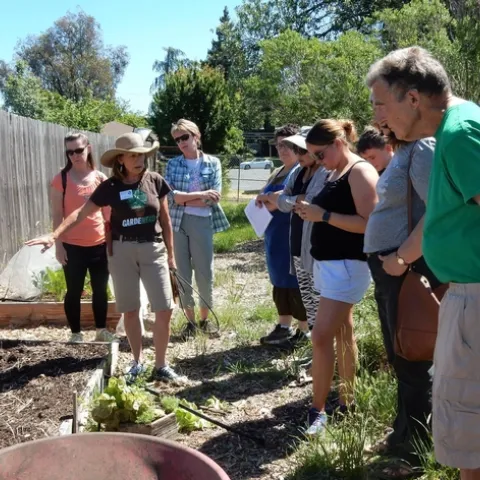
The SOD Blitz is one of the best ways to know when the pathogen arrives in SLO County. The sooner we know, the sooner we can develop effective management strategies to prevent oak trees from dying and altering the vegetation composition and susceptibility to wildfire.
View Article
Primary Image
The alfalfa looper moth, Autographa californica, nectaring on mustard blossoms in Vacaville, Calif. (Photo by Kathy Keatley Garvey)
Bug Squad: Article

In the Loop--on the Mustard

March 27, 2018
By Kathy Keatley Garvey
Ever seen this mottled brownish/blackish/grayish moth around lately? The alfalfa looper moth, Autographa californica?
View Article
Primary Image
Harlequin bug. (Photo: Jack Kelly Clark)
Pests in the Urban Landscape: Article

Easter Egg Hunt Answers

March 27, 2018
By Anne E Schellman
Yesterday we posted an Easter egg hunt challenge, and as promised, here are the adult insects and spiders with their matching eggs or egg cases pictured.
View Article
Primary Image
Don Hankins (right) sampling vegetation for a fire and biodiversity project in the Kaanju Ngaachi Indigenous Protected Area on the Cape York Peninsula, Queensland, Australia. Photo by Niki Michail.
The Confluence: Article

California Indigenous perspectives on water and fire management

March 26, 2018
By Faith Kearns Don Hankins is a professor of geography and planning at Chico State and a Miwko? (Plains Miwok) traditional cultural practitioner. He has spent his academic career working on water and fire issues in California, with a focus on applied traditional Indigenous stewardship.
View Article
Primary Image
A male Valley carpenter bee, Xylocopa varipuncta, nectars on a a mustard blossom in Vacaville, Calif. on Sunday, March 25. (Photo by Kathy Keatley Garvey)
Bug Squad: Article

The Boys Are Back in Town

March 26, 2018
By Kathy Keatley Garvey
The boys are back in town! Well, at least one is. We don't know where the girls are. Neither, apparently, does he. A male Valley carpenter bee, Xylocopa varipuncta, aka "the teddy bear bee," buzzed into our mustard patch Sunday and nectared on the blossoms for about 10 minutes.
View Article
Napa Master Gardener Column: Article

Growing Flowers with Your Vegetables

March 26, 2018
When I look back at my vegetable garden layouts from years ago, I see that everything was planted in neat and segregated rows. Every vegetable had its own area and would not dare encroach on its neighbors. I probably did this as I wanted my vegetable garden to be visually pleasing.
View Article