A Natural Solution for California's Herds: African Catfish Peptides

California's cattle producers and agricultural communities are all too familiar with the rising challenge of antibiotic resistance, making common bacterial infections harder to treat in livestock. But imagine a future where we could tackle these infections with a natural, powerful alternative. Our research points to just that: antimicrobial peptides (AMPs) found in African catfish.

We're really excited about these peptides because African catfish thrive in pathogen-rich freshwater, naturally producing these robust immune compounds in their skin mucus as a defense. This natural origin makes them highly appealing alternatives to synthetic drugs.

Predicted Safety and Potent Action

One of the most compelling aspects of these AMPs is their predicted safety for mammals. Our initial computer analyses suggest that various catfish AMPs are generally recognized as safe (GRAS). We predict they'll be absorbed in the human intestine without causing liver, brain, or heart toxicity. Furthermore, lab tests on a promising peptide, NACAP-II, confirmed it was non-hemolytic, meaning it didn't damage rabbit red blood cells—a strong indicator of its potential safety for mammalian cells.

Beyond safety, these peptides demonstrate effectiveness against problematic bacteria. One study revealed NACAP-II's strong activity against Extended-Spectrum Beta-Lactamase (ESBL)-producing Escherichia coli—a critical concern for both animal and human health due to its resistance to many common antibiotics. Another peptide, ACAP-IV, also showed antibacterial activity against E. coli and Staphylococcus aureus. We believe these AMPs work by directly disrupting bacterial cell membranes, a mechanism that makes it harder for bacteria to develop resistance compared to how they resist traditional antibiotics.
Primary Image
rain catch-brenda altman 2018 (2)
Under the Solano Sun: Article

Saving Water in Vallejo is...

March 21, 2018
I recently moved to Vallejo from San Francisco. I had installed a rainwater recovery system back in San Francisco which captured over 1,000 gallons of water for use in my garden. I wanted to duplicate and improve on a new water storage system here.
View Article
Primary Image
It's easier for consumers to be confident they are buying local food when it's purchased fresh.

'Local' food labels deceive customers

March 20, 2018
By Jeannette Warnert
A popular foodie trend is to "buy local," but use of the term is rarely enforced, reported Robert Anglen in the Arizona Republic. The story was published on USAToday.com. "The word 'local' is chic; it sells things," said Cindy Fake, UC Cooperative Extension advisor in Placer and Nevada counties.
View Article
Primary Image
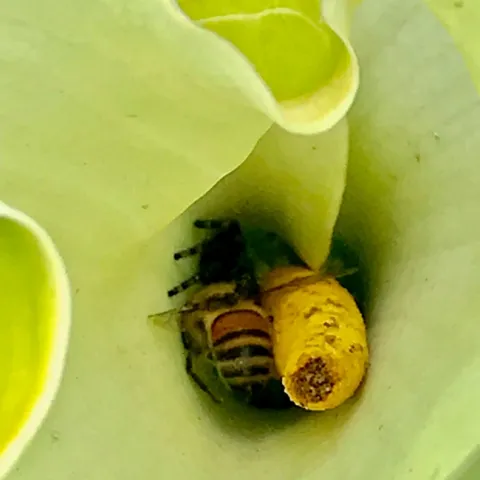
A black-tailed bumble bee, Bombus melanopygus, heads for a nectarine tree in Vacaville, Calif. on March 18. (Photo by Kathy Keatley Garvey)
Bug Squad: Article

Bumbling Into Spring

March 20, 2018
By Kathy Keatley Garvey
Might As Well Be Spring "I'm as restless as a willow in a windstormI'm as jumpy as puppet on a stringI'd say that I had spring feverBut I know it isn't spring."--Frank Sinatra Wait, it is spring! Today is the day we've all be waiting for--the first day of spring.
View Article
ANR Contracts & Grants Updates: Article

ANR ADVISE$ - Dr. Jeremy James

March 20, 2018
By Kathleen P Nolan
Dear Colleagues, Starting this month, Contracts and Grants will begin featuring a blog series, ANR ADVISE$, aimed at sharing effective grant-writing practices and perspectives across the organization. This first blog posting highlights advice from Dr. Jeremy James. Dr.
View Article
Primary Image
efnep cook
Nutrition News in the Butte Cluster: Article

Farmworker Institute of Education & Leadership Development Partners with EFNEP to Provide Participants GED Credit

March 20, 2018
The Butte Cluster Nutrition Education programs have significantly contributed to University of California Agriculture and Natural Resource's Healthy Families and Communities Strategic Initiative through the coordination and implementation of the UC CalFresh Nutrition Education Program (NEP) and the...
View Article