A Natural Solution for California's Herds: African Catfish Peptides

California's cattle producers and agricultural communities are all too familiar with the rising challenge of antibiotic resistance, making common bacterial infections harder to treat in livestock. But imagine a future where we could tackle these infections with a natural, powerful alternative. Our research points to just that: antimicrobial peptides (AMPs) found in African catfish.

We're really excited about these peptides because African catfish thrive in pathogen-rich freshwater, naturally producing these robust immune compounds in their skin mucus as a defense. This natural origin makes them highly appealing alternatives to synthetic drugs.

Predicted Safety and Potent Action

One of the most compelling aspects of these AMPs is their predicted safety for mammals. Our initial computer analyses suggest that various catfish AMPs are generally recognized as safe (GRAS). We predict they'll be absorbed in the human intestine without causing liver, brain, or heart toxicity. Furthermore, lab tests on a promising peptide, NACAP-II, confirmed it was non-hemolytic, meaning it didn't damage rabbit red blood cells—a strong indicator of its potential safety for mammalian cells.

Beyond safety, these peptides demonstrate effectiveness against problematic bacteria. One study revealed NACAP-II's strong activity against Extended-Spectrum Beta-Lactamase (ESBL)-producing Escherichia coli—a critical concern for both animal and human health due to its resistance to many common antibiotics. Another peptide, ACAP-IV, also showed antibacterial activity against E. coli and Staphylococcus aureus. We believe these AMPs work by directly disrupting bacterial cell membranes, a mechanism that makes it harder for bacteria to develop resistance compared to how they resist traditional antibiotics.
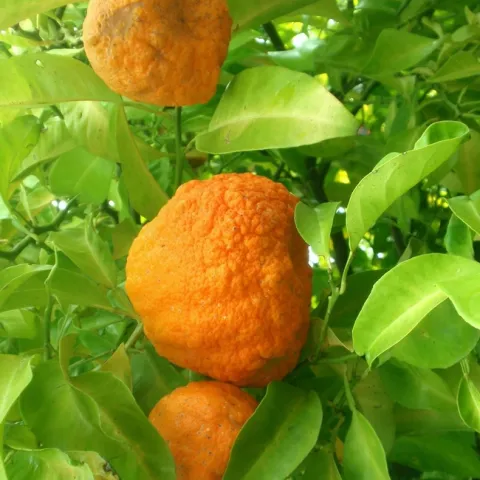
Happy National Squash Bee Day!

October 26, 2017
By Kathy Keatley Garvey
In case you missed it, today was National Pumpkin Day. But it ought to be National Squash Bee Day, because the squash bee (my favorite species is Peponapis pruinosa) is an important pollinator of squash and pumpkins. A little bit about the squash bees: Squash bees are specialists; not generalists.
View Article
UC Weed Science (weed control, management, ecology, and minutia): Article

Zeus herbicide update for T&V (fall 2017)

October 25, 2017
By Brad Hanson
I received the information below regarding Zeus Herbicide (sulfentrazone) that is relevant to the California tree and vine market. The product was registered (supplemental label) for T&V in 2014.
View Article
Primary Image
Photo 2 Reg Barrett- UC Berkeley, Department of Environmental Science, Policy & Management
Topics in Subtropics: Article

Wild Pig Management in Citrus

October 25, 2017
By Niamh M Quinn, Sonia I Rios
Wild pigs currently exist in 56 of California's 58 counties and can be found in a variety of habitats ranging from woodland, chaparral, meadow, grasslands and in agriculture cropping systems.
View Article

Jackson Audley: A Case Study with the Walnut Twig Beetle

October 25, 2017
By Kathy Keatley Garvey
So tiny and so destructive. It's about the size of a grain of rice but it's a killer. That's the walnut twig beetle, Pityophthorus juglandis, which in association with a newly described fungus, Geosmithia morbida, causes thousand cankers disease, wreaking havoc on native black walnut trees.
View Article

Bodil Cass and 'The Curious Case of Katydids in California Citrus'

October 24, 2017
By Kathy Keatley Garvey
What an interesting and innovative title: "The Ecoinformatics and the Curious Case of Katydids in California Citrus." That's what postdoctoral scholar Bodil Cass of the Jay Rosenheim lab, University of California, Davis, will discuss at her seminar from 4:10 to 5 p.m., Wednesday, Oct.
View Article

Orange You Glad It's Almost Halloween?

October 23, 2017
By Kathy Keatley Garvey
You can't get any more Halloween than a bold (daring) jumping spider with orange spots! This common North American spider was hanging out yesterday on our showy milkweed, Asclepias speciosa, trying to look like a spectator instead of a predator.
View Article
Primary Image
irrigATING CITRUS
Topics in Subtropics: Article

Precision Ag? Avocado? Citrus? Cherimoya?

October 23, 2017
By Ben A Faber
My dad always said that if you can learn one good thing from a meeting, it was a good meeting. Here's a webinar that might offer something good to for tree growers. Listen in and make up your mind. Monday, October 30th, 2017 9:00 AM 11:00 AM PDT (Time subject to change) Register Here Dr.
View Article