A Natural Solution for California's Herds: African Catfish Peptides

California's cattle producers and agricultural communities are all too familiar with the rising challenge of antibiotic resistance, making common bacterial infections harder to treat in livestock. But imagine a future where we could tackle these infections with a natural, powerful alternative. Our research points to just that: antimicrobial peptides (AMPs) found in African catfish.

We're really excited about these peptides because African catfish thrive in pathogen-rich freshwater, naturally producing these robust immune compounds in their skin mucus as a defense. This natural origin makes them highly appealing alternatives to synthetic drugs.

Predicted Safety and Potent Action

One of the most compelling aspects of these AMPs is their predicted safety for mammals. Our initial computer analyses suggest that various catfish AMPs are generally recognized as safe (GRAS). We predict they'll be absorbed in the human intestine without causing liver, brain, or heart toxicity. Furthermore, lab tests on a promising peptide, NACAP-II, confirmed it was non-hemolytic, meaning it didn't damage rabbit red blood cells—a strong indicator of its potential safety for mammalian cells.

Beyond safety, these peptides demonstrate effectiveness against problematic bacteria. One study revealed NACAP-II's strong activity against Extended-Spectrum Beta-Lactamase (ESBL)-producing Escherichia coli—a critical concern for both animal and human health due to its resistance to many common antibiotics. Another peptide, ACAP-IV, also showed antibacterial activity against E. coli and Staphylococcus aureus. We believe these AMPs work by directly disrupting bacterial cell membranes, a mechanism that makes it harder for bacteria to develop resistance compared to how they resist traditional antibiotics.

Primary Image
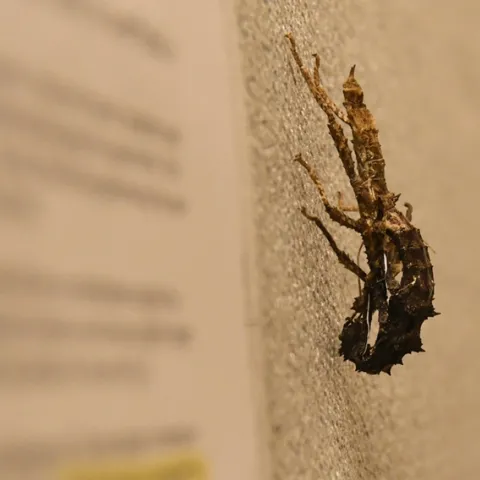
5 instars
Topics in Subtropics: Article

Green Stink Bugs in Macadamias

October 9, 2017
By Sonia I Rios
The green stink bug is the dominant species found in fruit and nut trees; the others are found primarily in vegetables. Stink bug infestations originate when adults fly in from weedy areas.
View Article

Insect Wedding Photography: When Three's a Crowd

October 6, 2017
By Kathy Keatley Garvey
So there they were, the bride and groom, culminating their vows. We spotted them in Vacaville, Calif., clinging to a passion flower vine (Passiflora), their host plant--just the two of them, the female Gulf Fritillary (Agraulis vanillae) and the male. Two's company? Not for long.
View Article
Primary Image
Blueberry fruit
Topics in Subtropics: Article

Organic Blueberries Make More Money

October 6, 2017
By Ben A Faber
Synopsis of: The Organic Premium for California Blueberries by Hoy Carmen, professor emeritus in the Agricultural and Resource Economics Dept., UC Davis Commercial-scale production of blueberries in California is a relatively recent development.
View Article

UC Davis Arboretum Plant Sale: Think Pollinators!

October 5, 2017
By Kathy Keatley Garvey
Think bees. Think butterflies. Think plants that will attract them. The UC Davis Arboretum and Public Garden is hosting its first in a series of fall plant sales on Saturday, Oct. 7 at the Arboretum Teaching Nursery on Garrod Drive, UC Davis campus.
View Article
Primary Image
Figures shows gradient blue to red cells indicating high to low performance, respectively.
SJC and Delta Field Crops: Article

Small Grains Variety Trial Results Available

October 5, 2017
By Michelle M Leinfelder-Miles
Fall has arrived, and for many crops, this means that it is harvest season. For small grains, however, the season starts anew. The UC Davis small grains variety evaluations are conducted across the state, including a site in the Delta.
View Article