A Natural Solution for California's Herds: African Catfish Peptides

California's cattle producers and agricultural communities are all too familiar with the rising challenge of antibiotic resistance, making common bacterial infections harder to treat in livestock. But imagine a future where we could tackle these infections with a natural, powerful alternative. Our research points to just that: antimicrobial peptides (AMPs) found in African catfish.

We're really excited about these peptides because African catfish thrive in pathogen-rich freshwater, naturally producing these robust immune compounds in their skin mucus as a defense. This natural origin makes them highly appealing alternatives to synthetic drugs.

Predicted Safety and Potent Action

One of the most compelling aspects of these AMPs is their predicted safety for mammals. Our initial computer analyses suggest that various catfish AMPs are generally recognized as safe (GRAS). We predict they'll be absorbed in the human intestine without causing liver, brain, or heart toxicity. Furthermore, lab tests on a promising peptide, NACAP-II, confirmed it was non-hemolytic, meaning it didn't damage rabbit red blood cells—a strong indicator of its potential safety for mammalian cells.

Beyond safety, these peptides demonstrate effectiveness against problematic bacteria. One study revealed NACAP-II's strong activity against Extended-Spectrum Beta-Lactamase (ESBL)-producing Escherichia coli—a critical concern for both animal and human health due to its resistance to many common antibiotics. Another peptide, ACAP-IV, also showed antibacterial activity against E. coli and Staphylococcus aureus. We believe these AMPs work by directly disrupting bacterial cell membranes, a mechanism that makes it harder for bacteria to develop resistance compared to how they resist traditional antibiotics.
Primary Image
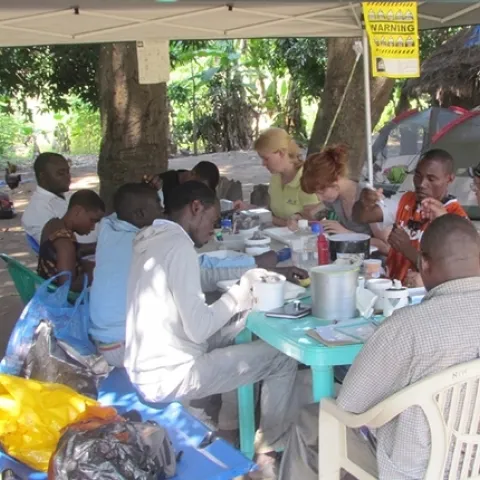
Medical entomologist Laura Norris (right side of table, second from top) works with a night's catch of mosquitoes in Mali.
Bug Squad: Article

Just a Matter of Time

January 12, 2015
By Kathy Keatley Garvey
It was just a matter of time. It was just a matter of time before the so-called "super mosquito" surfaced, resulting in the failure of insecticide-treated nets to provide meaningful control from malaria in some localities in Africa.
View Article
UC Weed Science (weed control, management, ecology, and minutia): Article

Herbicide Symptomology Photo Repository Launched! (UC IPM)

January 12, 2015
By Brad Hanson
UCIPM Press Release: New UC IPM photo repository shows plant damage from herbicides January 9, 2015 Davis, California Identifying nontarget crop and ornamental plant damage from herbicides has become much easier, with the launch of a new online photo repository by the Statewide IPM Program, Univers...
View Article
Primary Image
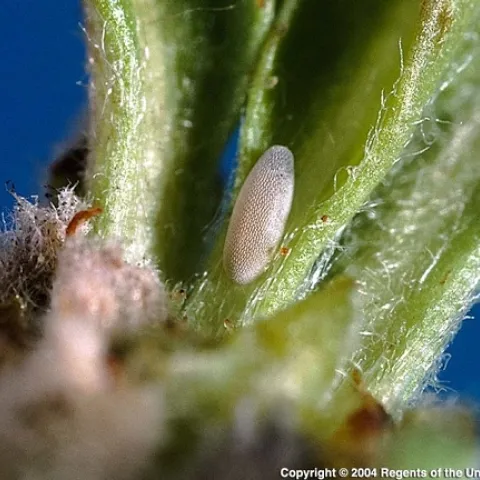
syrphid eggs
Topics in Subtropics: Article

Bad year for honeybees, good year for syrphid flies

January 12, 2015
By Ben A Faber
Gordon Frankie a bee biologist at UC Berkeley and I are doing a study to ultimately identify what plants could grown in avocado orchards to attract more honeybees, as well as other pollinators and potential biocontrol agents.
View Article
Primary Image
Entomologist Bruce Hammock in his office in Briggs Hall. (Photo by Kathy Keatley Garvey)
Bug Squad: Article

Entomologist Helping Humankind

January 9, 2015
By Kathy Keatley Garvey
He is an EHH: Entomologist Helping Humankind. Bruce Hammock a distinguished entomology professor at the University of California, Davis, began his career trying to figure out how to control pests.
View Article
Primary Image
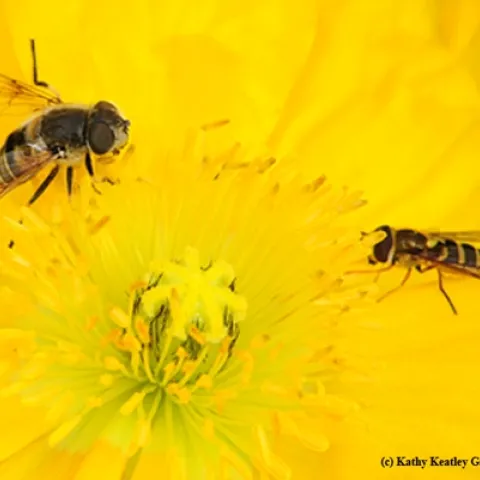
A drone fly, Eristalis tenax (left), and a syrphid fly. They're from the same family, Syrphidae and are often mistaken for honey bees. (Photo by Kathy Keatley Garvey)
Bug Squad: Article

Umm, Where's the Bee?

January 8, 2015
By Kathy Keatley Garvey
If there's one thing that entomologists hate, it's journalists who mistake a fly for a bee.
View Article
Primary Image
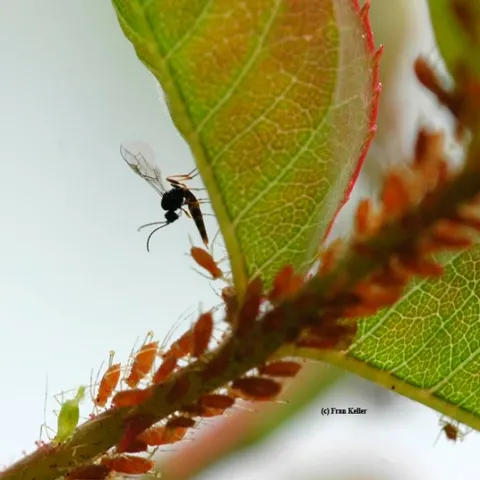
A wasp (family Aphidiinae) parasitizing an aphid. (Photo by Fran Keller, who received her doctorate in entomology this year from UC Davis.)
Bug Squad: Article

What's It Like to Be Parasitized?

January 7, 2015
By Kathy Keatley Garvey
What's it like to be parasitized? Say you're a caterpillar or an aphid and a wasp comes along and lays her eggs inside you. Her eggs will hatch and then her offspring will eat their way out. You, the host, are no more. Zero. Zip. Zilch.
View Article
Primary Image
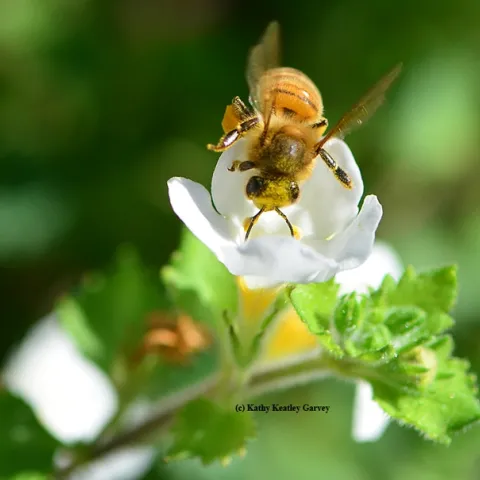
A pollen-covered honey bee heading toward Bacopa. (Photo by Kathy Keatley Garvey)
Bug Squad: Article

C'mon In, the Pollen's Fine!

January 6, 2015
By Kathy Keatley Garvey
It's a cold spell. As temperatures dip throughout much of California, and honey bees snuggle inside their hives, it's "bees-ness" in southern California this week.
View Article
UC Weed Science (weed control, management, ecology, and minutia): Article

Germinating First: A Summary on Root Growth and Competition

January 6, 2015
By Chris J McDonald
It is weed season! There is a principle in weed management that weeds are often better competitors for resources. Competition begins as soon as seeds break dormancy. The seeds that germinate first are often the ones that obtain the most resources.
View Article
Primary Image
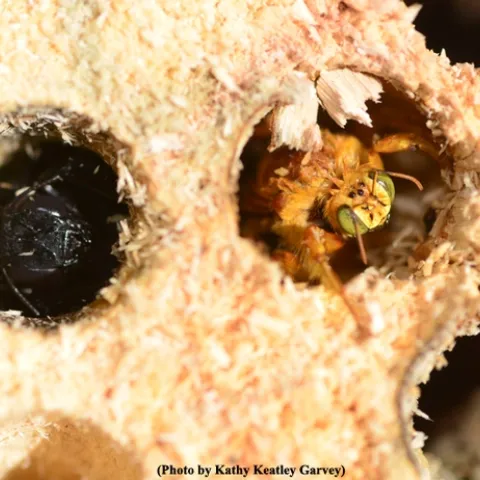
A male Valley carpenter bee (right) peers from a hole. A female (all females are solid black) occupies the hole next to him.
Bug Squad: Article

The 'Gold' That an Apple Tree Yielded

January 5, 2015
By Kathy Keatley Garvey
Thar's gold in them thar apple trees. Gold? When a rotten apple tree was cut down last week on private property in Davis, scores of eyes peered from the drilled holes.
View Article