A Natural Solution for California's Herds: African Catfish Peptides

California's cattle producers and agricultural communities are all too familiar with the rising challenge of antibiotic resistance, making common bacterial infections harder to treat in livestock. But imagine a future where we could tackle these infections with a natural, powerful alternative. Our research points to just that: antimicrobial peptides (AMPs) found in African catfish.

We're really excited about these peptides because African catfish thrive in pathogen-rich freshwater, naturally producing these robust immune compounds in their skin mucus as a defense. This natural origin makes them highly appealing alternatives to synthetic drugs.

Predicted Safety and Potent Action

One of the most compelling aspects of these AMPs is their predicted safety for mammals. Our initial computer analyses suggest that various catfish AMPs are generally recognized as safe (GRAS). We predict they'll be absorbed in the human intestine without causing liver, brain, or heart toxicity. Furthermore, lab tests on a promising peptide, NACAP-II, confirmed it was non-hemolytic, meaning it didn't damage rabbit red blood cells—a strong indicator of its potential safety for mammalian cells.

Beyond safety, these peptides demonstrate effectiveness against problematic bacteria. One study revealed NACAP-II's strong activity against Extended-Spectrum Beta-Lactamase (ESBL)-producing Escherichia coli—a critical concern for both animal and human health due to its resistance to many common antibiotics. Another peptide, ACAP-IV, also showed antibacterial activity against E. coli and Staphylococcus aureus. We believe these AMPs work by directly disrupting bacterial cell membranes, a mechanism that makes it harder for bacteria to develop resistance compared to how they resist traditional antibiotics.

Primary Image
image 26137
IGIS: Article

WorldView-3 launches August 13 2014

November 18, 2014
By Maggi Kelly
Worldview-2 has been a very useful sensor; we've used it for some of our wetlands work. On August 13th of this year DigitalGlobe launched WorldView-3 spacecraft. It will provide a 31 cm panchromatic resolution, 1.24 m multispectral resolution, with an average revisit time of
View Article
Primary Image
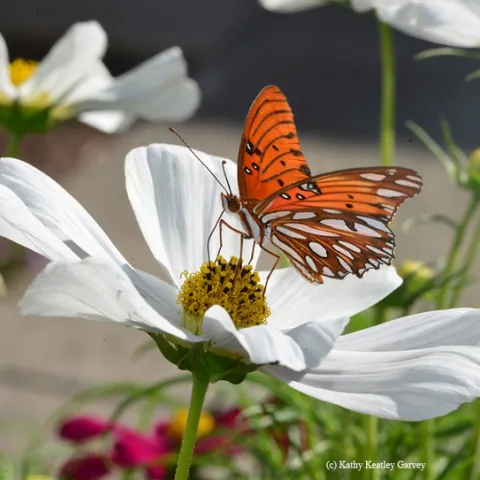
Gulf Fritillary butterfly on Cosmos. One myth is that if you rub the scales off their wings (who would want to?), they can't fly. (Photo by Kathy Keatley Garvey)
Bug Squad: Article

Bohart Museum Open House: Insect Myths!

November 18, 2014
By Kathy Keatley Garvey
How many insect myths do you know? Worker bees are males, right? Butterflies and moths can't fly if you rub the scales off their wings, right? Earwigs crawl into your ears and then into your brain, right? Wrong. They're all widely known but falsely held beliefs.
View Article
Primary Image
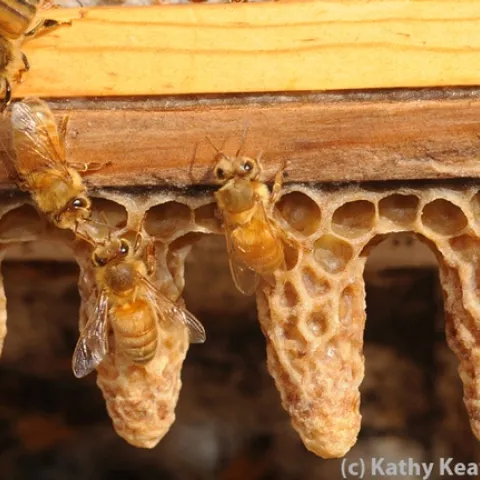
Worker bes cleaning out queen cells. Honey bee presentations will be part of the ICE program. (Photo by Kathy Keatley Garvey)
Bug Squad: Article

ICE Is Red-Hot!

November 17, 2014
By Kathy Keatley Garvey
You've heard folks say "cold as ice," right? Well, ICE is red hot. The International Congress of Entomology (ICE) is gearing up for its 2016 conference, "Entomology without Borders," to take place Sept. 25-30, 2016 in Orlando, Fla.
View Article
Primary Image
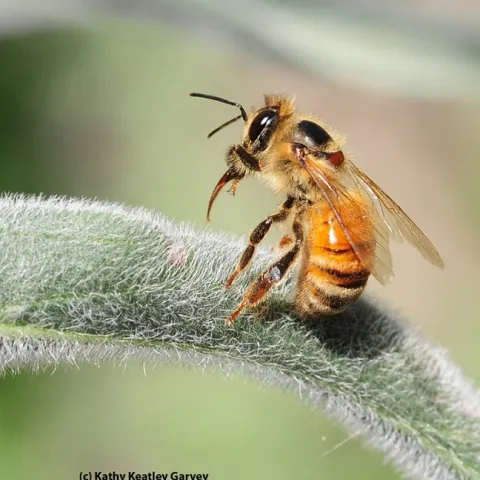
This honey may or may not have been poisoned by neonics, but it's definitely "under the weather." (Photo by Kathy Keatley Garvey)
Bug Squad: Article

Neonics: Should They Be Banned?

November 14, 2014
By Kathy Keatley Garvey
Neonicotinoids. It's a 14-letter word but many people consider it a four-letter word. Wikipedia defines it as a "a class of neuro-active insecticides chemically similar to nicotine...In the late 2000s some neonicotinoids came under increasing scrutiny over their environmental impacts.
View Article
Primary Image
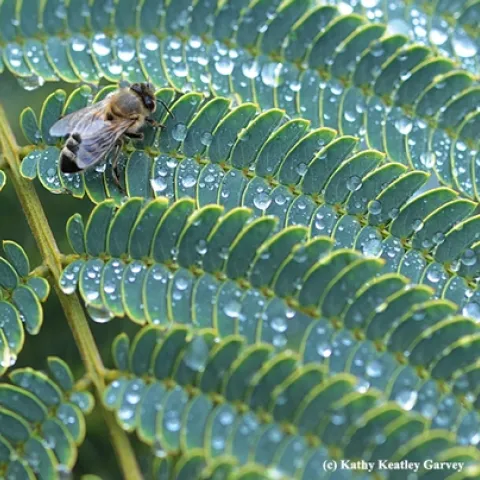
A honey bee encounters rain drops Nov. 13 in the midst of the California drought. (Photo by Kathy Keatley Garvey)
Bug Squad: Article

It's All The Buzz

November 13, 2014
By Kathy Keatley Garvey
Honey bees will be "all the buzz" next week when the California State Beekeepers' Association (CSBA) meets Nov. 18-20 in Valencia, Calif., and the Entomological Society of America (ESA) meets Nov. 16-19 in Portland, Ore.
View Article
IGIS: Article

Web mapping of high res imagery helps conservation

November 12, 2014
By Maggi Kelly
One of our collaborators on the Sonoma Vegetation Mapping Project has sent work on how web mapping and high resolution imagery has helped them do their job well. These are specific comments, but might be more generally applicable to other mapping and conservation arenas.
View Article
Primary Image
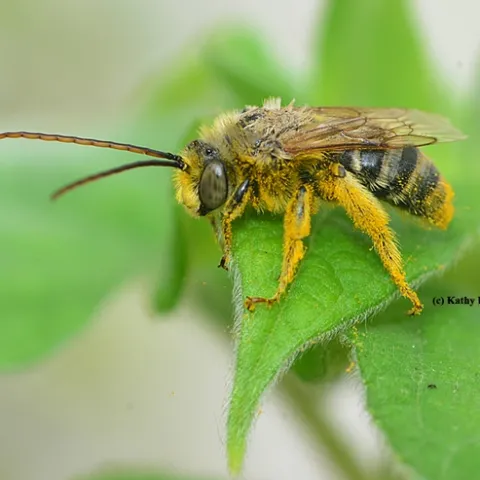
A long-horned male bee, Melissodes robustior, on the leaf of a Mexican sunflower, Tithonia. (Photo by Kathy Keatley Garvey
Bug Squad: Article

Where the Bees Are

November 12, 2014
By Kathy Keatley Garvey
Take a photo of a bee--any bee--and then look it up in the newly published California Bees and Blooms: A Guide for Gardeners and Naturalists (Heyday).
View Article
Colusa County: Article

UCCE Master Gardener of Colusa County Workshop ideas.

November 12, 2014
The UCCE Master Gardeners of Colusa County are looking to serve you better. We would like to know what workshops you would like to attend. Please fill out the survey. All participants will be entered into a drawing for a set of Landscape Pest ID cards. The deadline is Friday December 12.
View Article
Topics in Subtropics: Article

A Great Man has passed on.

November 11, 2014
By Ben A Faber
University of CaliforniaRiverside (UCR) Distinguished Professor of Soil Physics and Soil Physicist Emeritus John Letey, Jr. passed away on 14 September. He was 81 years old. He received his B.S. degree at Colorado State University and Ph.D. degree at the University of Illinois.
View Article