A Natural Solution for California's Herds: African Catfish Peptides

California's cattle producers and agricultural communities are all too familiar with the rising challenge of antibiotic resistance, making common bacterial infections harder to treat in livestock. But imagine a future where we could tackle these infections with a natural, powerful alternative. Our research points to just that: antimicrobial peptides (AMPs) found in African catfish.

We're really excited about these peptides because African catfish thrive in pathogen-rich freshwater, naturally producing these robust immune compounds in their skin mucus as a defense. This natural origin makes them highly appealing alternatives to synthetic drugs.

Predicted Safety and Potent Action

One of the most compelling aspects of these AMPs is their predicted safety for mammals. Our initial computer analyses suggest that various catfish AMPs are generally recognized as safe (GRAS). We predict they'll be absorbed in the human intestine without causing liver, brain, or heart toxicity. Furthermore, lab tests on a promising peptide, NACAP-II, confirmed it was non-hemolytic, meaning it didn't damage rabbit red blood cells—a strong indicator of its potential safety for mammalian cells.

Beyond safety, these peptides demonstrate effectiveness against problematic bacteria. One study revealed NACAP-II's strong activity against Extended-Spectrum Beta-Lactamase (ESBL)-producing Escherichia coli—a critical concern for both animal and human health due to its resistance to many common antibiotics. Another peptide, ACAP-IV, also showed antibacterial activity against E. coli and Staphylococcus aureus. We believe these AMPs work by directly disrupting bacterial cell membranes, a mechanism that makes it harder for bacteria to develop resistance compared to how they resist traditional antibiotics.
Colusa County: Article

Harvest Day

July 17, 2014
Harvest Day Saturday July 19, 9am-12:00 7681 Sycamore Slough Rd, Colusa Lot of peaches and nectarines to pick - bring a bag.
View Article
Primary Image
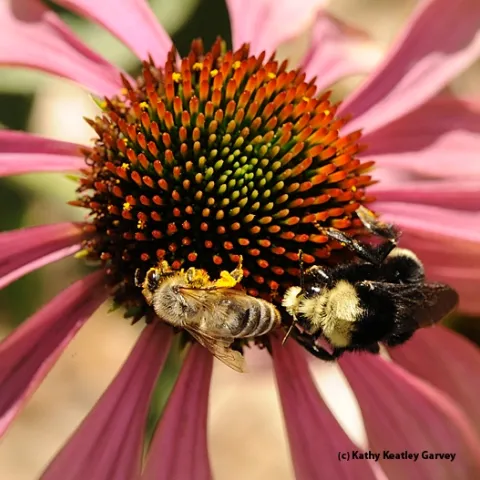
A longhorned bee, Melissodes agilis, dive-bombs a bumble bee, Bombus fervides. (Photo by Kathy Keatley Garvey)

Tithonia: What a Draw!

July 16, 2014
By Kathy Keatley Garvey
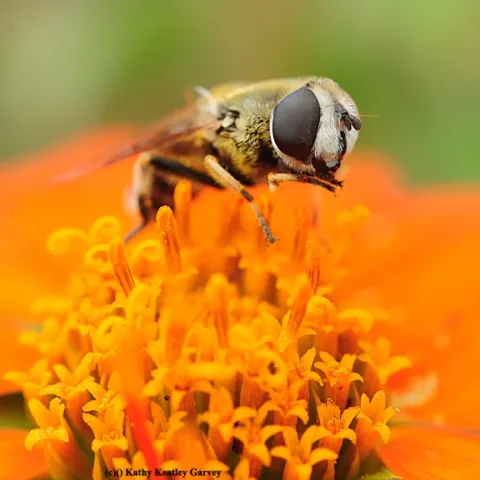
If you have Mexican sunflowers (genus Tithonia) in your garden, you can expect a diversity of insects--and not just honey bees. Lately we've been photographing all the insects that visit the Tithonia in our bee garden.
View Article
Primary Image
image 23494
IGIS: Article

NEW VTM Reshoot!

July 16, 2014
By Maggi Kelly
Take a look at this awesome VTM reshoot from the folks over at Geographic Resource Solutions (GRS), photographed during a recent mapping project of Lassen Volcanic National Park. Yet another great example and an incredible testament to lasting power of the VTM dataset.
View Article
Primary Image
A praying mantis won’t eat a few days before it will shed its skin (molt). This is normal. After molting it will start to eat again. When a praying mantis will not eat even though it does not need to molt, it can help to offer it a Praying mantis soaking up some sun rays. (Photo by Kathy Keatley Garvey)

Who Doesn't Love a Praying Mantis?

July 15, 2014
By Kathy Keatley Garvey
Who doesn't love a praying mantis? Certainly not a butterfly or a bee. We humans, though, are fascinated by them. First, there's the problem of finding them. Often they're so camouflaged that we don't see them until they rustle the leaves and snatch a moving prey.
View Article
UC Weed Science (weed control, management, ecology, and minutia): Article

Herbicide symptomology photos from weed science workshop

July 14, 2014
By Brad Hanson
Today, I thought I'd share a set of photos from a herbicide symptomology demonstration that I conducted in fall 2013 for our UC Weed Science School (next scheduled for fall 2015) and more recently in spring 2014 for a training session with other UC Cooperative Extension personnel.
View Article
UC Weed Science (weed control, management, ecology, and minutia): Article

Final week for comment on UC Advisor and Specialist position proposals

July 14, 2014
By Brad Hanson
This post is a quick reminder that this is the last week for public comment on 123 proposed UC Cooperative Extension positions (closes July 21st). The proposed positions are listed at this website and you can read the 2-page proposal and see any comments by clicking on the position title.
View Article
UC Weed Science (weed control, management, ecology, and minutia): Article

2014 UC Weed Day

July 11, 2014
By Brad Hanson
Yesterday was the 58th Annual Weed Day hosted by the UC Davis Weed Science Program and the UC Weed Research and Information Center.
View Article
Primary Image
Mylitta Crescent butterfly (Physiodes mylitta) on the leaf of a tower of jewels, Echium wildpretii. (Photo by Kathy Keatley Garvey)
Bug Squad: Article

Looking for a Thistle

July 10, 2014
By Kathy Keatley Garvey
Perhaps it was searching for a thistle. The Mylitta Crescent butterfly (Physiodes mylitta) did not find the thistleat least in our bee garden. What it did find were the leaves of a tower of jewels (Echium wildpretii) where it sunned itself before fluttering off to parts unknown.
View Article