A Natural Solution for California's Herds: African Catfish Peptides

California's cattle producers and agricultural communities are all too familiar with the rising challenge of antibiotic resistance, making common bacterial infections harder to treat in livestock. But imagine a future where we could tackle these infections with a natural, powerful alternative. Our research points to just that: antimicrobial peptides (AMPs) found in African catfish.

We're really excited about these peptides because African catfish thrive in pathogen-rich freshwater, naturally producing these robust immune compounds in their skin mucus as a defense. This natural origin makes them highly appealing alternatives to synthetic drugs.

Predicted Safety and Potent Action

One of the most compelling aspects of these AMPs is their predicted safety for mammals. Our initial computer analyses suggest that various catfish AMPs are generally recognized as safe (GRAS). We predict they'll be absorbed in the human intestine without causing liver, brain, or heart toxicity. Furthermore, lab tests on a promising peptide, NACAP-II, confirmed it was non-hemolytic, meaning it didn't damage rabbit red blood cells—a strong indicator of its potential safety for mammalian cells.

Beyond safety, these peptides demonstrate effectiveness against problematic bacteria. One study revealed NACAP-II's strong activity against Extended-Spectrum Beta-Lactamase (ESBL)-producing Escherichia coli—a critical concern for both animal and human health due to its resistance to many common antibiotics. Another peptide, ACAP-IV, also showed antibacterial activity against E. coli and Staphylococcus aureus. We believe these AMPs work by directly disrupting bacterial cell membranes, a mechanism that makes it harder for bacteria to develop resistance compared to how they resist traditional antibiotics.

IGIS: Article

Google Earth Demo at UCB

March 11, 2014
By Maggi Kelly
Thanks to Dave Thau, Karin Tuxen-Bettman, John Bailey, and Emily Henderson who came to visit the GIF and give a demo of the GEE toolbox. We went over the guts of GEE, Timelapse (very cool: make your own! Here is mine), the GEE GUI framework, and the GEE API.
View Article
Primary Image
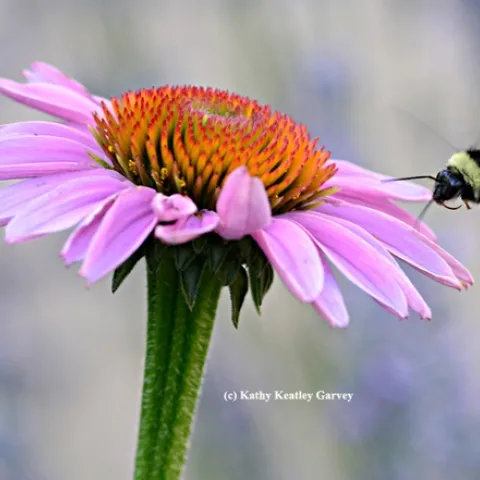
A honey bee heading for wild radish. (Photo by Kathy Keatley Garvey)
Bug Squad: Article

Going 'Rad'

March 11, 2014
By Kathy Keatley Garvey
It may not be the farmer's friend, but it's the beekeeper's friend. Wild radish (Raphanus raphanistrum), a member of the mustard family, Brassicaceae, is considered a weed, but I consider it a flowering plant for bees when I see it along roadsides and parks and lining orchards and vineyards.
View Article
Primary Image
spotted leaf blight
Topics in Subtropics: Article

Watch Out in a Drought - Leaf Blight Can Become Severe

March 11, 2014
By Ben A Faber
I recently went out to an avocado orchard on sandy soil that had had sudden leaf drop after a Santa Ana condition. The problem is that the orchard had had an ongoing leaf blight problem that had been accentuated by two years of drought and with the Santa Ana more pressure had been put on the trees.
View Article
UC Weed Science (weed control, management, ecology, and minutia): Article

Use of glyphosate (Roundup) to control field bindweed in blackberries

March 11, 2014
By Steven A Fennimore, Mark P Bolda
From the UC Strawberries and Caneberries blog :: Sept. 11, 2013 Field bindweed, Convolvulus arvensis, also known locally as morning glory, is a persistent weed pest in blackberries grown on the Central Coast of the California.
View Article
Primary Image
A female butterfly, a painted lady, nectaring on Spanish lavender on March 8 in the Benicia Community Garden. (Photo by Kathy Keatley Garvey)
Bug Squad: Article

Welcome Back, Painted Ladies

March 10, 2014
By Kathy Keatley Garvey
The painted ladies are on move. Butterflies. Scores of painted ladies (Vanessa cardui) are now migrating north from their overwintering sites near the U.S. Mexico border.
View Article
Colusa County: Article

Walnut Orchard Notes

March 10, 2014
In this issue: Understanding & Managing Botryosphaeria and Phomosis canker and blight in Walnuts Field Meeting Training Young Walnuts: No Pruning/Pruning Compared Save the Date! Irrigation Scheduling & Drought Mgmt Strategies Meeting...
View Article
Primary Image
Queen Turner inspects the beekeeping operation on the rooftop of the San Francisco Chronicle. Turner completed a 10-month stay in the U.S. and returned to Botswana where she is head of the beekeeping section of the Ministry of Agriculture in the Botswana government. (Photo: Kathy Keatley Garvey)
Bug Squad: Article

Just Bee-Cause

March 7, 2014
By Kathy Keatley Garvey
In recent years, honey bees received neither recognition nor respect until commercial beekeeper David Hackenberg of Pennsylvania/Florida sounded the alarm in 2006 about his missing honey bees.
View Article
UC Weed Science (weed control, management, ecology, and minutia): Article

Co-existence of RR and Conventional Hay Fields

March 7, 2014
By Michelle M Leinfelder-Miles
From the Alfalfa & Forage News blog :: Oct. 25, 2013 Written by Michelle Leinfelder-Miles At the Alfalfa and Forage Meeting held at the Kearney Agricultural Center in September, we provided a demonstration of the co-existence of Roundup Ready (RR) and conventional alfalfa hay fields.
View Article