A Natural Solution for California's Herds: African Catfish Peptides

California's cattle producers and agricultural communities are all too familiar with the rising challenge of antibiotic resistance, making common bacterial infections harder to treat in livestock. But imagine a future where we could tackle these infections with a natural, powerful alternative. Our research points to just that: antimicrobial peptides (AMPs) found in African catfish.

We're really excited about these peptides because African catfish thrive in pathogen-rich freshwater, naturally producing these robust immune compounds in their skin mucus as a defense. This natural origin makes them highly appealing alternatives to synthetic drugs.

Predicted Safety and Potent Action

One of the most compelling aspects of these AMPs is their predicted safety for mammals. Our initial computer analyses suggest that various catfish AMPs are generally recognized as safe (GRAS). We predict they'll be absorbed in the human intestine without causing liver, brain, or heart toxicity. Furthermore, lab tests on a promising peptide, NACAP-II, confirmed it was non-hemolytic, meaning it didn't damage rabbit red blood cells—a strong indicator of its potential safety for mammalian cells.

Beyond safety, these peptides demonstrate effectiveness against problematic bacteria. One study revealed NACAP-II's strong activity against Extended-Spectrum Beta-Lactamase (ESBL)-producing Escherichia coli—a critical concern for both animal and human health due to its resistance to many common antibiotics. Another peptide, ACAP-IV, also showed antibacterial activity against E. coli and Staphylococcus aureus. We believe these AMPs work by directly disrupting bacterial cell membranes, a mechanism that makes it harder for bacteria to develop resistance compared to how they resist traditional antibiotics.
UC Weed Science (weed control, management, ecology, and minutia): Article

Herbicide symptomology photos from weed science workshop

July 14, 2014
By Brad Hanson
Today, I thought I'd share a set of photos from a herbicide symptomology demonstration that I conducted in fall 2013 for our UC Weed Science School (next scheduled for fall 2015) and more recently in spring 2014 for a training session with other UC Cooperative Extension personnel.
View Article
UC Weed Science (weed control, management, ecology, and minutia): Article

Final week for comment on UC Advisor and Specialist position proposals

July 14, 2014
By Brad Hanson
This post is a quick reminder that this is the last week for public comment on 123 proposed UC Cooperative Extension positions (closes July 21st). The proposed positions are listed at this website and you can read the 2-page proposal and see any comments by clicking on the position title.
View Article
Primary Image
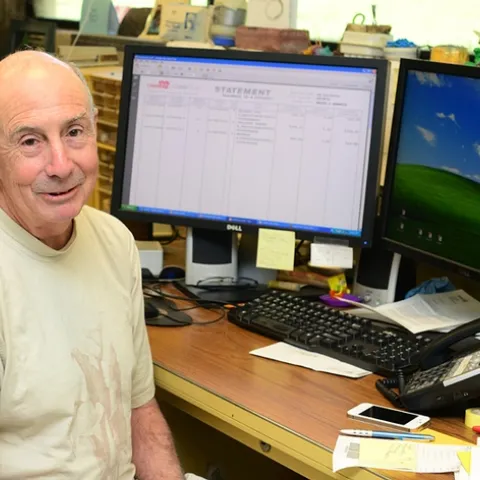
Professor Bruce Hammock in his office in Briggs Hall, UC Davis campus. (Photo by Kathy Keatley Garvey)
Bug Squad: Article

'The Well': The Hammocks Did It Well

July 11, 2014
By Kathy Keatley Garvey
There are no bugs in the film. None. Just because an entomologist is cast in a Hollywood movie, that doesn't mean there will be bugs.
View Article
UC Weed Science (weed control, management, ecology, and minutia): Article

2014 UC Weed Day

July 11, 2014
By Brad Hanson
Yesterday was the 58th Annual Weed Day hosted by the UC Davis Weed Science Program and the UC Weed Research and Information Center.
View Article
Primary Image
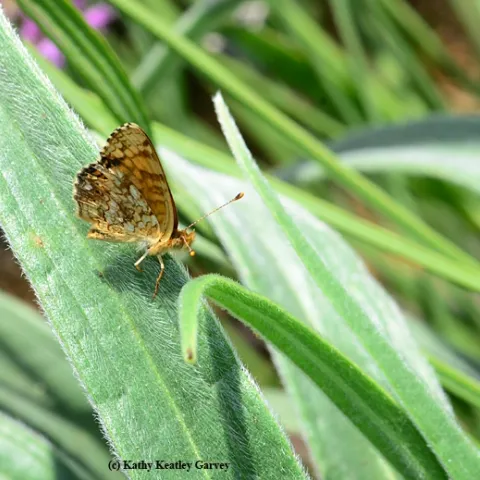
Mylitta Crescent butterfly (Physiodes mylitta) on the leaf of a tower of jewels, Echium wildpretii. (Photo by Kathy Keatley Garvey)
Bug Squad: Article

Looking for a Thistle

July 10, 2014
By Kathy Keatley Garvey
Perhaps it was searching for a thistle. The Mylitta Crescent butterfly (Physiodes mylitta) did not find the thistleat least in our bee garden. What it did find were the leaves of a tower of jewels (Echium wildpretii) where it sunned itself before fluttering off to parts unknown.
View Article
Primary Image
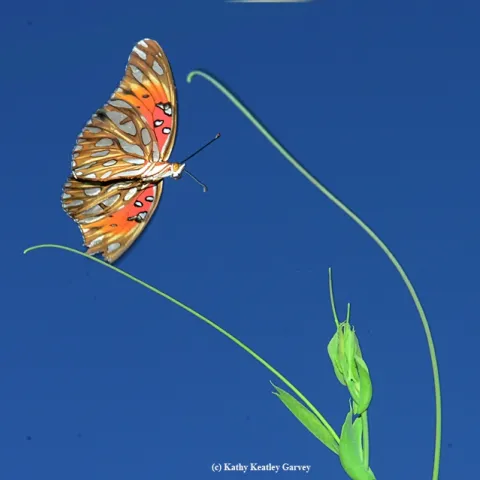
Gulf Fritillary (Agraulis vanillae) in flight over a passionflower vine. (Photo by Kathy Keatley Garvey)
Bug Squad: Article

A Very Showy Butterfly

July 9, 2014
By Kathy Keatley Garvey
There's a good reason why lepidopterists call the Gulf Fritillary (Agraulis vanillae) "showy." Its bright orange-red wings, spangled iridescent silver on the underside, and a four-inch wingspan all point to "showy.
View Article
Primary Image
straw
UC Rice Blog: Article

Rice Strawlage Meeting

July 9, 2014
By Luis Espino
Rice Straw - A New Method to Get Through a Drought Veterans Memorial Hall 525 West Sycamore Street Willows, CA Tuesday, July 29, 2014 9am - noon UC Cooperative Extension research has found that baling rice straw right behind the harvester greatly increases cattle's ability to utilize it.
View Article
Colusa County: Article

July 2014

July 9, 2014
Harvest Day July 19, 9-12 Davis Ranches, Colusa See flyer for details...
View Article
Primary Image
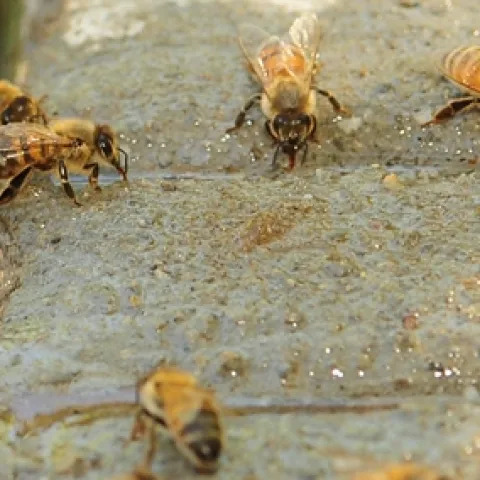
Honey bees find water where they can. (Photo by Kathy Keatley Garvey)
Bug Squad: Article

Honey Bees Need Water, Too!

July 8, 2014
By Kathy Keatley Garvey
These triple-digit temperatures make us all thirst for water. Honey bees need water, too.
View Article
UC Rice Blog: Article

Warm May and June making rice develop faster

July 8, 2014
By Bruce A Linquist
We all know it has been a warm year. In fact, in 2014 the average daily temperature for May and June was 72.2 degrees (CIMIS-Colusa). This is 2.4 degrees warmer than the average of the last 20 years and 3.3 degrees warmer than the average of the last 5 years.
View Article