A Natural Solution for California's Herds: African Catfish Peptides

California's cattle producers and agricultural communities are all too familiar with the rising challenge of antibiotic resistance, making common bacterial infections harder to treat in livestock. But imagine a future where we could tackle these infections with a natural, powerful alternative. Our research points to just that: antimicrobial peptides (AMPs) found in African catfish.

We're really excited about these peptides because African catfish thrive in pathogen-rich freshwater, naturally producing these robust immune compounds in their skin mucus as a defense. This natural origin makes them highly appealing alternatives to synthetic drugs.

Predicted Safety and Potent Action

One of the most compelling aspects of these AMPs is their predicted safety for mammals. Our initial computer analyses suggest that various catfish AMPs are generally recognized as safe (GRAS). We predict they'll be absorbed in the human intestine without causing liver, brain, or heart toxicity. Furthermore, lab tests on a promising peptide, NACAP-II, confirmed it was non-hemolytic, meaning it didn't damage rabbit red blood cells—a strong indicator of its potential safety for mammalian cells.

Beyond safety, these peptides demonstrate effectiveness against problematic bacteria. One study revealed NACAP-II's strong activity against Extended-Spectrum Beta-Lactamase (ESBL)-producing Escherichia coli—a critical concern for both animal and human health due to its resistance to many common antibiotics. Another peptide, ACAP-IV, also showed antibacterial activity against E. coli and Staphylococcus aureus. We believe these AMPs work by directly disrupting bacterial cell membranes, a mechanism that makes it harder for bacteria to develop resistance compared to how they resist traditional antibiotics.

Primary Image
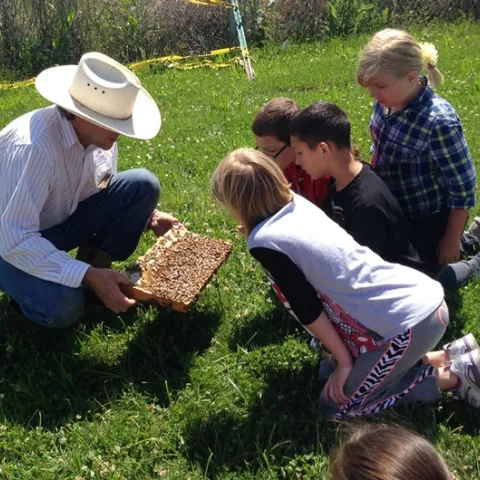
This photo of beekeeper Billy Synk, manager and staff research associate of the Harry H. Laidlaw Jr. Honey Bee Research Facility at UC Davis, appears on the cover of the February edition of the American Bee Journal. (Photo by Kathy Keatley Garvey)

Becoming a Beekeeper

February 10, 2014
By Kathy Keatley Garvey
"How do I get started in beekeeping?" This is the time of year when scores of prospective beekeepers contact Extension apiculturist Eric Mussen of the UC Davis Department of Entomology and Nematology for advice on beginning beekeeping.
View Article
Primary Image
avocado leaf necrosis
Topics in Subtropics: Article

Avocados Looking Grim this Time of Year

February 10, 2014
By Ben A Faber
I've been getting calls and have gone out to see several avocado orchards in the Ventura/Santa Barbara area and the comments are that the trees look worse this year than they normally do. When I see the trees, it's clear that they don't look in the best shape.
View Article
Primary Image
image 20533
IGIS: Article

Musings about Robert N. Colwell

February 7, 2014
By Maggi Kelly
I am working on a retrospective of remote sensing of forests in California for the centennial. I am trying to highlight some of the pioneering work done by remote sensors that focused on Californian forests from the 1960s through the use of lidar today.
View Article
Primary Image
Honey bee foraging on flowering quince. (Photo by Kathy Keatley Garvey)

Learning About the Pollinators

February 7, 2014
By Kathy Keatley Garvey
If you want to learn more about pollinators and sustainable gardening, then you should circle March 15 on your calendar and register for the "Pollinator Gardening Workshop, Your Sustainable Backyard.
View Article
Primary Image
mandarin
Topics in Subtropics: Article

UC Riverside Citrus Day

February 7, 2014
By Ben A Faber
UC Riverside and the Citrus Research Board partner to provide: UC Riverside Citrus Day for Professional Industry members Thursday, February 20, 2014 8 a.m. to 3:00 p.m.
View Article
Primary Image
A syrphid fly, aka flower fly or hover fly, sipping nectar from a tower of jewels. (Photo by Kathy Keatley Garvey)

The Power of Red

February 6, 2014
By Kathy Keatley Garvey
There's a heartfelt reason why Friday, Feb. 7 is "UC Davis Wears Red Day." It's about raising awareness for heart disease, the No. 1 killer of both men and women. It's a battle we need to fight with an arsenal of weapons.
View Article
Colusa County: Article

February 2014

February 6, 2014
Summary of 2013 University of California Statewide Rice Variety Trials...
View Article
Colusa County: Article

Walnut Orchard Notes

February 6, 2014
Meeting announcements: Walnut Day, Wednesday, February 26, 1-4pm, Veterans Memorial Hall, Yuba City Walnut No Pruning/Pruning Comparison Field Meeting, Tuesday, March 4, 10-11:30am, Nickels Soil Lab, Arbuckle Botryosphaeria and Phomopsis canker and blight and their mgmt in walnut Field Meeting, Wedn...
View Article
UC Weed Science (weed control, management, ecology, and minutia): Article

JOB OPENING // VP of Agriculture and Dean of the College of Agriculture

February 6, 2014
By Gale Perez
The VICE PRESIDENT of Agriculture and DEAN of the College of Agriculture position opened up at Montana State University. Initial screening of applications will begin immediately and continue until an appointment is made. For full consideration, materials should be provided by FEBRUARY 18, 2014.
View Article