A Natural Solution for California's Herds: African Catfish Peptides

California's cattle producers and agricultural communities are all too familiar with the rising challenge of antibiotic resistance, making common bacterial infections harder to treat in livestock. But imagine a future where we could tackle these infections with a natural, powerful alternative. Our research points to just that: antimicrobial peptides (AMPs) found in African catfish.

We're really excited about these peptides because African catfish thrive in pathogen-rich freshwater, naturally producing these robust immune compounds in their skin mucus as a defense. This natural origin makes them highly appealing alternatives to synthetic drugs.

Predicted Safety and Potent Action

One of the most compelling aspects of these AMPs is their predicted safety for mammals. Our initial computer analyses suggest that various catfish AMPs are generally recognized as safe (GRAS). We predict they'll be absorbed in the human intestine without causing liver, brain, or heart toxicity. Furthermore, lab tests on a promising peptide, NACAP-II, confirmed it was non-hemolytic, meaning it didn't damage rabbit red blood cells—a strong indicator of its potential safety for mammalian cells.

Beyond safety, these peptides demonstrate effectiveness against problematic bacteria. One study revealed NACAP-II's strong activity against Extended-Spectrum Beta-Lactamase (ESBL)-producing Escherichia coli—a critical concern for both animal and human health due to its resistance to many common antibiotics. Another peptide, ACAP-IV, also showed antibacterial activity against E. coli and Staphylococcus aureus. We believe these AMPs work by directly disrupting bacterial cell membranes, a mechanism that makes it harder for bacteria to develop resistance compared to how they resist traditional antibiotics.
Primary Image
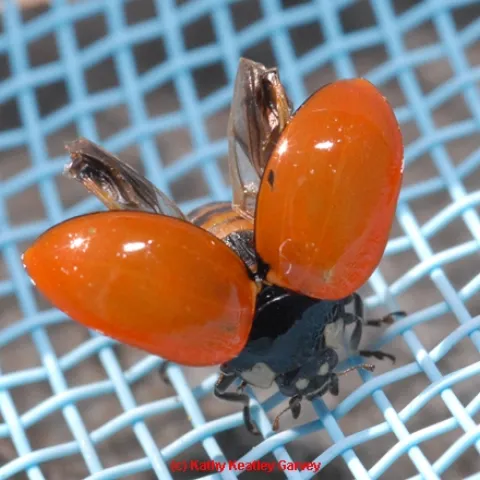
A honey bee heading toward almond blossoms. (Photo by Kathy Keatley Garvey)

Honey Bees and Extinction

November 7, 2013
By Kathy Keatley Garvey
"Would the extinction of honey bees lead directly to the extinction of humans?" That's a recent question posed on Quora, where folks can ask questions and receive answers. The answer is "no.
View Article
Primary Image
A monarch butterfly on lantana last week in Vacaville, Calif. (Photo by Kathy Keatley Garvey)

Saving the Monarchs

November 6, 2013
By Kathy Keatley Garvey
If you think people don't care about monarch butterflies, think again. A recent survey published in Conservation Letters showed that Americans are willing to spend at least $4.78 billion to help conserve monarchs (Danaus plexippus), one of the most recognizable of all insects.
View Article
Primary Image
image 19191
IGIS: Article

Sudden Oak Death in the UK - Oct 2013

November 6, 2013
By Maggi Kelly
From suddenoakdeath.org. The United Kingdom (UK) Forestry Commission has updated its P. ramorum larch outbreak map (http://www.forestry.gov.uk/forestry/infd-86ajqa) to include Northern Ireland.
View Article
Primary Image
tensiometer2
Topics in Subtropics: Article

Soil Moisture Sensors

November 6, 2013
By Ben A Faber
There's been a lot of salt damage to fruit trees after two years of drought using poor quality water and not doing adequate leaching. The situation could be improved by knowing when to irrigate. Here's some guidelines on selecting soil moisture measuring devices.
View Article
IGIS: Article

Helsinki wants feedback on its new urban plans

November 6, 2013
By Maggi Kelly
From Greg Brown. Helsinki, Finland is developing a new city plan for the future (http://www.hel.fi/wps/portal/Kaupunkisuunnitteluvirasto_en). Helsinki becomes possibly the first major world city to use PPGIS to inform its comprehensive city planning process.
View Article
Primary Image
Hover fly, Eristalis hirta, on zinnia. (Photo by Kathy Keatley Garvey)

Lovin' the Zinnias

November 5, 2013
By Kathy Keatley Garvey
Orange zinnias not only brighten our autumn days but glorify our gardens. And when there's a bug on the zinnias, all the better.
View Article
UC Weed Science (weed control, management, ecology, and minutia): Article

Saving glyphosate

November 5, 2013
By Franz J Niederholzer, John A Roncoroni
Saving Glyphosate Glyphosate, the active ingredient in Roundup, is the most commonly used herbicide in California. Highly effective, safe for the user and the environment, and now inexpensive, glyphosate is a valuable weed management tool.
View Article
Primary Image
This photo of a bee foraging on a zinnia, taken in the Haagen-Dazs Honey Bee Haven, graces the front and back covers of "Bee Friendly: A Planting Guide for European Honeybees and Australia Native Pollinators." (Photo by Kathy Keatley Garvey)

All the Way from Down Under

November 4, 2013
By Kathy Keatley Garvey
One of the most prominent and distant--as in far away--visitors to the Hagen-Dazs Honey Bee Haven, the half-acre bee friendly garden on Bee Biology Road, UC Davis, was Mark Leech of Launceston, Tasmania, Australia.
View Article