A Natural Solution for California's Herds: African Catfish Peptides

California's cattle producers and agricultural communities are all too familiar with the rising challenge of antibiotic resistance, making common bacterial infections harder to treat in livestock. But imagine a future where we could tackle these infections with a natural, powerful alternative. Our research points to just that: antimicrobial peptides (AMPs) found in African catfish.

We're really excited about these peptides because African catfish thrive in pathogen-rich freshwater, naturally producing these robust immune compounds in their skin mucus as a defense. This natural origin makes them highly appealing alternatives to synthetic drugs.

Predicted Safety and Potent Action

One of the most compelling aspects of these AMPs is their predicted safety for mammals. Our initial computer analyses suggest that various catfish AMPs are generally recognized as safe (GRAS). We predict they'll be absorbed in the human intestine without causing liver, brain, or heart toxicity. Furthermore, lab tests on a promising peptide, NACAP-II, confirmed it was non-hemolytic, meaning it didn't damage rabbit red blood cells—a strong indicator of its potential safety for mammalian cells.

Beyond safety, these peptides demonstrate effectiveness against problematic bacteria. One study revealed NACAP-II's strong activity against Extended-Spectrum Beta-Lactamase (ESBL)-producing Escherichia coli—a critical concern for both animal and human health due to its resistance to many common antibiotics. Another peptide, ACAP-IV, also showed antibacterial activity against E. coli and Staphylococcus aureus. We believe these AMPs work by directly disrupting bacterial cell membranes, a mechanism that makes it harder for bacteria to develop resistance compared to how they resist traditional antibiotics.
Primary Image
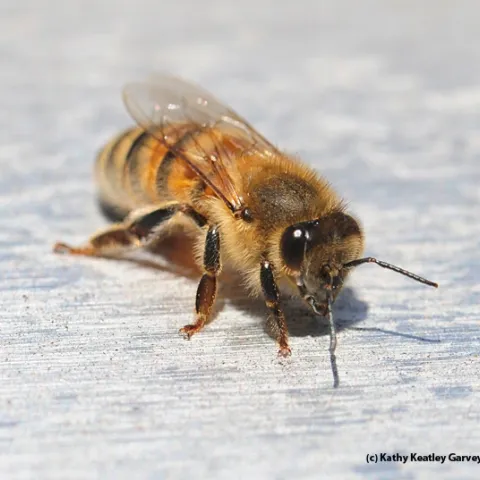
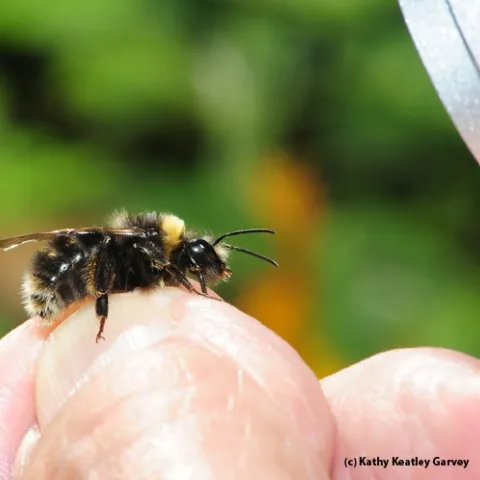
A blue honey bee on a coneflower. (Photo by Kathy Keatley Garvey)

Feeling the Blues

July 9, 2013
By Kathy Keatley Garvey
You've probably seen a blue moon, which happens every two to three years. That's when a second full moon occurs in a single calendar month. You've also probably seen blueprints, blue books and blue-plate specials. You've sung the blues and you've been blue.
View Article
Primary Image
Pallidosis disease caused by viruses transmitted by whiteflies and other sources
E-Journal of Entomology and Biologicals: Article

Increased whitefly risk to strawberries as a pest and a vector of the viral disease, pallidosis-related decline

July 9, 2013
Greenhouse whitefly (Trialeurodes vaporariorum) is the predominant species of whiteflies on strawberries in the Central Coast. What used to be a pest causing yield loss through direct damage has now emerged as a vector of a devastating viral disease called pallidosis-related decline of strawberries.
View Article
Primary Image
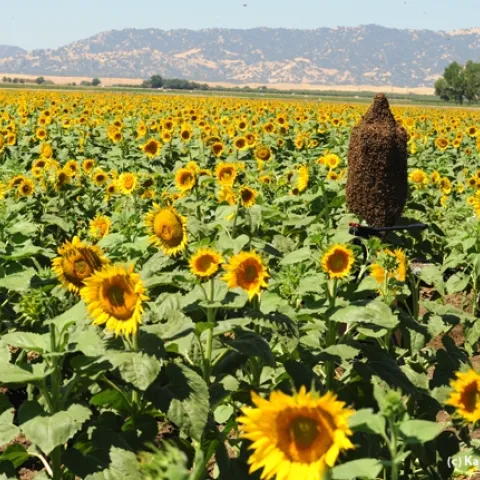
Honey bees and a sunflower bee forage on a sunflower head. (Photo by Kathy Keatley Garvey)

Sunny-Side Up

July 8, 2013
By Kathy Keatley Garvey
You can tell it's summer along Yolo County roads by the acres and acres of sunflower fields. Looking like real-life Van Gogh paintings (Van Gogh painted them in vases, Mother Nature paints them in rows), the sunflower fields are nothing short of spectacular.
View Article
UC Weed Science (weed control, management, ecology, and minutia): Article

Sampling a pond for hydrilla

July 8, 2013
By Guy Kyser
Joe DiTomaso and I are supposed to monitor the effectiveness of a hydrilla treatment in a pond near Marysville. I usually work on rangeland, where things stay put - the plants don't float away, and the equipment doesn't sink out of sight.
View Article
Primary Image
S-AV-CULT-IR[1]

Chemical Treatment to Prevent System Clogging

July 8, 2013
By Ben A Faber
Chemical treatment of water for microirrigation systems is required when the water may cause chemical precipitate or biological clogging of the microirrigation drippers or microsprinklers. The chemical treatment varies depending on the clogging source.
View Article
UC Weed Science (weed control, management, ecology, and minutia): Article

57th Annual UC Davis Weed Day this week!

July 8, 2013
By Brad Hanson
A reminder to all who registered already that the 57th Annual UC Davis Weed Day is this Thursday (July 11th). I've attached the agenda for the morning field tour and the afternoon presentation schedule at the end of this post.
View Article
Primary Image
Honey bee is covered with pollen from a blanket flower, Gaillardia. (Photo by Kathy Keatley Garvey)

Pollen: Precious Gold

July 5, 2013
By Kathy Keatley Garvey
The California Gold Rush (1848-1855) has nothing on honey bees. Sometimes foraging honey bees are covered with their own kind of gold--pollen--or protein for their colonies.
View Article
Primary Image
hairy fleabane

Herbicide resistant weeds in your neighborhood

July 5, 2013
By Ben A Faber
It is not always easy to kill weeds with herbicides for several reasons, but if you apply the right material at the right time to susceptible weeds you expect control. But you should never assume it, because resistant weeds rely on this assumption.
View Article
Primary Image
Honey bee packing red pollen from a rock purslane. (Photo by Kathy Keatley Garvey)

Hurrah for the Red, White and Blue!

July 4, 2013
By Kathy Keatley Garvey
It's the Fourth of July--a time to celebrate our nation's Independence Day. Hurrah for the red, white and blue! That also covers red, white and blue pollen collected by our honey bees. If you look closely, you'll see their "patriotic" colors.
View Article