A Natural Solution for California's Herds: African Catfish Peptides

California's cattle producers and agricultural communities are all too familiar with the rising challenge of antibiotic resistance, making common bacterial infections harder to treat in livestock. But imagine a future where we could tackle these infections with a natural, powerful alternative. Our research points to just that: antimicrobial peptides (AMPs) found in African catfish.

We're really excited about these peptides because African catfish thrive in pathogen-rich freshwater, naturally producing these robust immune compounds in their skin mucus as a defense. This natural origin makes them highly appealing alternatives to synthetic drugs.

Predicted Safety and Potent Action

One of the most compelling aspects of these AMPs is their predicted safety for mammals. Our initial computer analyses suggest that various catfish AMPs are generally recognized as safe (GRAS). We predict they'll be absorbed in the human intestine without causing liver, brain, or heart toxicity. Furthermore, lab tests on a promising peptide, NACAP-II, confirmed it was non-hemolytic, meaning it didn't damage rabbit red blood cells—a strong indicator of its potential safety for mammalian cells.

Beyond safety, these peptides demonstrate effectiveness against problematic bacteria. One study revealed NACAP-II's strong activity against Extended-Spectrum Beta-Lactamase (ESBL)-producing Escherichia coli—a critical concern for both animal and human health due to its resistance to many common antibiotics. Another peptide, ACAP-IV, also showed antibacterial activity against E. coli and Staphylococcus aureus. We believe these AMPs work by directly disrupting bacterial cell membranes, a mechanism that makes it harder for bacteria to develop resistance compared to how they resist traditional antibiotics.
Primary Image
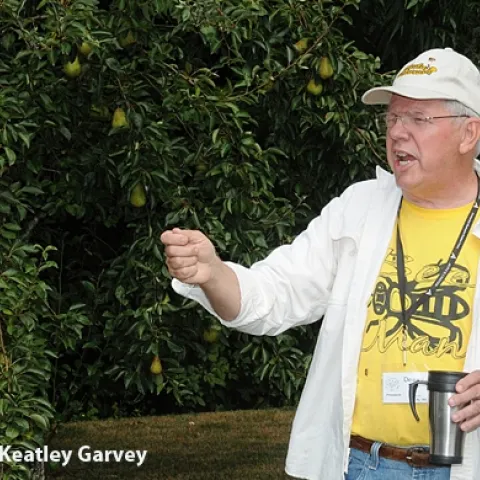
Fran Keller photographing insects in the Mojave Desert. (Photo by Mark deVries)

Fran Keller: Entomologist, Teacher, Artist, Author

May 28, 2013
By Kathy Keatley Garvey
When Mary Frances "Fran" Keller, doctoral candidate at the UC Davis Department of Entomology, delivers her exit seminar on Wednesday, May 29, the audience will get a glimpse of all the titles she holds.
View Article
Primary Image
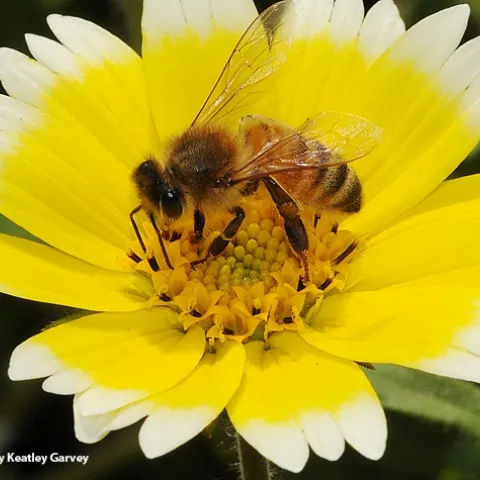
Honey bee covered with pollen; she is on a yellow coneflower, Echinacea paradoxa. (Photo by Kathy Keatley Garvey)

Pollen Power

May 27, 2013
By Kathy Keatley Garvey
Bees carry pollen in their pollen baskets, but that's not the only place.
View Article
Primary Image
No-see-um, 70 times life size. (Illustration by Lynn Kimsey)

No-See-Ums, But You Feel 'Em

May 24, 2013
By Kathy Keatley Garvey
It happened unexpectedly. Tabatha Yang and her six-month-old son, Karoo, were sitting on their lawn last Sunday at their West Davis home, when she saw red. Literally. One minute they were enjoying the springlike weather, and the next minute his head was covered with bright red dots.
View Article
Primary Image
Valentine pummelo
Topics in Subtropics: Article

'Valentine' - a new pummelo hybrid

May 24, 2013
By Ben A Faber
In the last two decades, many distinctive citrus selections have become available at retail markets in the US. These include cultivars such as 'Cara Cara' navel orange, 'Cocktail' pummelo-mandarin hybrid, 'Variegated Pink' lemon, 'Seedless Kishu' mandarin and 'Buddha's Hand' citron.
View Article
Primary Image
A backlit honey bee heads for a pomegranate blossom. (Photo by Kathy Keatley Garvey)

Promenade in the Pomegranates

May 23, 2013
By Kathy Keatley Garvey
What a match--honey bees and pomegranate blossoms. Watching the golden bees forage amid the brilliant red blossoms in the late afternoon is a delight to see, especially when the sun backlights them. The ancient fruit, native to Iran, is one of the world's first cultivated fruits.
View Article
Primary Image
asphyxiation
Topics in Subtropics: Article

Clogging emitters?

May 23, 2013
By Ben A Faber
"What should I watch for?" "I Have a Clogging Problem and I Want to Solve It" "How do I determine if I have a clogging problem?" "What should I do to keep my microirrigation system running well?
View Article
Primary Image
Backlit by the morning sun, a spider web glows, glistens and glitters. (Photo by Kathy Keatley Garvey)

Where's Charlotte?

May 22, 2013
By Kathy Keatley Garvey
A spider web is one of nature's most marvelous wonders. It's art, it's architecture, and it's engineering. The silk is as beautiful as it is deceiving. It's 10 times stronger than Kevlar; as sticky as cotton candy covered with honey; and as flexible as a classical ballet dancer.
View Article