A Natural Solution for California's Herds: African Catfish Peptides

California's cattle producers and agricultural communities are all too familiar with the rising challenge of antibiotic resistance, making common bacterial infections harder to treat in livestock. But imagine a future where we could tackle these infections with a natural, powerful alternative. Our research points to just that: antimicrobial peptides (AMPs) found in African catfish.

We're really excited about these peptides because African catfish thrive in pathogen-rich freshwater, naturally producing these robust immune compounds in their skin mucus as a defense. This natural origin makes them highly appealing alternatives to synthetic drugs.

Predicted Safety and Potent Action

One of the most compelling aspects of these AMPs is their predicted safety for mammals. Our initial computer analyses suggest that various catfish AMPs are generally recognized as safe (GRAS). We predict they'll be absorbed in the human intestine without causing liver, brain, or heart toxicity. Furthermore, lab tests on a promising peptide, NACAP-II, confirmed it was non-hemolytic, meaning it didn't damage rabbit red blood cells—a strong indicator of its potential safety for mammalian cells.

Beyond safety, these peptides demonstrate effectiveness against problematic bacteria. One study revealed NACAP-II's strong activity against Extended-Spectrum Beta-Lactamase (ESBL)-producing Escherichia coli—a critical concern for both animal and human health due to its resistance to many common antibiotics. Another peptide, ACAP-IV, also showed antibacterial activity against E. coli and Staphylococcus aureus. We believe these AMPs work by directly disrupting bacterial cell membranes, a mechanism that makes it harder for bacteria to develop resistance compared to how they resist traditional antibiotics.
Palmer amaranth seed longevity

May 1, 2013
Since it was first identified in 2004, glyphosate-resistant Palmer amaranth has become the most significant weedy pest of cotton in the Southeastern United States.
View Article

Special issue of Nature 'GM Crops: Promise and Reality'

May 1, 2013
Just a quick note to let everyone know that the May 2, 2013 issue of Nature is devoted to GMO technology. Contents include an editorial, updates about GM salmon, a series of graphs and figures detailing the adoption of GMO technology, and commentaries about the GMO debate.
View Article
Primary Image
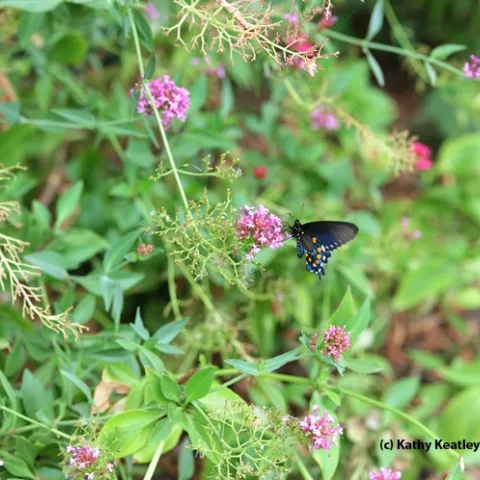
Western tiger swallowtail, Papilio rutulus, on a Mexican sunflower, Tithonia. (Photo by Kathy Keatley Garvey
Bug Squad: Article

From Butterflies to Goldspotted Oak Borers

April 30, 2013
By Kathy Keatley Garvey
Thursday, May 2 is a good day to learn about butterflies. That's when butterfly expert Art Shapiro, professor of evolution and ecology at UC Davis, will be speak at the Northern California Entomology Society meeting, to be held at the Harry H. Laidlaw Jr.
View Article
Cooperative Extension Ventura County: Article

May 2013 Clover Lines

April 30, 2013
In this issue... Super Field Day, Food Faire and Fashion Revue Event Wrap-ups; Record Book Resources, 100 Blankets Community Service Event, and much, much more.
View Article
Primary Image
Brown marmorated stink bugs. (USDA, Stephen Ausmus)
Bug Squad: Article

About That Stink Bug...

April 29, 2013
By Kathy Keatley Garvey
It doesn't usually make the 6 o'clock news--or even the 10 o'clock news--but it's trouble. Trouble, indeed. The brown marmorated stink bug (Halyomorpha hales), a native of Asia, was first discovered in the United States in Allentown, Penn., in 2000. Since then, it's been making a big stink.
View Article
Primary Image
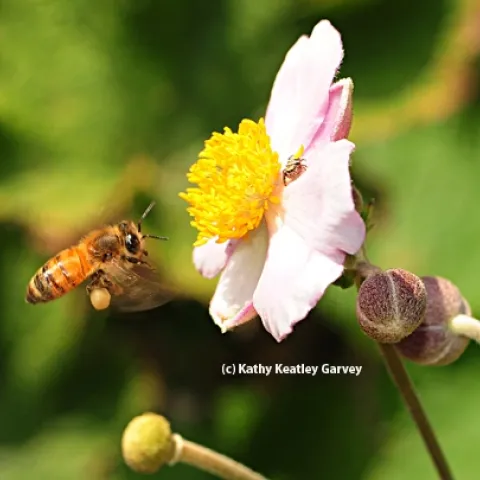
Honey bee foraging on tower of jewels. (Photo by Kathy Keatley Garvey)
Bug Squad: Article

Just Bee-lieve

April 26, 2013
By Kathy Keatley Garvey
When there's so much pain, grief and sorrow in the world, it's time to shut off the TV, log off the computer, exit the house, and photograph honey bees. Watching honey bees foraging in the tower of jewels, Echium wildpretii, is therapy enough.
View Article