A Natural Solution for California's Herds: African Catfish Peptides

California's cattle producers and agricultural communities are all too familiar with the rising challenge of antibiotic resistance, making common bacterial infections harder to treat in livestock. But imagine a future where we could tackle these infections with a natural, powerful alternative. Our research points to just that: antimicrobial peptides (AMPs) found in African catfish.

We're really excited about these peptides because African catfish thrive in pathogen-rich freshwater, naturally producing these robust immune compounds in their skin mucus as a defense. This natural origin makes them highly appealing alternatives to synthetic drugs.

Predicted Safety and Potent Action

One of the most compelling aspects of these AMPs is their predicted safety for mammals. Our initial computer analyses suggest that various catfish AMPs are generally recognized as safe (GRAS). We predict they'll be absorbed in the human intestine without causing liver, brain, or heart toxicity. Furthermore, lab tests on a promising peptide, NACAP-II, confirmed it was non-hemolytic, meaning it didn't damage rabbit red blood cells—a strong indicator of its potential safety for mammalian cells.

Beyond safety, these peptides demonstrate effectiveness against problematic bacteria. One study revealed NACAP-II's strong activity against Extended-Spectrum Beta-Lactamase (ESBL)-producing Escherichia coli—a critical concern for both animal and human health due to its resistance to many common antibiotics. Another peptide, ACAP-IV, also showed antibacterial activity against E. coli and Staphylococcus aureus. We believe these AMPs work by directly disrupting bacterial cell membranes, a mechanism that makes it harder for bacteria to develop resistance compared to how they resist traditional antibiotics.
Primary Image
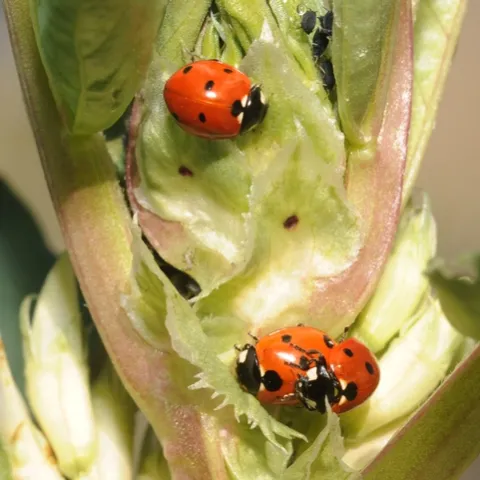
Ladybugs in the fava beans at the Haagen-Dazs Honey Bee Haven. (Photo by Kathy Keatley Garvey)

Love in the Fava Beans

January 5, 2012
By Kathy Keatley Garvey
It was lovely day today, in more ways than one. During the lunch hour, we stopped by the Hagen-Dazs Honey Bee Haven on Bee Biology Road, University of California, Davis, and discovered more than just blossoms in the planter box filled with fava beans.
View Article
Primary Image
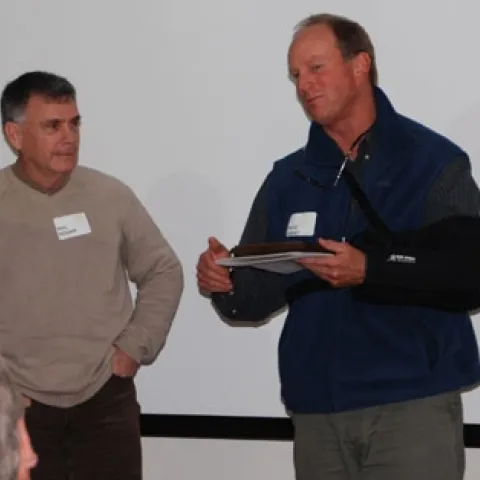
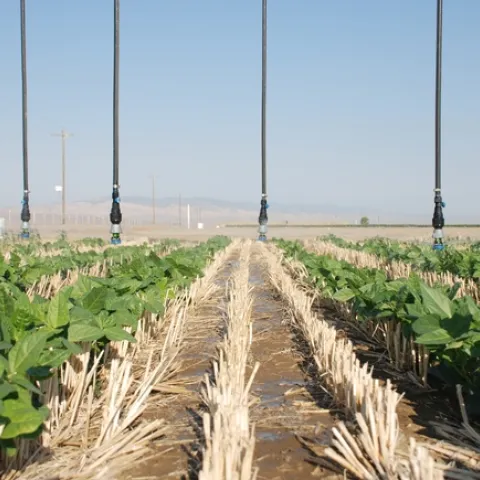
Fritz Durst receives his award from Phil Hogan, district conservationist with USDA NRCS, Woodland, Calif.
Conservation Agriculture: Article

2011 CT farmers awarded

January 5, 2012
By Jeannette Warnert
In 2005, the University of California and NRCS Conservation Tillage Workgroup established the Conservation Tillage Farmer Innovator Award as a means for providing greater visibility to CT pioneers in California.
View Article
UC Weed Science (weed control, management, ecology, and minutia): Article

T&V herbicides - MOA for resistance management

January 5, 2012
By Brad Hanson
I was forwarded a question recently about rotating herbicide mode of actions for resistance management in vineyards and realized that the information is not always particularly easy to find.
View Article
Primary Image
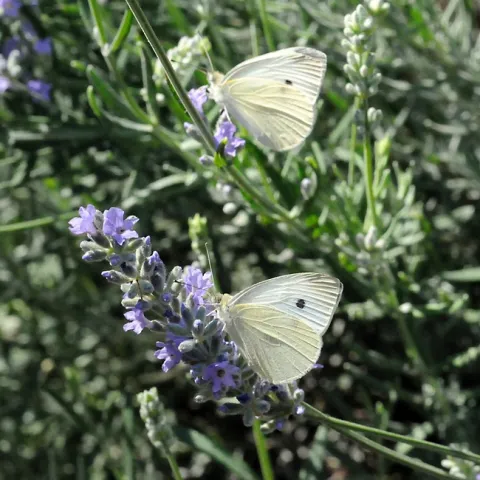
Two cabbage whites (Pieris rapae) on catmint in Vacaville, Calif., on Sept. 7, 2008. (Photo by Kathy Keatley Garvey)

On the Fly

January 4, 2012
By Kathy Keatley Garvey
We've been waiting with bated breath for butterfly expert Art Shapiro, professor of evolution and ecology at UC Davis, to announce he's found the first Pieris rapae of the year. Not so. Not yet.
View Article
UC Weed Science (weed control, management, ecology, and minutia): Article

Orchard herbicide trials - focus on hairy fleabane

January 4, 2012
By Brad Hanson
Although many orchard weed managers are waiting for rain (or at least a chance of rain) before putting out their dormant-season herbicide applications, I thought I'd post a few results from three 2011 residual herbicide trials focused on hairy fleabane.
View Article
UC Weed Science (weed control, management, ecology, and minutia): Article

Natural Herbicides: Are they effective?

January 3, 2012
By Gale Perez
The public's increasing demand for safe green products has resulted in many new environmentally-friendly products becoming available for controlling weeds in the garden and landscape.
View Article
Primary Image
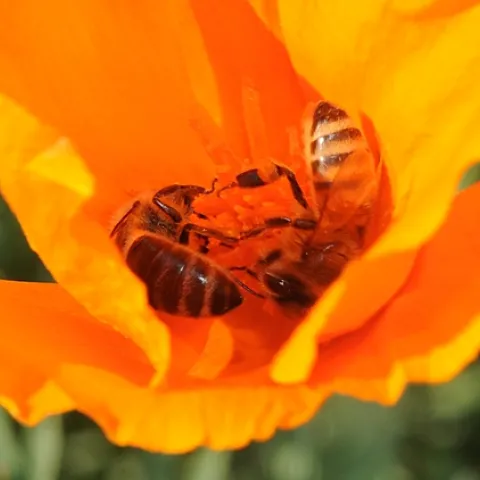
Two honey bees sharing a California poppy on Garrod Drive, UC Davis. (Photo by Kathy Keatley Garvey)

Might as Well Be Spring?

January 2, 2012
By Kathy Keatley Garvey
When California poppies (Eschscholzia californica) bloom and honey bees battle over the blossoms, can spring be far behind? No, it's just California's pleasant weather.
View Article