A Natural Solution for California's Herds: African Catfish Peptides

California's cattle producers and agricultural communities are all too familiar with the rising challenge of antibiotic resistance, making common bacterial infections harder to treat in livestock. But imagine a future where we could tackle these infections with a natural, powerful alternative. Our research points to just that: antimicrobial peptides (AMPs) found in African catfish.

We're really excited about these peptides because African catfish thrive in pathogen-rich freshwater, naturally producing these robust immune compounds in their skin mucus as a defense. This natural origin makes them highly appealing alternatives to synthetic drugs.

Predicted Safety and Potent Action

One of the most compelling aspects of these AMPs is their predicted safety for mammals. Our initial computer analyses suggest that various catfish AMPs are generally recognized as safe (GRAS). We predict they'll be absorbed in the human intestine without causing liver, brain, or heart toxicity. Furthermore, lab tests on a promising peptide, NACAP-II, confirmed it was non-hemolytic, meaning it didn't damage rabbit red blood cells—a strong indicator of its potential safety for mammalian cells.

Beyond safety, these peptides demonstrate effectiveness against problematic bacteria. One study revealed NACAP-II's strong activity against Extended-Spectrum Beta-Lactamase (ESBL)-producing Escherichia coli—a critical concern for both animal and human health due to its resistance to many common antibiotics. Another peptide, ACAP-IV, also showed antibacterial activity against E. coli and Staphylococcus aureus. We believe these AMPs work by directly disrupting bacterial cell membranes, a mechanism that makes it harder for bacteria to develop resistance compared to how they resist traditional antibiotics.
Primary Image
Honey bee foraging on sunflower in a field off Pedrick Road, Dixon. (Photo by Kathy Keatley Garvey)
Bug Squad: Article

Bee Heaven

August 16, 2011
A field of green ribboned in yellow. Anyone who drives down Pedrick Road in Dixon, Calif., and sees the spectacular sunflower fields can't help but smile. Yellow sunflowers do that to you. They make you smile.
View Article
Colusa County: Article

August 2011

August 16, 2011
Rice blast: more of the same with a bit of a twist in 2011 - Armyworms - 2011: About the same as last year.
View Article
UC Weed Science (weed control, management, ecology, and minutia): Article

Herbicide Resistance in T&V Crops - Weed Manager Survey

August 16, 2011
By Brad Hanson
Today I'm asking for input from folks who work in orchard and vineyard weed control (land owners, managers, pest control advisors, sprayer operators, etc.) on your take on herbicide resistant weeds.
View Article
UC Weed Science (weed control, management, ecology, and minutia): Article

Poisonous Weeds!

August 16, 2011
By Brad Hanson
I ran across a Weed Science Society of America (WSSA) press release from last summer that I found interesting.
View Article
Primary Image
Honey bee on a yellow starthistle flower on Bee Biology Road at UC Davis. (Photo by Kathy Keatley Garvey)
Bug Squad: Article

'Star' Quality?

August 15, 2011
It's a perfect example of "the bad, the ugly and the good." In that order. Not "the good, the bad and the ugly." The yellow starthistle (Centaurea solstitialis) is the kind of obnoxious weed you wish would go away forever.
View Article
Primary Image
Presentation1
UC Rice Blog: Article

Crop Progress

August 15, 2011
Released August 15, 2011, by the National Agricultural Statistics Service (NASS), Agricultural Statistics Board, United States Department of Agriculture (USDA).
View Article
Primary Image
Hole in one--a hole signifying the emergence of a leafcutting bee (Megachile). (Photo by Kathy Keatley Garvey)
Bug Squad: Article

Hole in One

August 12, 2011
First you give them roots, then you give them wings. That's what's happening in our bee condo, a wooden block (nest) with drilled holes for leafcutting bees (Megachile). They flew in, laid their eggs, provisioned the nests with pollen and leaf fragments, and capped the holes. We had 11 tenants.
View Article
Primary Image
IMG 3194
UC Rice Blog: Article

Armyworms

August 12, 2011
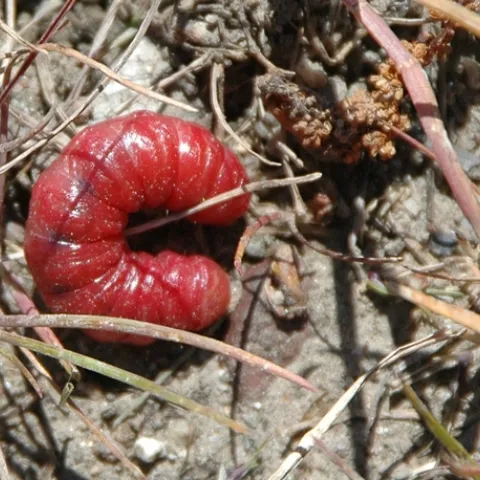
I've been receiving reports of high armyworm populations this summer. You can always find some armyworms in rice fields, but I have rarely seen fields that needed a treatment due to armyworm injury. Defoliation caused by armyworms is not uncommon.
View Article
Primary Image
Honey bee on gallardia. (Photo by Kathy Keatley Garvey)
Bug Squad: Article

The Places to 'Bee'

August 11, 2011
The places to "bee" for beekeepers in September and November are the Big Island of Hawaii and the not-so-little-city of Rohnert Park, Calif. The Western Apicultural Society, founded by UC Davis scientists in 1978, has scheduled its annual conference for Sept.
View Article