A Natural Solution for California's Herds: African Catfish Peptides

California's cattle producers and agricultural communities are all too familiar with the rising challenge of antibiotic resistance, making common bacterial infections harder to treat in livestock. But imagine a future where we could tackle these infections with a natural, powerful alternative. Our research points to just that: antimicrobial peptides (AMPs) found in African catfish.

We're really excited about these peptides because African catfish thrive in pathogen-rich freshwater, naturally producing these robust immune compounds in their skin mucus as a defense. This natural origin makes them highly appealing alternatives to synthetic drugs.

Predicted Safety and Potent Action

One of the most compelling aspects of these AMPs is their predicted safety for mammals. Our initial computer analyses suggest that various catfish AMPs are generally recognized as safe (GRAS). We predict they'll be absorbed in the human intestine without causing liver, brain, or heart toxicity. Furthermore, lab tests on a promising peptide, NACAP-II, confirmed it was non-hemolytic, meaning it didn't damage rabbit red blood cells—a strong indicator of its potential safety for mammalian cells.

Beyond safety, these peptides demonstrate effectiveness against problematic bacteria. One study revealed NACAP-II's strong activity against Extended-Spectrum Beta-Lactamase (ESBL)-producing Escherichia coli—a critical concern for both animal and human health due to its resistance to many common antibiotics. Another peptide, ACAP-IV, also showed antibacterial activity against E. coli and Staphylococcus aureus. We believe these AMPs work by directly disrupting bacterial cell membranes, a mechanism that makes it harder for bacteria to develop resistance compared to how they resist traditional antibiotics.
Primary Image
NEWLY INDUCTED FELLOW Bruce Hammock (right), distinguished professor of entomology at the University of California, Davis, with ESA president Dave Hogg of the University of Wisconsin. (Photo by Kathy Keatley Garvey)
Bug Squad: Article

Our Newest ESA Fellows

December 21, 2010
By Kathy Keatley Garvey
Three University of California entomology professors were among the 10 newly elected Fellows of the Entomological Society of America (ESA) honored at the organization's 58th annual meeting, held Dec. 12-15 in San Diego. Their selection speaks highly of the caliber of UC professors.
View Article
Primary Image
FRANK ZALOM (left), professor and integrated pest management (IPM) with the UC Davis Department of Entomology, receives the "Award for Excellence in IPM" from Entomological Foundation president S. Bradleigh Vinson, professor at Texas A&M. The award, presented at the Entomological Society of America's 58th annual meeting, held in San Diego, was sponsored by the Entomological Foundation and Syngenta Crop Protection. (Photo by Kathy Keatley Garvey)
Bug Squad: Article

Well-Deserved Honor

December 20, 2010
By Kathy Keatley Garvey
Whether it's spotted-wing Drosophila, codling moth or light brown apple moth--or myriads of other invasives--integrated pest management (IPM) specialist Frank Zalom knows his pests and how to manage them.
View Article
UC Weed Science (weed control, management, ecology, and minutia): Article

Discussion of herbicide-resistant weeds - California Weed Science Society

December 20, 2010
By Brad Hanson
This is a reposting of an article I recently wrote for the California Weed Science Society Journal (also reprinted by Western Farm Press). The article is based on a presentation I made at the California Weed Science Society annual meeting in Visalia last January.
View Article
UC Weed Science (weed control, management, ecology, and minutia): Article

California Weed Science Society annual meeting - January 19 in Monterey

December 20, 2010
By Brad Hanson
63rd Annual Conference California Weed Science Society Weed Control: Balancing Biology, Reality & Sustainability Conference dates: January 19, 20 & 21, 2011 Portola Plaza Hotel Two Portola Plaza Monterey, CA 93940 (888) 222-5851 Click here for Society Info Click here for Conference Agenda Click here...
View Article

The 13 Bugs of Christmas

December 17, 2010
By Kathy Keatley Garvey
Forget "The 12 Days of Christmas." It's "The 13 Bugs of Christmas." The UC Davis Department of Entomology came up with a song at its annual holiday party that drew roaring applause--and attention to bugs that either please or plague people.
View Article
Primary Image
HOVER FLY working a flower in the Haagen-Dazs Honey Bee Haven at the University of California, Davis. The larvae of hover flies are voracious aphid eaters. (Photo by Kathy Keatley Garvey)
Bug Squad: Article

Why Organic Farmers Love Hover Flies

December 16, 2010
By Kathy Keatley Garvey
If you were an aphid on a head of lettuce, a hoverfly larva would be a nightmare. They are voracious eaters of aphids. One larva per plant will control the aphids. That's what organic researcher Eric Brennan of the Agricultural Research Service (ARS), U.S.
View Article
Primary Image
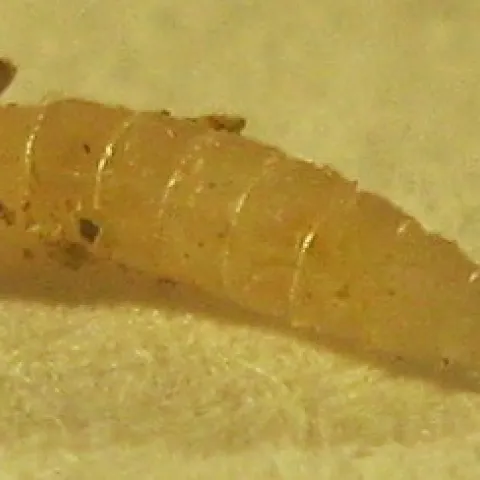
Whitish with a tapering body
E-Journal of Entomology and Biologicals: Article

Maggots in Young Strawberry Fields

December 15, 2010
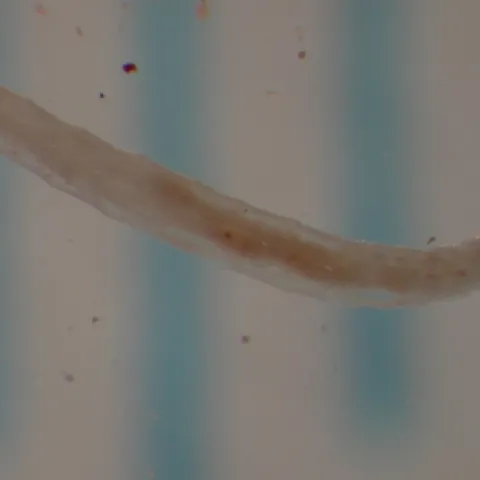
Whitish maggots with a tapering body (above) and about 1/4 inch long (below) Several growers in the Santa Maria area reported maggot infestation in their young strawberry fields. I have visited some fields and collected some specimens.
View Article
Primary Image
Jeff Mitchell
Conservation Agriculture: Article

Workgroup chair Jeff Mitchell's annual address

December 15, 2010
By Jeannette Warnert
By Jeff Mitchell, workgroup chair Dec. 14, 2010 What I would like to do with you briefly this morning is take a minute to tell the story of the Conservation Tillage and Cropping Systems Workgroup, - who we are, what weve done, and why you should believe us.
View Article