A Natural Solution for California's Herds: African Catfish Peptides

California's cattle producers and agricultural communities are all too familiar with the rising challenge of antibiotic resistance, making common bacterial infections harder to treat in livestock. But imagine a future where we could tackle these infections with a natural, powerful alternative. Our research points to just that: antimicrobial peptides (AMPs) found in African catfish.

We're really excited about these peptides because African catfish thrive in pathogen-rich freshwater, naturally producing these robust immune compounds in their skin mucus as a defense. This natural origin makes them highly appealing alternatives to synthetic drugs.

Predicted Safety and Potent Action

One of the most compelling aspects of these AMPs is their predicted safety for mammals. Our initial computer analyses suggest that various catfish AMPs are generally recognized as safe (GRAS). We predict they'll be absorbed in the human intestine without causing liver, brain, or heart toxicity. Furthermore, lab tests on a promising peptide, NACAP-II, confirmed it was non-hemolytic, meaning it didn't damage rabbit red blood cells—a strong indicator of its potential safety for mammalian cells.

Beyond safety, these peptides demonstrate effectiveness against problematic bacteria. One study revealed NACAP-II's strong activity against Extended-Spectrum Beta-Lactamase (ESBL)-producing Escherichia coli—a critical concern for both animal and human health due to its resistance to many common antibiotics. Another peptide, ACAP-IV, also showed antibacterial activity against E. coli and Staphylococcus aureus. We believe these AMPs work by directly disrupting bacterial cell membranes, a mechanism that makes it harder for bacteria to develop resistance compared to how they resist traditional antibiotics.

Primary Image
CHEMICAL ECOLOGISTS Walter Leal (foreground) and Zain Syed at work in the Leal lab in the UC Davis Department of Entomology. Leal is a professor and former chair of the department, and Syed is a postdoctoral researcher and the primary author of a paper published March 16 in PLoS One. (Photo by Kathy Keatley Garvey)

On the Trail of a Better Insect Repellent

March 16, 2011
By Kathy Keatley Garvey
Researchers in the Walter Leal lab, UC Davis Department of Entomology, are engaging in some exciting research. They just discovered a "generic insect repellent detector" in the fruit fly (Drosophila melanogaster)--research published today (March 16) in PloS One (Public Library of Science).
View Article
Primary Image
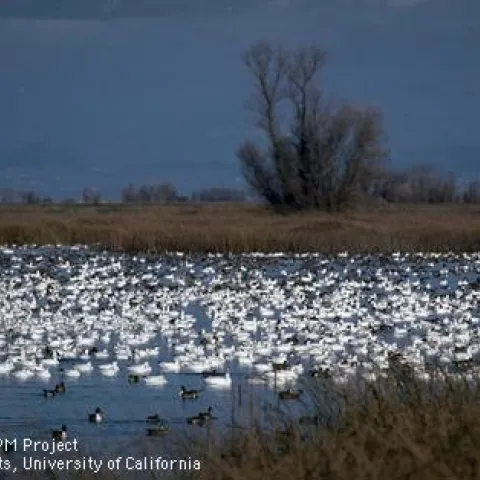
Snow geese and ducks on a flooded rice field in winter
UC Rice Blog: Article

Welcome to the UC Rice Blog!

March 16, 2011
By Luis Espino
Welcome to the University of California Rice Blog. Posts in this blog will be made by Univerisy of California Farm Advisors Luis Espino, Chris Greer and Cass Mutters. We'll be updating the blog constantly during the growing season.
View Article

Pacific Mosquitofern (Azolla filculoides)

March 16, 2011
By John A Roncoroni
Pacific Mosquitofern, (Azolla filculoides) often referred to as Azolla, is native to California. It is considered a desirable component of natural habitats and an important food source for waterfowl. Azolla is a floating aquatic fern that spreads by stem fragments and spores.
View Article
Primary Image
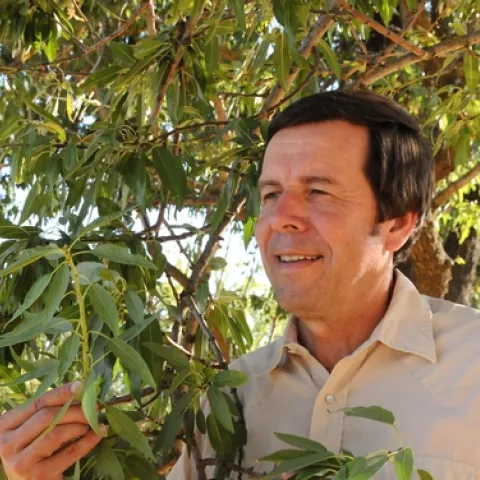
FRANK ZALOM, integrated pest management specialist and professor and former vice chair of the UC Davis Department of Entomology, is the 2011 recipient of the C. W. Woodworth Award. (Photo by Kathy Keatley Garvey)

Our IPM Specialist

March 15, 2011
By Kathy Keatley Garvey
Congratulations to integrated pest management specialist Frank Zalom, professor and former vice chair of the UC Davis Department of Entomology. He's just been named the recipient of the C. W. Woodworth Award, the highest award bestowed by the Pacific Branch of the Entomological Society of America.
View Article

Orchard Floor Management Field Day

March 15, 2011
By Gale Perez
Orchard Floor Management Field Day Demonstration and Herbicide Trial Located at a Yolo County walnut and almond orchard Just north of Co rd 98 and Co. rd.
View Article
Primary Image
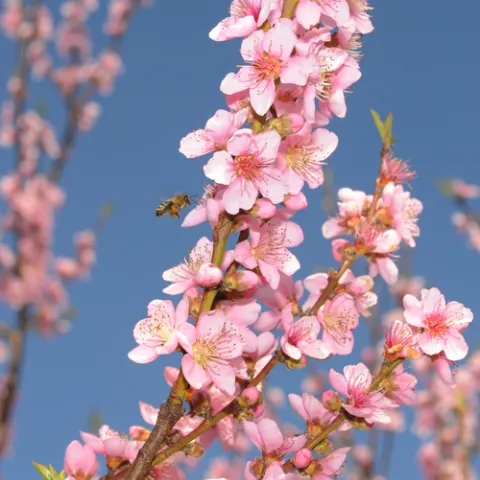
HONEY BEE heads for the highest blossoms in a UC Davis peach orchard. (Photo by Kathy Keatley Garvey)

Peachy Keen

March 14, 2011
By Kathy Keatley Garvey
California peach blossoms are peachy keen. Especially when honey bees are foraging. The pink pastel blossoms, powder blue sky, and golden honey bees...yes, California peach orchards are blooming.
View Article
Conservation Agriculture: Article

Is there organized 'opposition' to conservation tillage?

March 14, 2011
By Jeannette Warnert
A student at UC Irvine, Saumya Bhardwaj, who is working on a research project on "how to prevent soil damage from monoculture," sent a query to the Conservation Tillage workgroup about policies or interest groups standing in the way of CT implementation.
View Article
Primary Image
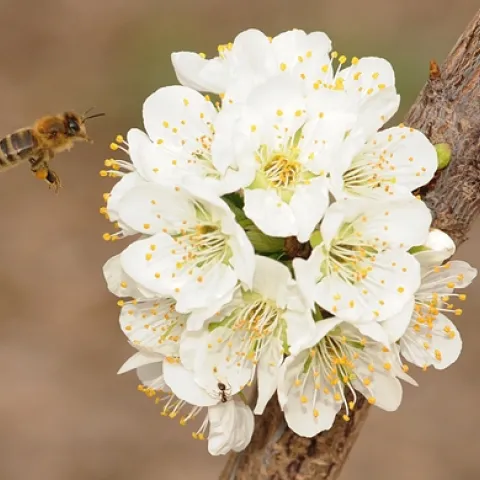
HONEY BEE from the Harry H. Laidlaw Jr. Honey Bee Research Facility, UC Davis, heads toward a plum blossom in the Haagen-Dazs Honey Bee Haven, a half-acre bee friendly garden on Bee Biology Road. The garden is open dawn to dusk at no charge. (Photo by Kathy Keatley Garvey)

A Plum Assignment

March 11, 2011
By Kathy Keatley Garvey
When something is a "plum," it's something desirable, whether it be a "plum" position, a "plum" assignment or a "plum" reward. With honey bees, a bee on a plum blossom is definitely a plum job. The honey bees foraging today in the Hagen-Dazss Honey Bee Haven at Harry H. Laidlaw Jr.
View Article
Primary Image
Lewis mite-Daniel Gilrein
E-Journal of Entomology and Biologicals: Article

Lewis mite: A potential pest of strawberries and raspberries

March 11, 2011
Lewis mite, Eotetranychus lewisi (Photo courtesy: Daniel Gilrein, Cornell University) Lewis spider mite or Lewis mite, Eotetranychus lewisi (McGregor) (Phylum Arachnida, sub-class Acarina, family Tetranychidae) is a pest of many host plants.
View Article