A Natural Solution for California's Herds: African Catfish Peptides

California's cattle producers and agricultural communities are all too familiar with the rising challenge of antibiotic resistance, making common bacterial infections harder to treat in livestock. But imagine a future where we could tackle these infections with a natural, powerful alternative. Our research points to just that: antimicrobial peptides (AMPs) found in African catfish.

We're really excited about these peptides because African catfish thrive in pathogen-rich freshwater, naturally producing these robust immune compounds in their skin mucus as a defense. This natural origin makes them highly appealing alternatives to synthetic drugs.

Predicted Safety and Potent Action

One of the most compelling aspects of these AMPs is their predicted safety for mammals. Our initial computer analyses suggest that various catfish AMPs are generally recognized as safe (GRAS). We predict they'll be absorbed in the human intestine without causing liver, brain, or heart toxicity. Furthermore, lab tests on a promising peptide, NACAP-II, confirmed it was non-hemolytic, meaning it didn't damage rabbit red blood cells—a strong indicator of its potential safety for mammalian cells.

Beyond safety, these peptides demonstrate effectiveness against problematic bacteria. One study revealed NACAP-II's strong activity against Extended-Spectrum Beta-Lactamase (ESBL)-producing Escherichia coli—a critical concern for both animal and human health due to its resistance to many common antibiotics. Another peptide, ACAP-IV, also showed antibacterial activity against E. coli and Staphylococcus aureus. We believe these AMPs work by directly disrupting bacterial cell membranes, a mechanism that makes it harder for bacteria to develop resistance compared to how they resist traditional antibiotics.
Primary Image
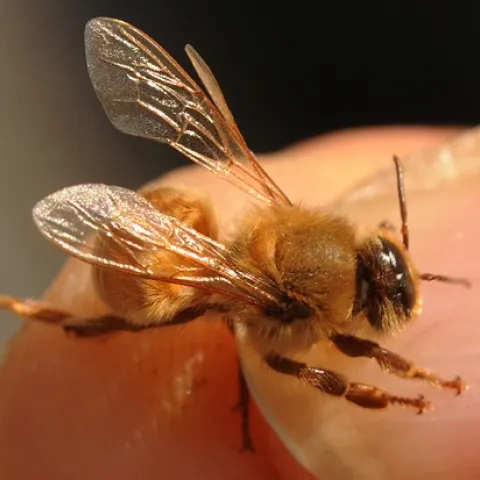
THIS MUTANT BEE, rarely found in the beekeeping world, is often called a "cyclops" bee. It has the head of a drone (note the wrap-around eyes or eyes that meet at the top of the head) and the body of a worker, complete with pollen baskets and a stinger. This one, about to take flight, is on the hand of bee breeder-geneticist Susan Cobey, who spotted it in a Glenn County queen-production business. (Photo by Kathy Keatley Garvey)
Bug Squad: Article

Part Drone, Part Worker Bee

April 1, 2011
By Kathy Keatley Garvey
Very rare. Very rare, indeed. It has the eyes of a drone and the body of a worker bee. And no, this is not science fiction. It's a mutant honey bee. "They're not totally uncommon," said Extension apiculturist Eric Mussen of the UC Davis Department of Entomology. "But they're there.
View Article
Colusa County: Article

April 2011

April 1, 2011
2010 rice variety trials results - How much phosphorus should you apply? - New UC Rice Blog - Rice Winter Meetings and Rice Production Workshop presentations available on-line - Contributions of California rice farmers to the economy - New UC ANR publications.
View Article
Primary Image
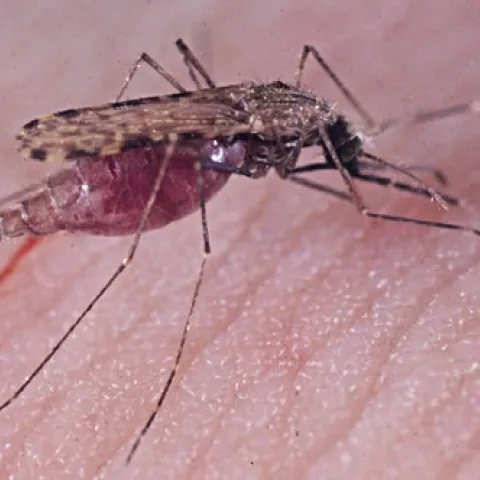
MALARIA MOSQUITO, Anopheles gambiae, blood-feeding. This photo was taken by Anthony Cornel, associate professor of entomology at UC Davis.
Bug Squad: Article

World Malaria Day at UC Davis

March 31, 2011
By Kathy Keatley Garvey
Mark your calendars for a sobering experience. The University of California,Davis, will observe World Malaria Day with a daylong retreat showcasing UC Davis scientists current research in vector biology and genetics. The event, free and open to the public, will take place from 9 a.m. to 4 p.m.
View Article
Colusa County: Article

April 2011

March 31, 2011
Fair Award Sponsor form, Camp Tehama Application, Scholarship, All Star and Merit Applications, Home Ec Review results...
View Article
Primary Image
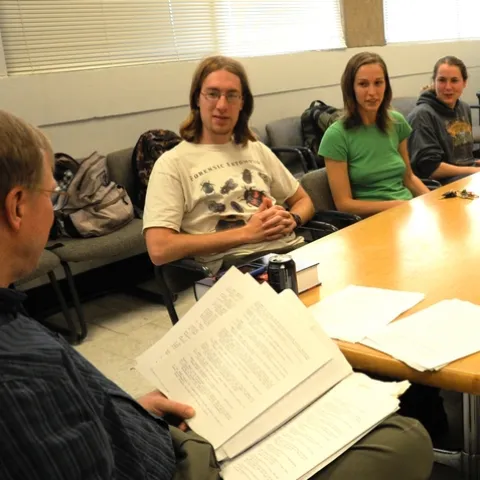
RESEARCHER Ian Pearse, a doctoral candidate who studies with major professor Rick Karban at the UC Davis Department of Entomology, examines some oak apple galls. (Photo by Kathy Keatley Garvey)
Bug Squad: Article

A Lot of Gall

March 30, 2011
By Kathy Keatley Garvey
Those oak trees (Quercus lobata) in Californias Central Valley have a lot of gall.
View Article
Primary Image
COACH Larry Godfrey, Extension entomologist with the UC Davis Department of Entomology, calls out questions during a practice session. The graduate students (from left) are Matan Shelomi, Meredith Cenzer and Emily Symmes. Not pictured is James Harwood. The team just won the Linnaean Games at the Pacific Branch of the Entomological Society of America and will now compete in the nationals. (Photo by Kathy Keatley Garvey)
Bug Squad: Article

Sudden-Death Question

March 29, 2011
By Kathy Keatley Garvey
Quick! What's the answer to this question? "I am a blood feeder; I have no hair but have a comb.
View Article
Primary Image
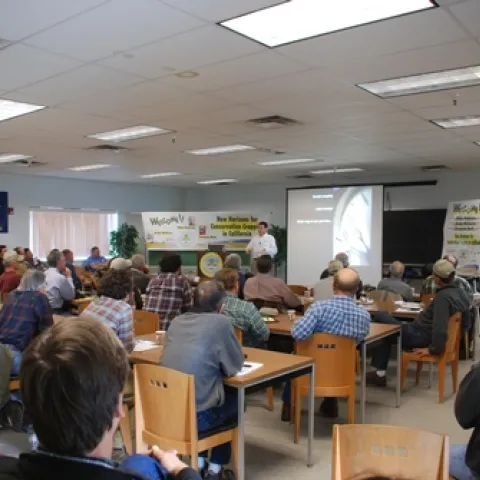
Classroom presentation.
Conservation Agriculture: Article

CT research shared at New Horizons conferences

March 29, 2011
By Jeannette Warnert
By Jeff Mitchell Whether its called high residue farming or conservation agriculture, theres very little of it currently done in California. For decades, the dominant production paradigm throughout California has been just the opposite - intense tillage, clean cultivation and residue-free fields.
View Article
Primary Image
TINY EGG, a future honey bee queen, is moved from a comb to a queen cell cup at the Strachan Apiaries in Yuba City. (Photo by Kathy Keatley Garvey)
Bug Squad: Article

Queen Bee to Be

March 28, 2011
By Kathy Keatley Garvey
One of the highlights of Susan Cobey's class on "The Art of Queen Bee Rearing" is a visit to commercial queen bee breeders in Northern California. Cobey is a bee breeder-geneticist at the Harry H. Laidlaw Jr. Honey Bee Research Facility at UC Davis, and Washington State University.
View Article