A Natural Solution for California's Herds: African Catfish Peptides

California's cattle producers and agricultural communities are all too familiar with the rising challenge of antibiotic resistance, making common bacterial infections harder to treat in livestock. But imagine a future where we could tackle these infections with a natural, powerful alternative. Our research points to just that: antimicrobial peptides (AMPs) found in African catfish.

We're really excited about these peptides because African catfish thrive in pathogen-rich freshwater, naturally producing these robust immune compounds in their skin mucus as a defense. This natural origin makes them highly appealing alternatives to synthetic drugs.

Predicted Safety and Potent Action

One of the most compelling aspects of these AMPs is their predicted safety for mammals. Our initial computer analyses suggest that various catfish AMPs are generally recognized as safe (GRAS). We predict they'll be absorbed in the human intestine without causing liver, brain, or heart toxicity. Furthermore, lab tests on a promising peptide, NACAP-II, confirmed it was non-hemolytic, meaning it didn't damage rabbit red blood cells—a strong indicator of its potential safety for mammalian cells.

Beyond safety, these peptides demonstrate effectiveness against problematic bacteria. One study revealed NACAP-II's strong activity against Extended-Spectrum Beta-Lactamase (ESBL)-producing Escherichia coli—a critical concern for both animal and human health due to its resistance to many common antibiotics. Another peptide, ACAP-IV, also showed antibacterial activity against E. coli and Staphylococcus aureus. We believe these AMPs work by directly disrupting bacterial cell membranes, a mechanism that makes it harder for bacteria to develop resistance compared to how they resist traditional antibiotics.

Primary Image
THREE GREEN APHIDS are sucking plant juices from a rock purslane, while a honey bee is sipping nectar. (Photo by Kathy Keatley Garvey)

Guess Who Came to Dinner?

November 23, 2009
By Kathy Keatley Garvey
Picture this. A light rainstorm strikes the garden, pummeling and shredding some of the blossoms. As the rain lets up, a honey bee buzzes into a rock purslane blossom for a sweet shot of nectar. She is not alone. If you look closely, you'll see three green aphids on an unopened blossom next to her.
View Article
Primary Image
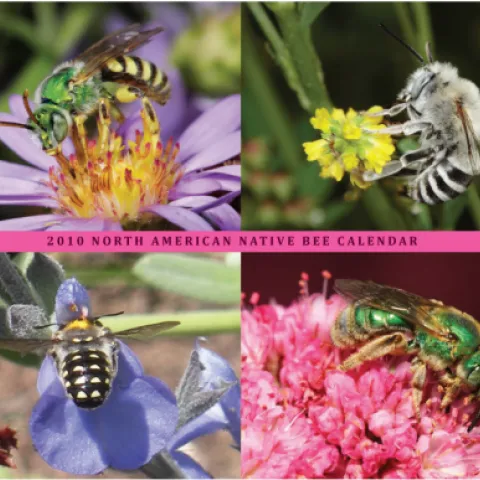
SPECTACULAR PHOTOGRAPHY of entomologist Rollin Coville, who received his doctorate in entomology from UC Berkeley, graces the 2010 Native Bees Calendar, a fundraising project of the Xerces Society and the Great Sunflower Project. (Photos courtesy of Rollin Coville)

Native Bee Calendar Focuses on 'Pin-Up Girls'--and Boys

November 20, 2009
By Kathy Keatley Garvey
Humans aren't the only calendar pin-up models. Think native bees. Think the 2010 Native Bees Calendar. The Xerces Society and the Great Sunflower Project have joined forces to produce a calendar showcasing 12 commonly found native bees.
View Article
Primary Image
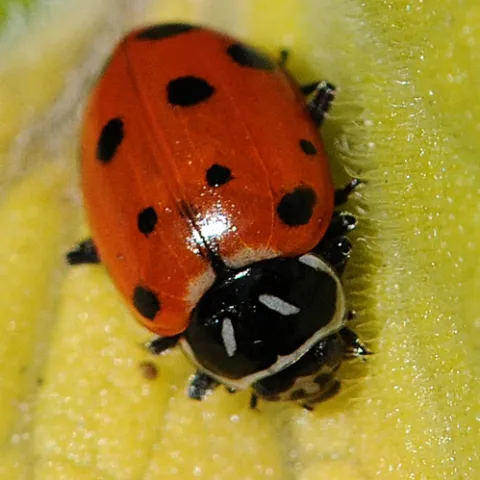
LADYBUG crawls on a leaf at the UC Berkeley Botanical Garden. (Photo by Kathy Keatley Garvey)
Bug Squad: Article

What's Bugging the Ladybug?

November 19, 2009
By Kathy Keatley Garvey
It probably bugs her but it doesn't kill her. But why? An entomologist at the University of Montreal is investigating why parasitic wasps (Dinocampus coccinellae) that lay their eggs on ladybugs (Coccinella maculata) do not kill them. Often a parasitic insect, such as a tachinid fly, kills its host.
View Article
Primary Image
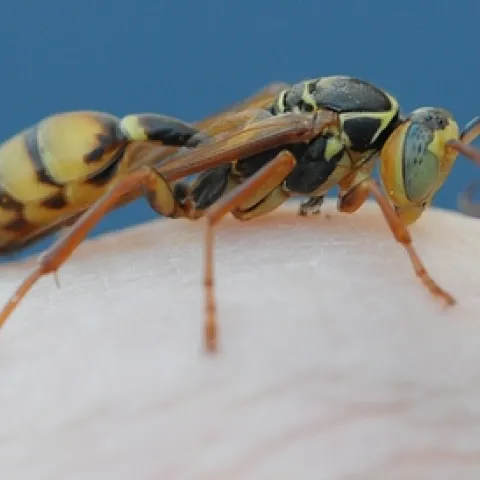
SLOW-MOVING yellow-legged paper wasp, Mischocyttarus flavitarsis. (Photo by Kathy Keatley Garvey)
Bug Squad: Article

Waist Not, Want Not

November 18, 2009
By Kathy Keatley Garvey
A buggy thing happened on the way to a meeting. As we left Briggs Hall, a three-story building on the UC Davis campus that houses the Department of Entomology, we noticed a wasp at our feet.
View Article
Primary Image
THE RESEARCHERS--Maurice and Catherine Tauber in Brazil.
Bug Squad: Article

The Taubers: Legends in the Entomological World

November 17, 2009
By Kathy Keatley Garvey
They met and married in the 1960s when they were studying for their doctorates in entomology at UC Berkeley. They established exemplary careers in entomology at Cornell University. Now, at retirement age, they've moved back to Northern California. Meet Drs.
View Article
Primary Image
BEEKEEPER AND ARTIST Andrew Tyzack of East Riding, Yorkshire, UK, with his bees. (Photo courtesy of Andrew Tyzack)
Bug Squad: Article

Bees in Art

November 16, 2009
By Kathy Keatley Garvey
Bees engage us. They fascinate, charm and inspire us. Last Sunday morning, as the temperature climbed from 40 to 50 degrees, the honey bees joined us in our garden. They buzzed in and out of the autumn blossoms, gathering pollen and nectar.
View Article
Primary Image
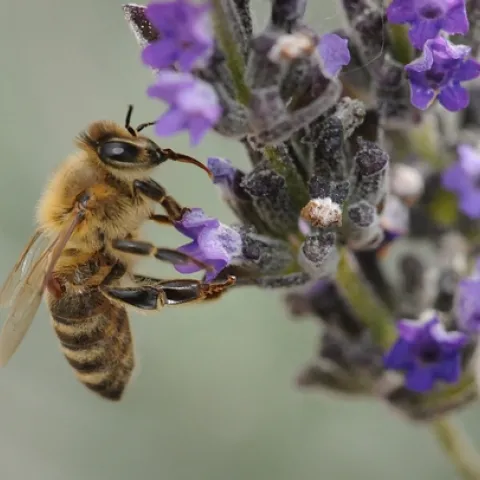
VARROA MITE on a honey bee (see raised reddish-brown spot under the wing). The mites reproduce in the hive, sucking the blood of pupae. (Photo by Kathy Keatley Garvey)
Bug Squad: Article

Not a Pleasant Sight

November 13, 2009
By Kathy Keatley Garvey
What's wrong with this photo? A honey bee is nectaring a lavender, right? Right. But if you look closely, you'll see a Varroa mite--a parasite--attached to her. Varroa mites, considered the No.
View Article
Primary Image
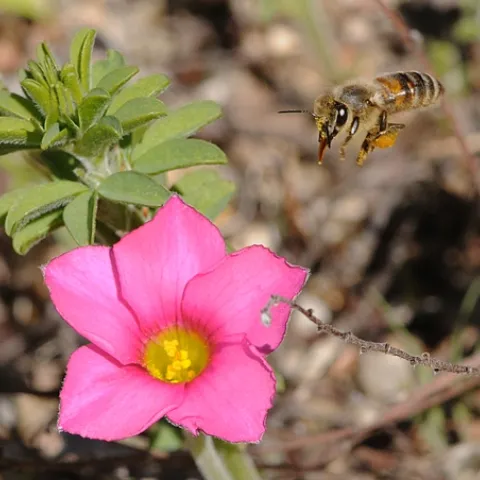
HONEY BEE, with tongue extended, makes a "beeline" for pink oxalis (Oxalis herta) in the UC Berkeley Botanical Garden. (Photo by Kathy Keatley Garvey)

Bottoms Up

November 12, 2009
By Kathy Keatley Garvey
A recent visit to the UC Berkeley Botanical Garden found honey bees making a...yes...beeline...for the pink oxalis (Oxalis herta), a native of South Africa. Some folks consider oxalis, especially yellow oxalis, a "weed.
View Article