A Natural Solution for California's Herds: African Catfish Peptides

California's cattle producers and agricultural communities are all too familiar with the rising challenge of antibiotic resistance, making common bacterial infections harder to treat in livestock. But imagine a future where we could tackle these infections with a natural, powerful alternative. Our research points to just that: antimicrobial peptides (AMPs) found in African catfish.

We're really excited about these peptides because African catfish thrive in pathogen-rich freshwater, naturally producing these robust immune compounds in their skin mucus as a defense. This natural origin makes them highly appealing alternatives to synthetic drugs.

Predicted Safety and Potent Action

One of the most compelling aspects of these AMPs is their predicted safety for mammals. Our initial computer analyses suggest that various catfish AMPs are generally recognized as safe (GRAS). We predict they'll be absorbed in the human intestine without causing liver, brain, or heart toxicity. Furthermore, lab tests on a promising peptide, NACAP-II, confirmed it was non-hemolytic, meaning it didn't damage rabbit red blood cells—a strong indicator of its potential safety for mammalian cells.

Beyond safety, these peptides demonstrate effectiveness against problematic bacteria. One study revealed NACAP-II's strong activity against Extended-Spectrum Beta-Lactamase (ESBL)-producing Escherichia coli—a critical concern for both animal and human health due to its resistance to many common antibiotics. Another peptide, ACAP-IV, also showed antibacterial activity against E. coli and Staphylococcus aureus. We believe these AMPs work by directly disrupting bacterial cell membranes, a mechanism that makes it harder for bacteria to develop resistance compared to how they resist traditional antibiotics.
Primary Image
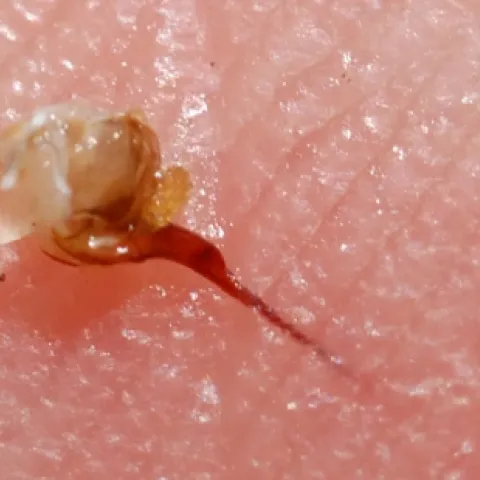
Here's a close-up of what the stinging apparatus looks like in the skin. (Photo by Kathy Keatley Garvey)

The Sting

August 13, 2008
By Kathy Keatley Garvey
Ouch! So, you've been stung by a bee. If you're a beekeeper, an occasional sting is a natural part of beekeeping. UC Davis apiculturist Eric Mussen says that the average beekeeper may be stung approximately 3000 times a year.
View Article
Primary Image
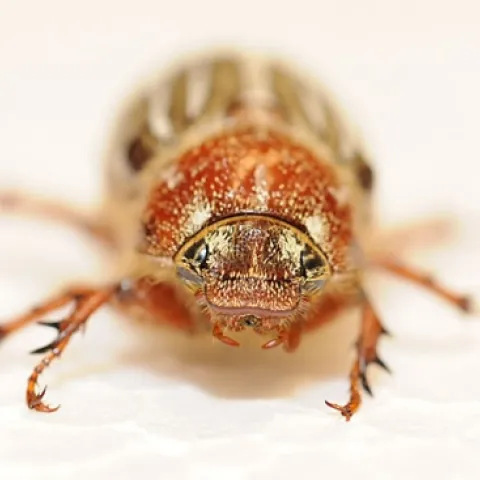
"Wanna make something of it?" Ten-lined June beetle. (Photo by Kathy Keatley Garvey)

Writing with Light

August 12, 2008
By Kathy Keatley Garvey
I've always loved the wit and wisdom of insect-inspired poets. God in His wisdom made the fly And then forgot to tell us why. - - Ogden Nash "The Fly" We hope that, when the insects take over the world, they will remember with gratitude how we took them along on all our picnics.
View Article
Colusa County: Article

August 2007

August 12, 2008
Announcing our new Rice Advisor Resistant Watergrass Control Field Meeting - September 5, 2007...
View Article
Primary Image
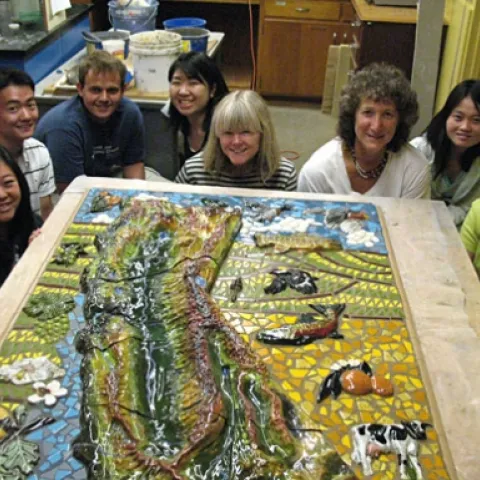
“California's Gold” artists include (from left) students Stacy Matsuura, Joji Kume, Frank Sousa, Lesli Hamamoto, community member Joy Elson, professor Diane Ullman, alumna Feiyian Yoong and community member Barbara Engel.

California's Gold and Nature's Gallery

August 11, 2008
By Kathy Keatley Garvey
When the California State Fair, Sacramento, opens Friday, Aug. 15 for an 18-day run, don't miss "California's Gold" and "Nature's Gallery" in the UC Davis Centennial Pavilion (Building 3).
View Article
Primary Image
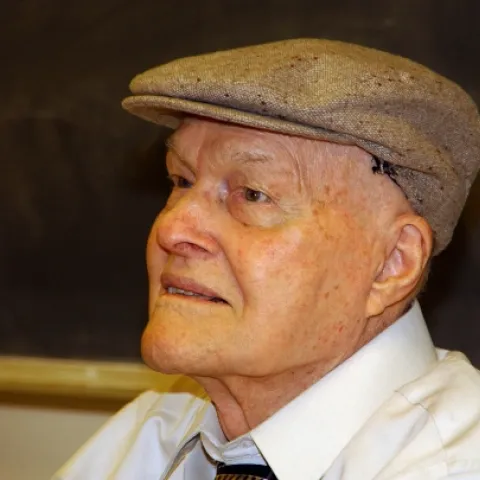
Richard Bohart (1913-2007) on May 15, 2006, when he received the International Society of Hymenopterists Distinguished Research Medal, one of three ever awarded. (Photo by Kathy Keatley Garvey)

What's Entomology?

August 8, 2008
By Kathy Keatley Garvey
I'm standing in line at the photo center, waiting to pay for the dozen 8x10 photos of noted entomologist Richard Bohart that I'd ordered for his UC Davis memorial. Doc, as he was called, died Feb. 1, 2007 in Berkeley at age 93 after a career spanning 70 years--33 at UC Davis.
View Article
Primary Image
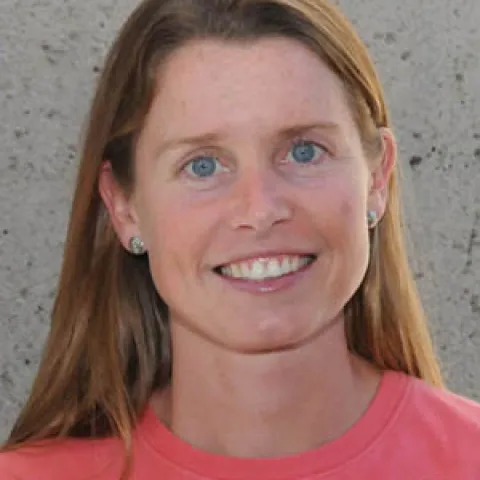
Michelle Flenniken

Meet Michelle

August 7, 2008
By Kathy Keatley Garvey
Meet Michelle Flenniken. She's an insect virus researcher in professor Raul Andino's lab, UC San Francisco Department of Microbiology and Immunology, and she's the newly selected Hagen-Dazs Postdoctoral Fellow at UC Davis.
View Article
Primary Image
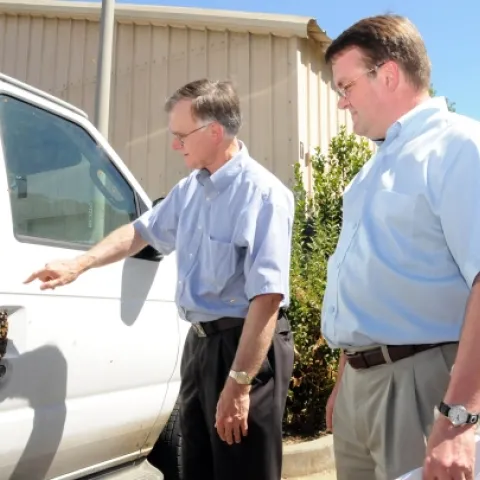
UC Davis apiculturist Eric Mussen (left) explains bee behavior to Keir Reavie, head of the Biological and Agriculture Sciences Department at Shields Library. (Photo by Kathy Keatley Garvey)
Bug Squad: Article

A Honey of a Ride

August 6, 2008
By Kathy Keatley Garvey
A funny thing happened on the way from El Cerrito to UC Davis on Friday, Aug. 1. And it wasn't even Friday the 13th. At 7 a.m., a group of UC Davis employees approached their commuter van in an El Cerrito parking lot.
View Article
Colusa County: Article

August 2008

August 4, 2008
Rice Experiment Station Field Day, panicle blanking, blast, fighting mosquitoes in Colusa County.
View Article
Colusa County: Article

April 2007

April 1, 2008
Nickels Field Day Meeting Announcement (Program and Reservation Form)...
View Article