
California's cattle producers and agricultural communities are all too familiar with the rising challenge of antibiotic resistance, making common bacterial infections harder to treat in livestock. But imagine a future where we could tackle these infections with a natural, powerful alternative. Our research points to just that: antimicrobial peptides (AMPs) found in African catfish.
We're really excited about these peptides because African catfish thrive in pathogen-rich freshwater, naturally producing these robust immune compounds in their skin mucus as a defense. This natural origin makes them highly appealing alternatives to synthetic drugs.
Predicted Safety and Potent Action
One of the most compelling aspects of these AMPs is their predicted safety for mammals. Our initial computer analyses suggest that various catfish AMPs are generally recognized as safe (GRAS). We predict they'll be absorbed in the human intestine without causing liver, brain, or heart toxicity. Furthermore, lab tests on a promising peptide, NACAP-II, confirmed it was non-hemolytic, meaning it didn't damage rabbit red blood cells—a strong indicator of its potential safety for mammalian cells.
Beyond safety, these peptides demonstrate effectiveness against problematic bacteria. One study revealed NACAP-II's strong activity against Extended-Spectrum Beta-Lactamase (ESBL)-producing Escherichia coli—a critical concern for both animal and human health due to its resistance to many common antibiotics. Another peptide, ACAP-IV, also showed antibacterial activity against E. coli and Staphylococcus aureus. We believe these AMPs work by directly disrupting bacterial cell membranes, a mechanism that makes it harder for bacteria to develop resistance compared to how they resist traditional antibiotics.


New Online Course: Calibrating Herbicide Applications for Non-Agricultural Areas

NPI researcher Danielle Lee to present at the 2025 National WIC Association’s Education and Training Conference
A Westringia for every garden
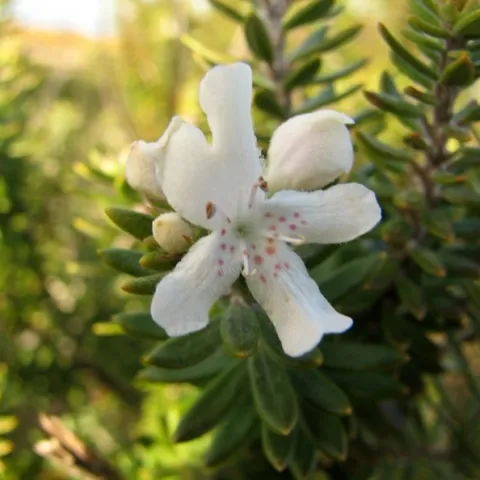
Looking for an attractive plant that uses little water, is pest and deer-resistant, looks good year-round, and can serve a variety of garden purposes? Westringia may be just the plant for you. This easy-care evergreen shrub has gray-green to green or variegated foliage. Westringia is native to Australia. A member of the mint family (Lamiaceae), these shrubs are sometimes called coast rosemary, since the foliage somewhat resembles rosemary.
Reasons to love Westringia
- Wide variety of shapes and sizes. From groundcovers to large shrubs 12 feet tall and 6 feet wide, there are plenty to choose from. Click here to see some popular varieties.
- Easy to grow. They grow in most soils. Most varieties prefer sun, but some grow in part-shade.
- Long bloom season. Many varieties flower consistently or intermittently throughout the year. As with other members of the mint family, the upper petal (or lip) is divided into two lobes. There are four stamens, and the leaves are in whorls of 3 or 4.
- Good choice for coastal locations. Westringia tolerates wind and salt spray.
- Drought resistance. Westringia is an excellent choice for a water-wise and Earth-friendly garden. In warmer, inland climates, some additional summer water will help keep it happy.
- Helps with erosion control. This is helpful when planting on a hillside.
- Useful in many settings. Generally speaking, these shrubs are used in hedges, mixed borders, screens, mass plantings and wind breaks.
- Moderate growth habit. Westringia won’t outgrow your border anytime soon.
- Pest resistance. Westringia are generally not bothered by pests.
- Deer resistance. Many varieties are unappealing to deer.
Some varieties to consider for your garden:
Westringia fruticosa
W. fruticosa, the Australian or Coast Rosemary, is an evergreen shrub that grows up to 6' tall and 12' wide. Its growth rate is moderate. It has soft, gray green leaves. Its white flowers bloom throughout the year, especially in frost free areas. W. fruticosa prefers full sun. It is drought tolerant but will appreciate occasional watering in spring and summer. Its tolerance for wind and salt spray makes it a great choice for coastal areas.
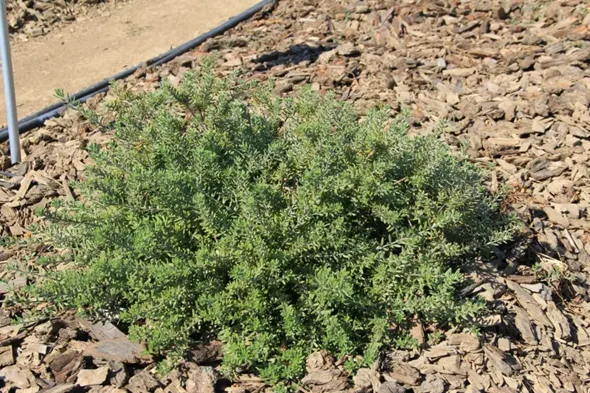
Westringia fruticosa ‘NFL25’
‘Mundi’ Coast Rosemary is a groundcover version of Coast Rosemary. Darker green than other Westringia, it is a good-looking foliage plant with a dense form and nice texture. In addition to serving as a groundcover, it is a good “front of the border” option for a mixed border. It is generally not bothered by pests or disease, blooms throughout the year, and has low water requirements.
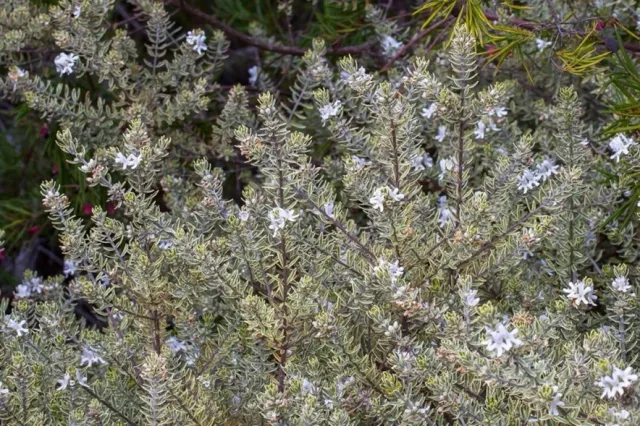
Westringia brevifolia
W. brevifolia (small-leafed Westringia) is an evergreen shrub, 5 to 6 feet tall and 3 to 5 feet wide, with small, narrow, gray-green leaves and pale purplish blue to white flowers almost year-round. It grows in sun or shade, and in most soils. It does best along the coast. W. brevifolia ‘Raleighii’ (Raleigh Westringia) is a somewhat larger variant of W. brevifolia at 5 to 6 feet tall and 6 to 8 feet wide.
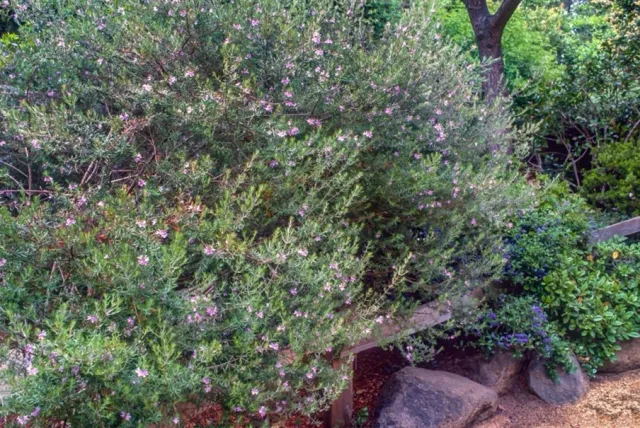
Westringia 'Wynyabbie Gem'
Westringia 'Wynyabbie Gem' is an evergreen shrub that grows to 6 feet tall and wide. It has narrow gray-green leaves and small lavender flowers that bloom almost year-round. It prefers sun to part shade, and good drainage. 'Wynyabbie Highlight', a variant of 'Wynyabbie Gem', has variegated leaves.
Westringia fruticosa ‘Morning Light’
W. Fruticosa ‘Morning Light’ is a small evergreen shrub that grows 3 feet tall and wide. It has white edged leaves and small white flowers that bloom intermittently through the spring. It is very drought tolerant.