
COLLABORATORS: Brad Higbee, Trécé
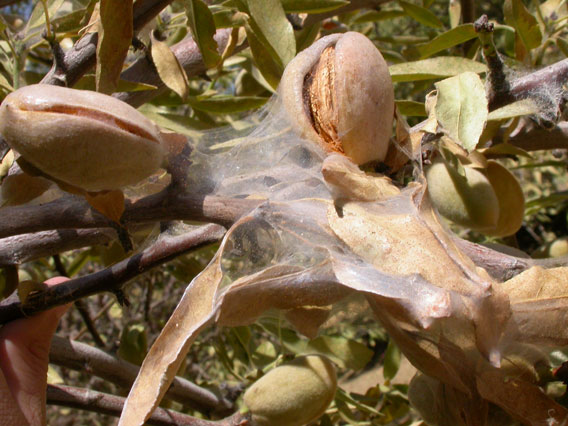
Spider mites are one of the most important arthropod pests of almonds in the lower San Joaquin Valley. The current industry standard practice for spider mite treatments are to apply a preventative miticide in April or May followed by additional miticides in the summer. PUR data in 2013 showed that in the southern San Joaquin Valley there were more
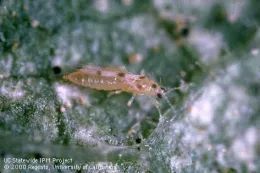
acres treated with a miticide in April or May than the total number of acres that exist. Prior to the year 2000 less than 20% of orchards were treated with a miticide prior to June. This is a concern because preventative miticide sprays, especially with abamectin, are toxic to sixspotted thrips and predatory mites that are needed for biological control. Additionally, by treating ‘preventatively’ sufficient food is not maintained for predators early in the season and biological control cannot be established.
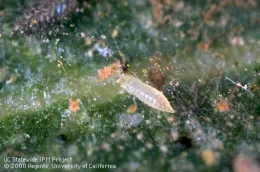
IPM practices for spider mite treatments are based on presence/absence monitoring program beginning in March and treatment thresholds established by the University of California. Spider mites, predatory mites, sixspotted thrips, lacewing larvae and spider mite destroyer beetles are included within sampling programs from March to
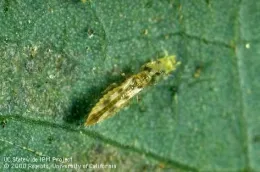
August. Our research has found that using yellow sticky traps to monitor for sixspotted thrips or spider mite destroyer beetles helps determine if the predators are in the almond orchard. Treatments are based on UC Pest Management Guidlines.