
Climate-friendly Gardening
Building Healthy Soil - Conserving Water - Reducing Emissions - Growing Vegetables - Planting Natives
Lorem ipsum dolor sit amet, consectetur adipiscing elit, sed do eiusmod tempor incididunt ut labore et dolore magna aliqua. Ut enim ad minim veniam, quis nostrud exercitation ullamco laboris nisi ut aliquip ex ea commodo consequat. Duis aute irure dolor in reprehenderit in voluptate velit esse cillum dolore eu fugiat nulla pariatur. Excepteur sint occaecat cupidatat non proident, sunt in culpa qui officia deserunt mollit anim id est laborum.
Conserving Water
- Choosing appropriate and low-water plants
- Replacing or reducing lawns
- Increasing irrigation efficiency
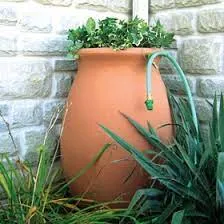
- Keeping rainwater on-site
- Using graywater for irrigation
- Keeping runoff water free of chemicals and other pollutants
For more information, see Conserving Water.
Building Healthy Soil
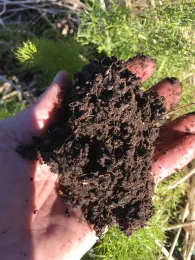
Healthy soil is alive with a diverse community of organisms that work together to decompose organic matter (such as plant and animal material), recycle nutrients, improve soil structure, and create pore space so water can infiltrate and be stored in the soil. All of these processes are essential for plant growth and development. Plants and soil organisms are responsible for producing soil organic matter, or stored carbon. To capture more carbon in the soil, we need more plants growing in healthy, living soil.
Here’s what you can do:
- Most importantly, understand the needs of each plant. Every plant species has evolved and adapted to a specific set of conditions. While the following general guidelines apply, different species may require more fine-tuned care to thrive.
- Protect the soil from the sun, wind and rain with plant cover or mulch.
- Protect the soil from compaction by using pathways.
- Limit disturbance such as tilling, which breaks down soil structure, releases carbon dioxide to the atmosphere, and creates compaction.
- Use compost and organic fertilizers to provide food for soil organisms, improve soil structure, and increase the soil’s capacity to retain water and nutrients. A healthy community of soil organisms will cycle nutrients that feed your plants.
- Plant cover crops to enrich the soil with living roots and their exudates (organic carbon compounds) and to protect the soil.
- Instead of removing the entire plant, leave its roots in the soil. Plant roots are organic matter that will break down and feed the soil organisms as well as improve soil structure.
- Eliminate the use of pesticides, herbicides and fungicides.
- Do not use leaf blowers on soil. Blowers remove the organic matter that protects soil, leaving it bare. This creates compaction and prevents movement of air and water into the soil.
Reducing Emissions
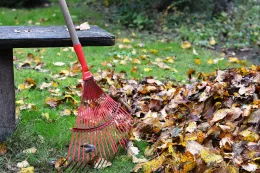
- Avoid fossil-fuel powered equipment such as leaf blowers and rototillers (avoiding this equipment also supports soil health)
- Conserve resources
- Shop locally
- Use manual equipment
- Avoid single-use plastics
Growing Vegetables
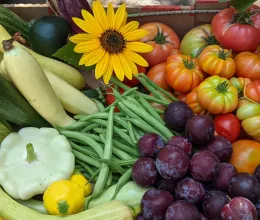
There is plenty of great information available on growing fruit and vegetables, and on how to control any pests or diseases that might arise. Here are a few useful links on the subject.
- The California Garden Web (UC ANR)
- Edible Gardening and Planting Calendars
- UC IPM (Integrated Pest Management)
Planting Natives
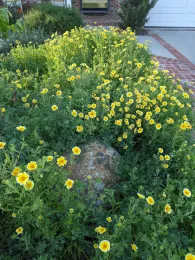
Advantages of growing California natives:
- By growing natives, gardeners reduce their usage of fertilizers and pesticides.
- Gardeners can help support the native birds, butterflies, bees, other insects and wildlife by growing the native plants those animals need to survive.
- In general, native plant gardens require less maintenance than lawns.
Here’s what you can do:
- Get to know the native plants that are suited to your region and your specific gardening space.
- Seek plants that will not require much supplemental watering once established.
- Add locally-appropriate native plants to your garden.
- Protect the soil by growing native groundcovers.
- Eliminate or reduce lawn coverage and install less water-thirsty plants.
- Don’t grow a “pest” - an invasive plant that outcompetes native plants and does not provide the food resources needed by the local fauna.
See California Native Gardening for more.