

Defensible space describes the area surrounding a structure or asset where vegetation and combustible materials are carefully maintained to eliminate pathways that wildfire can burn directly to structures, reduce potential for ignition of nearby vegetation and combustible materials from embers, and provide a safe zone to easily evacuate and for firefighters to defend structures.
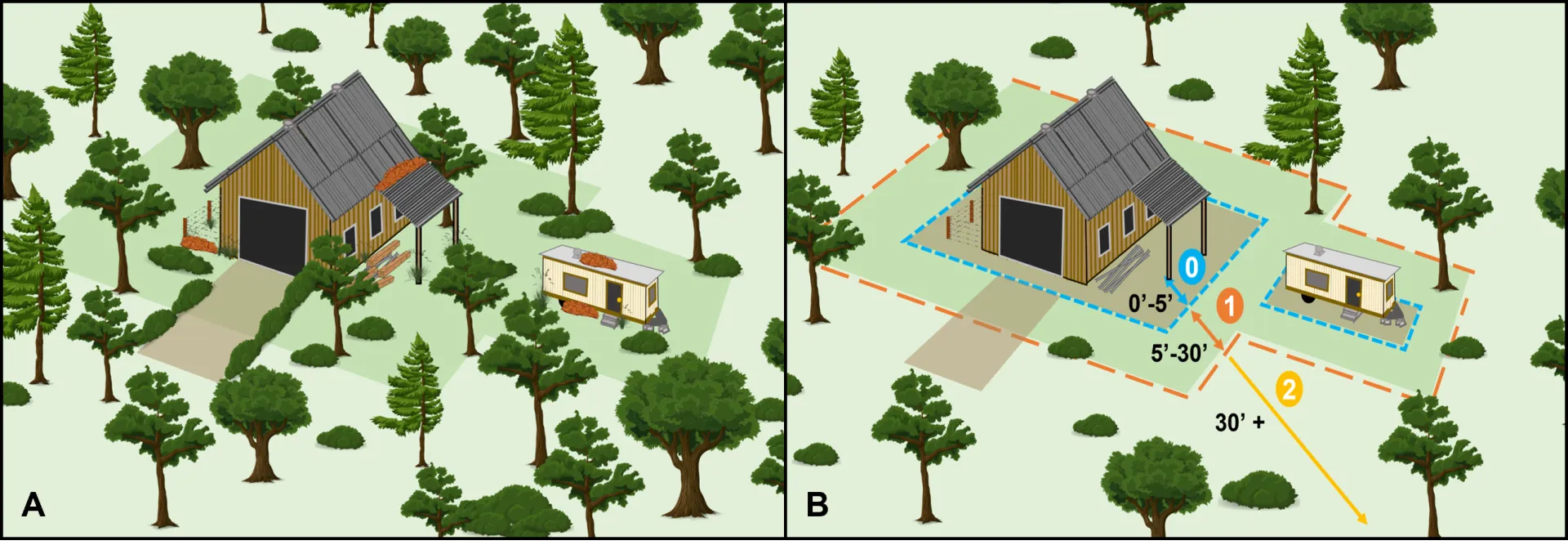
Preparing your defensible space does not have to be costly. Below are recommended actions you can take to implement an effective defensible space strategy within different sones within 0-100 feet of your structures.
Zone | Recommended Actions |
Zone Zero0-5 ft from structure |
|
Zone One5-30 ft from structure |
|
Zone Two30-100 ft from structure |
|
Additional Resources
Check out these additional defensible space-related resources from UC ANR Fire Network Members and our colleagues!
- Learn more about the fundamentals of defensible space using the information found on our website
- Reducing the Vulnerability of Building to Wildfire: Vegetation and Landscaping Guidance UC ANR Publication 8695 (2021)
- Wildfire Preparedness for Farms, Ranches, and Agricultural Operators factsheet from the UC ANR Fire Network (2026) -English
- Wildfire Preparedness for Farms, Ranches, and Agricultural Operations guide from the UC ANR Fire Network (2026) - Spanish
- Land Stewardship and Vegetation Management factsheet from the UC ANR Fire Network (2024)