A Natural Solution for California's Herds: African Catfish Peptides

California's cattle producers and agricultural communities are all too familiar with the rising challenge of antibiotic resistance, making common bacterial infections harder to treat in livestock. But imagine a future where we could tackle these infections with a natural, powerful alternative. Our research points to just that: antimicrobial peptides (AMPs) found in African catfish.

We're really excited about these peptides because African catfish thrive in pathogen-rich freshwater, naturally producing these robust immune compounds in their skin mucus as a defense. This natural origin makes them highly appealing alternatives to synthetic drugs.

Predicted Safety and Potent Action

One of the most compelling aspects of these AMPs is their predicted safety for mammals. Our initial computer analyses suggest that various catfish AMPs are generally recognized as safe (GRAS). We predict they'll be absorbed in the human intestine without causing liver, brain, or heart toxicity. Furthermore, lab tests on a promising peptide, NACAP-II, confirmed it was non-hemolytic, meaning it didn't damage rabbit red blood cells—a strong indicator of its potential safety for mammalian cells.

Beyond safety, these peptides demonstrate effectiveness against problematic bacteria. One study revealed NACAP-II's strong activity against Extended-Spectrum Beta-Lactamase (ESBL)-producing Escherichia coli—a critical concern for both animal and human health due to its resistance to many common antibiotics. Another peptide, ACAP-IV, also showed antibacterial activity against E. coli and Staphylococcus aureus. We believe these AMPs work by directly disrupting bacterial cell membranes, a mechanism that makes it harder for bacteria to develop resistance compared to how they resist traditional antibiotics.
Primary Image
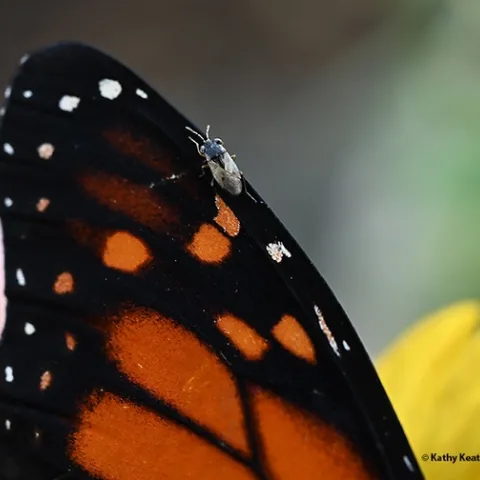
A bigeyed bug on the wing of a monarch butterfly. (Photo by Kathy Keatley Garvey)
Bug Squad: Article

A Bigeyed Bug and a Monarch Butterfly

January 16, 2024
By Kathy Keatley Garvey
You've heard folks call insects "big 'ol bugs" (often in astonishment or terror), right? But have you ever seen a "bigeyed bug on a monarch butterfly?" Bigeyed bugs, Geocoris spp.
View Article
Primary Image
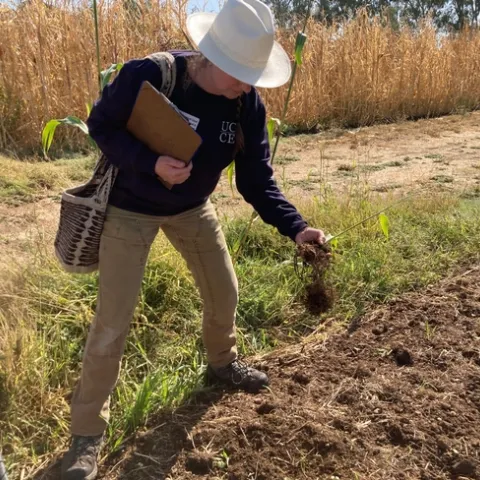
Margaret Lloyd grabs a handful of soil to examine in a field.
Food Blog: Article

UC offers resources for urban farmers at EcoFarm

January 16, 2024
By Pamela S Kan-Rice
University of California scientists will be participating in the 44th Annual EcoFarm Conference Jan. 17-20 in Pacific Grove. EcoFarm participants gather to celebrate and learn about advances in farming and food systems throughout the state.
View Article
Article

Welcome

January 16, 2024
By Laura E Garza Diaz
Welcome to the UCCE Water Resources and Climate Change Blog, your go-to source for insightful information on the dynamic intersection of water resources and climate change in Mendocino and Lake Counties.
View Article
Primary Image
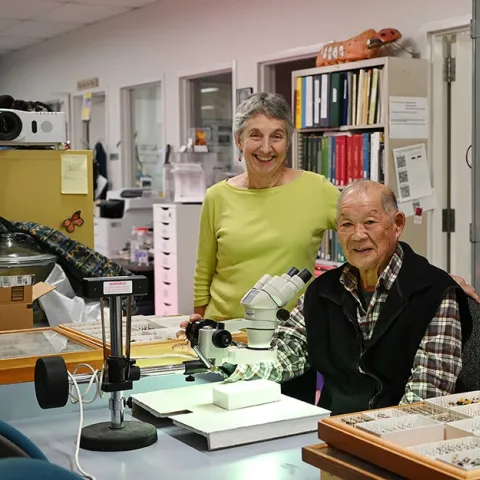
UC Davis distinguished professor emeritus Harry Kaya and UC Davis distinguished professor Lynn Kimsey are longtime friends and colleagues. They are pictured here Dec. 17, 2023 in the Bohart Museum of Entomology. (Photo by Kathy Keatley Garvey)
Entomology & Nematology News: Article

Meet Harry Kaya: A Giant in Entomology and Nematology

January 16, 2024
By Kathy Keatley Garvey
When UC Davis distinguished professor emeritus Harry Kaya visits the Bohart Museum of Entomology and chats with UC Davis distinguished professor Lynn Kimsey, director of the Bohart Museum, it's a reunion of longtime colleagues and friends.
View Article
Article

Aggie Enterprise financial system’s first week success

January 16, 2024
By Pamela S Kan-Rice
Dear Colleagues: I'm pleased to announce that the first week of hypercare for the new Aggie Enterprise financial system has been a resounding success! During this critical phase, our dedicated UC ANR Aggie Enterprise Waggle support team worked tirelessly to ensure a seamless transition and address i...
View Article
Primary Image
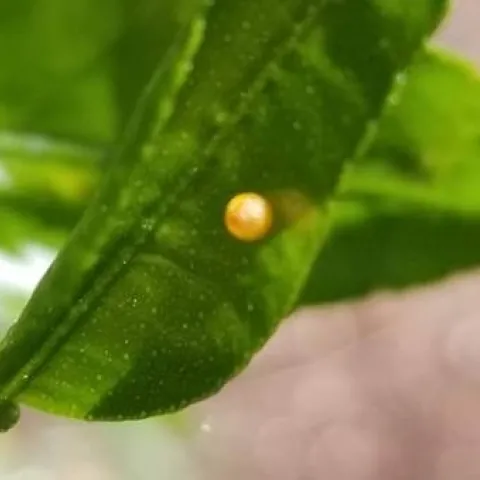
insect egg on citrus leaf
Topics in Subtropics: Article

Invasive Species and Climate Change

January 16, 2024
By Ben A Faber
Please join us for the INAUGURAL International Invasive Species and Climate Change Conference (IISCCC) organized by the Regional Invasive Species and Climate Change (RISCC) Management Network on January 30 and 31, 2024.
View Article