A Natural Solution for California's Herds: African Catfish Peptides

California's cattle producers and agricultural communities are all too familiar with the rising challenge of antibiotic resistance, making common bacterial infections harder to treat in livestock. But imagine a future where we could tackle these infections with a natural, powerful alternative. Our research points to just that: antimicrobial peptides (AMPs) found in African catfish.

We're really excited about these peptides because African catfish thrive in pathogen-rich freshwater, naturally producing these robust immune compounds in their skin mucus as a defense. This natural origin makes them highly appealing alternatives to synthetic drugs.

Predicted Safety and Potent Action

One of the most compelling aspects of these AMPs is their predicted safety for mammals. Our initial computer analyses suggest that various catfish AMPs are generally recognized as safe (GRAS). We predict they'll be absorbed in the human intestine without causing liver, brain, or heart toxicity. Furthermore, lab tests on a promising peptide, NACAP-II, confirmed it was non-hemolytic, meaning it didn't damage rabbit red blood cells—a strong indicator of its potential safety for mammalian cells.

Beyond safety, these peptides demonstrate effectiveness against problematic bacteria. One study revealed NACAP-II's strong activity against Extended-Spectrum Beta-Lactamase (ESBL)-producing Escherichia coli—a critical concern for both animal and human health due to its resistance to many common antibiotics. Another peptide, ACAP-IV, also showed antibacterial activity against E. coli and Staphylococcus aureus. We believe these AMPs work by directly disrupting bacterial cell membranes, a mechanism that makes it harder for bacteria to develop resistance compared to how they resist traditional antibiotics.
Primary Image
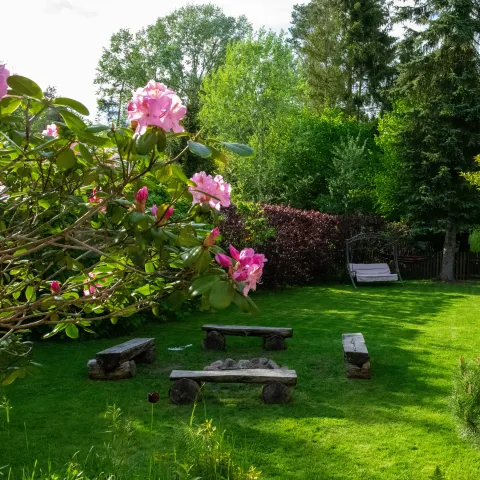
Sunny garden

How to Succeed at Garden Design

December 29, 2025
By Michael Lecours
By Aileen Carroll, UC Master Gardener of Napa County. Planning ahead comes more naturally to some of us than others. I personally am perfectly happy to fly by the seat of my pants, while many of the people around me stiffen the moment plans change without warning.  Fortunately, when it comes to…
View Article
Primary Image
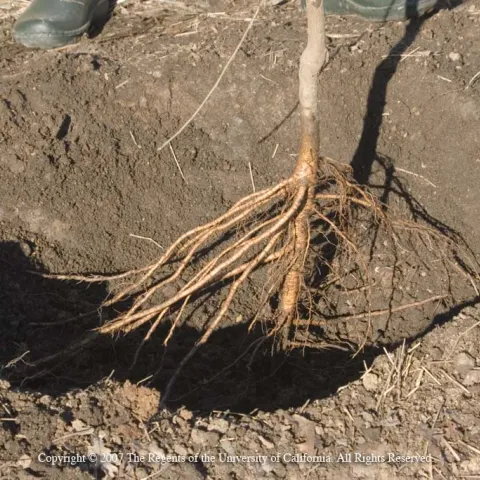
Planting a bare-root fruit tree. UC ANR

Planting Bare-Root Fruit Trees

December 29, 2025
There are several advantages to planting bare-root trees: they are usually less expensive, easier for gardeners to transport, and they will grow their roots entirely into native soil (rather than having to transition from potting mix into dissimilar native soil). Also, the ideal time to plant bare-root…
View Article
Shasta County: Article

Volume 4, Issue1 - January 2012 Northern California Ranch Update

December 29, 2025
By Mari Szynal
In this Issue:   Pasture Aeration Trial   Research Update on Using a Rotary Wiper   2010/11 Northern California Winter Pasture Experience   Effects of Heavy Grazing on Tarweek and Vinegarweed   Controlling Wire Grass in Irrigated Pastures   A Method…
View Article
UC Master Gardeners of Placer County: Article

The Dance for Defensible Space

December 29, 2025
By Kevin Marini, UC Community Education Specialist: Natural Resources From The Curious Gardener, Spring 2023 In this day and age, it can be challenging to find common ground on a myriad of social and environmental issues that confront us in our modern societies. It has become a societal norm to hold a…
View Article
Shasta County: Article

2026 January Tips 'N Topics

December 29, 2025
By Mari Szynal
In this Issue:   Operation Organized Chaos...with food   Steer Tagging Date   Pollination Garden Date   County Ambassador Team in Action   Countywide Favorite Foods Day - registration is open   Stills Day Camp Volunteers   Happy Valley…
View Article
Primary Image
Cabbage white butterfly, Pieris rapae. (Photo by Kathy Keatley Garvey)

On the Hunt for the First Cabbage White Butterfly...Suds for a Bug!

December 29, 2025
By Kathy Keatley Garvey
 Suds for a bug. A butterfly for a beer...If you find and collect the first cabbage white butterfly in the three-county area of Sacramento, Yolo and Solano, and you are judged the winner of the annual "Beer for a Butterfly" Contest, you will receive a pitcher of beer or its equivalent.And bragging…
View Article
Primary Image
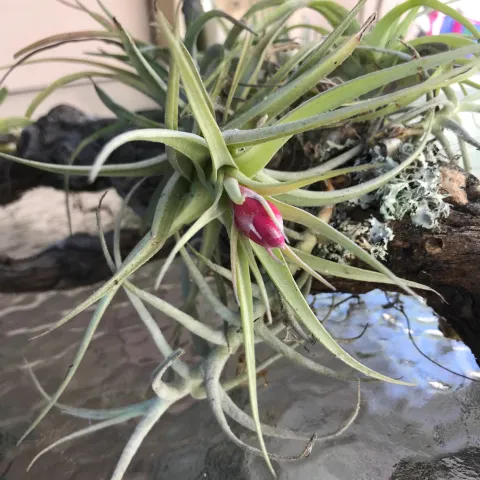
Tillandsia air plant blooms
UC Marin Master Gardeners: Article

Fabulous air plants!

December 29, 2025
 Have you noticed some curly, spikey, gray-green alien-like plants resting in a shell, hanging from a ceiling, perched on windowsills, clustered on coffee tables…no soil or water in sight?Meet tillandsias, also known as air plants, a wondrous family of plants that literally thrive on air! They are low…
View Article
UC Master Gardeners of Placer County: Article

Berryland (California Native Berries)

December 29, 2025
By Kathryn MacRoberts, UC Master Gardeners of Placer County From The Curious Gardener, Winter 2013“One berry, two berry, pick me a blueberry. Hatberry, shoeberry, in my canoeberry.  Under the bridge, and over the dam, looking for berries, berries for jam.” Would you like a Berryland? Who doesn’t…
View Article
UC Master Gardeners of Placer County: Article

Black Bamboo

December 29, 2025
 By Laurie Meyerpeter, UC Master Gardeners of Placer CountyQ: I have a black bamboo that is too large for the pot. How and when should I divide it? A: Black bamboo is a running bamboo so it is wise to grow it in a container or use a bamboo barrier product if grown in the garden. Mature running…
View Article
UC Master Gardeners of Placer County: Article

Two All-Star Currants

December 29, 2025
By Laurie McGonagill, UC Master Gardener of Placer County  The currant is a fruiting vine in the genus Ribes you may have avoided because of the prickles. Rest assured, it is the gooseberry—also in Grossulariaceae, the gooseberry family—not the currant, which has spines (prickles). Currants are…
View Article