California's cattle producers and agricultural communities are all too familiar with the rising challenge of antibiotic resistance, making common bacterial infections harder to treat in livestock. But imagine a future where we could tackle these infections with a natural, powerful alternative. Our research points to just that: antimicrobial peptides (AMPs) found in African catfish.
We're really excited about these peptides because African catfish thrive in pathogen-rich freshwater, naturally producing these robust immune compounds in their skin mucus as a defense. This natural origin makes them highly appealing alternatives to synthetic drugs.
Predicted Safety and Potent Action
One of the most compelling aspects of these AMPs is their predicted safety for mammals. Our initial computer analyses suggest that various catfish AMPs are generally recognized as safe (GRAS). We predict they'll be absorbed in the human intestine without causing liver, brain, or heart toxicity. Furthermore, lab tests on a promising peptide, NACAP-II, confirmed it was non-hemolytic, meaning it didn't damage rabbit red blood cells—a strong indicator of its potential safety for mammalian cells.
Beyond safety, these peptides demonstrate effectiveness against problematic bacteria. One study revealed NACAP-II's strong activity against Extended-Spectrum Beta-Lactamase (ESBL)-producing Escherichia coli—a critical concern for both animal and human health due to its resistance to many common antibiotics. Another peptide, ACAP-IV, also showed antibacterial activity against E. coli and Staphylococcus aureus. We believe these AMPs work by directly disrupting bacterial cell membranes, a mechanism that makes it harder for bacteria to develop resistance compared to how they resist traditional antibiotics.

The Mighty Crabapple
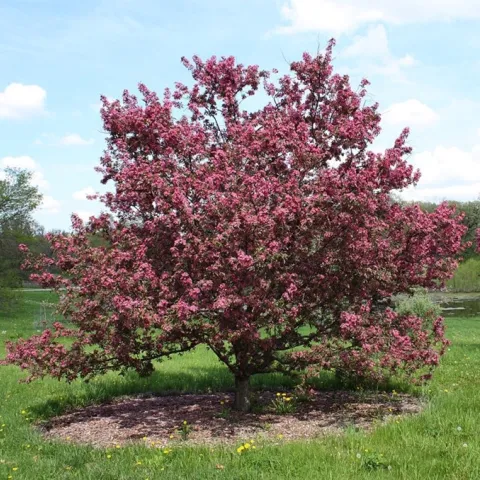
Few trees offer as much varied beauty as crabapples! These lovely trees are excellent additions to any landscape, offering year-round beauty as well as wildlife support. As a bonus, their fruit has culinary uses. Crabapples are relatives of the rose family and are native to North America, Europe, and Asia. As their name suggests, crabapples are close cousins of apples, but their fruit is smaller and more tarts. The name is thought to be derived from the Old English-Norse tern "scrab" in the 1400s, meaning rough and sour.
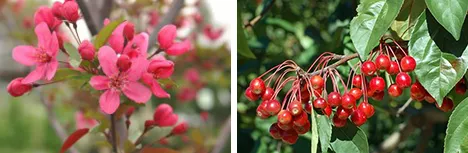
Crabapples are popular landscape trees
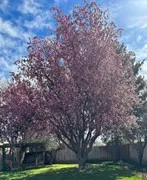
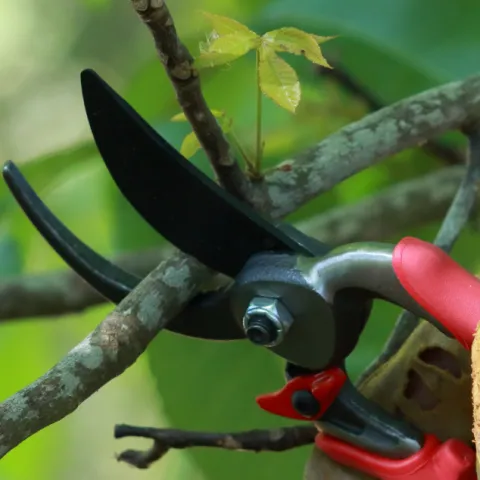
Crabapple (Malus) trees fill many roles in the landscape. They typically grow around 15 to 25 feet tall and wide, although there are shorter and taller cultivars. Their reasonable size is perfect for small gardens, and their innate beauty makes them striking accents in entry gardens and throughout the landscape. They also make excellent shade trees, providing dappled light rather than deep shade. Crabapples are low maintenance, drought-tolerant, and frost hardy. Minimal pruning keeps the trees shaped and healthy. If well cared for, crabapple trees have a long lifespan of 30 to 70 years.
Fabulous four-season interest
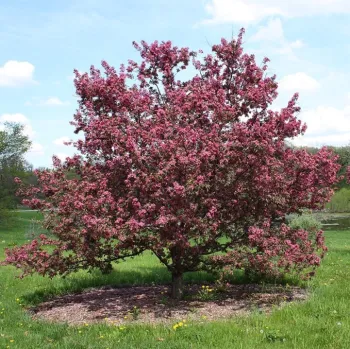
Crabapples are often chosen for their radiant all-season visual display. For many weeks in spring, they are loaded with dense white, pink, or red blossoms favored by pollinators. By June they are chock full of tart mini-apples for eating, preserving, and decorating. In fall the foliage turns a myriad of bright colors. Finally, in winter, the bare trees often have leftover fruit - a tasty snack for deer and birds such as robins and bluebirds.
Small, tart fruit is ideal for jam
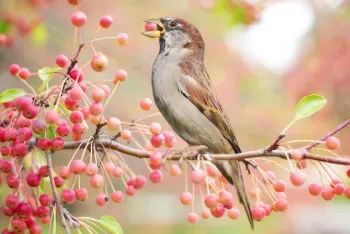
Red and yellow crabapple fruit ranges in size from small berries eaten by birds to miniature apples up to 2 inches in diameter. The official distinction between an apple and a crabapple is the 2-inch mark: anything larger counts as an apple. Crabapples tend to be far more sour than regular apples due to their high malic acid content, so they are best eaten in cooked and sweetened recipes, including mixed preserves with berries. Crabapples are also naturally high in pectin, and therefore they make exceptional jam.
How to grow and care for crabapple trees
Crabapples do not demand too much of the gardener. How’s how to grow and care for one of these wonderful trees.
- Choose a location with plenty of sunlight. Crabapples need at least six hours of sun per day year-round.
- Provide rich soil. Crabapples perform best in loamy soil with plenty of organic matter, but they are adaptable to other soil types.
- Assure good drainage. To avoid root rot, make sure water drains well where your crabapple is planted.
- Water regularly. For the first year after planting, water deeply once or twice a week. In our area, and depending on the cultivar, crabapples may become drought tolerant after one to three years of regular irrigation. However, deep, occasional supplemental water is recommended during especially hot, dry spells.
- Mulch. Apply a layer of mulch to help retain moisture, regulate soil temperature, and keep weeds down.
Considerations when choosing a crabapple tree
- Check chill hours. Like many other fruit trees, crabapples need a certain number of hours below 45° F to break dormancy and produce fruit. Most areas of Marin receive 800-1,000 chill hours, but this varies greatly from coast to inland areas and whether your crabapple is planted in a sheltered or exposed location. Make sure to choose a cultivar with an appropriate number of chill hours for your garden. If in doubt, choose a lower-chill variety.
- Carefully consider planting location. Some crabapple varieties drop fruit before it can be consumed by birds, which can create a slime layer on your patio or lawn. Additionally, the fallen fruit that is not cleaned up can attract wasps, rodents, and deer.
- Not all crabapples can be eaten (by humans). If you’re planting your crabapple for eating, make sure to choose a variety with a larger fruit size. Small-fruiting crabapples are useless for human consumption -- but are greatly enjoyed by birds and other wildlife.
- Think about disease resistance. Some crabapple cultivars are prone to apple scab, blight, mildew, and rust. It’s best to choose a disease-resistant cultivar and make sure your crabapple is getting enough sun and water to lessen the chance of disease.
Some varieties of crabapple to consider
With up to 1,000 varieties of crabapples in the world, you can be sure that there is one for your garden. Here’s a list of crabapples that thrive in our area. See highlights below.
- Malus fusca (Pacific crabapple) is native to the Bay Area and as far north as Alaska. It is particularly easy to grow in our climate. These trees grow to 30 feet tall and 20 feet wide, but they can be kept smaller with pruning. Pacific crabapples bear fragrant light pink flowers in spring and orange fruit in summer that is delicious when cooked into jelly or raisins.
- Malus ‘Prairie Fire’ (prairie fire crabapple) is a popular selection. It bears purple-tinged foliage in summer and maroon fruit that persists into winter. The burgundy-red leaves and brilliant pink spring blooms are spectacular in spring. Grows 15 to 25 feet tall.
- Malus ‘Evereste’ (Evereste crabapple) is a disease-resistant choice that is often available as a dwarf, growing just 5 to 14 feet tall. It produces masses of fragrant white blossoms in spring and one-inch red fruit in summer that can be used to make jelly, pickled apples, or apple cider.
- Malus x ‘Royal Raindrops’ (royal raindrops crabapple) has magenta pink, fragrant blooms, purple-tinged foliage, and red fruit prized by birds. Grows 15 to 20 feet tall
- Malus x ‘Hargozam’ (harvest gold crabapple) bears stunning yellow fruit. Grows 20 to 25 feet tall.