A Natural Solution for California's Herds: African Catfish Peptides

California's cattle producers and agricultural communities are all too familiar with the rising challenge of antibiotic resistance, making common bacterial infections harder to treat in livestock. But imagine a future where we could tackle these infections with a natural, powerful alternative. Our research points to just that: antimicrobial peptides (AMPs) found in African catfish.

We're really excited about these peptides because African catfish thrive in pathogen-rich freshwater, naturally producing these robust immune compounds in their skin mucus as a defense. This natural origin makes them highly appealing alternatives to synthetic drugs.

Predicted Safety and Potent Action

One of the most compelling aspects of these AMPs is their predicted safety for mammals. Our initial computer analyses suggest that various catfish AMPs are generally recognized as safe (GRAS). We predict they'll be absorbed in the human intestine without causing liver, brain, or heart toxicity. Furthermore, lab tests on a promising peptide, NACAP-II, confirmed it was non-hemolytic, meaning it didn't damage rabbit red blood cells—a strong indicator of its potential safety for mammalian cells.

Beyond safety, these peptides demonstrate effectiveness against problematic bacteria. One study revealed NACAP-II's strong activity against Extended-Spectrum Beta-Lactamase (ESBL)-producing Escherichia coli—a critical concern for both animal and human health due to its resistance to many common antibiotics. Another peptide, ACAP-IV, also showed antibacterial activity against E. coli and Staphylococcus aureus. We believe these AMPs work by directly disrupting bacterial cell membranes, a mechanism that makes it harder for bacteria to develop resistance compared to how they resist traditional antibiotics.
Rosenberg International Forum on Water Policy: Page

Biography of Roberto Tomas

Impacts of Land Subsidence Due to Groundwater Withdrawal in the Segura Basin (SE Spain) Abstract: The Segura Basin covers an area of 18.870 km2 with a population over 1.7 million people. The basin is dominated by the Segura River and its tributaries, as the Guadalentn River.
View Page
Rosenberg International Forum on Water Policy: Page

Abstract - Najib Abou Karaki

The Dead Sea Water Level Lowering - Hazards, Economic and Social Consequences, and Proposed Protection Strategy Abstract: The Dead Sea region is undergoing massive rapid economic development coupled with environmental hazards and degradation.
View Page
Primary Image
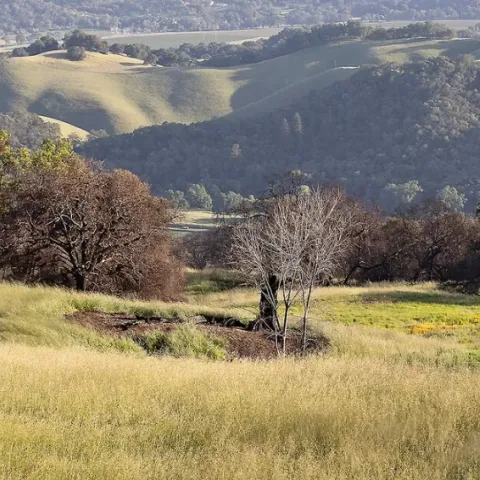
Jacobs Ranch
UC ANR Research and Extension Centers: Page

REC Policy & Forms

This page provides REC staff with quick access to commonly used policies, forms, and waivers needed for daily operations. Items are listed alphabetically and include downloadable documents covering topics such as liability waivers, equipment agreements, facility use, property disposal, flexible work…
View Page
UC ANR Research and Extension Centers: Page

Research Impacts

Roundup Ready alfalfa has increased in popularity in Northeast California as glyphosate offers excellent control of problem weeds. Considerable research before and after the commercial release of Roundup Ready alfalfa demonstrated essentially no perceptible crop injury from glyphosate.
View Page
UC ANR Research and Extension Centers: Page

Research Funding

UC ANR realizes that the cost of conducting field research can sometimes be a disincentive to scientists. Fortunately, UC ANR and each REC provides funding to reduce the full cost of research for UC researchers.
View Page
UC ANR Research and Extension Centers: Page

Project Submission

An annual call for proposals is announced through the UC ANR Update, UC ANR Portal, and using Collaborative Tools for existing research projects. However, off-cycle research projects are generally accepted outside the normal call for proposals (March-April) as long as space and labor are available.
View Page
UC ANR Research and Extension Centers: Page

About Us

The University of California Agriculture and Natural Resources Division operates nine Research and Extension Centers (RECs).
View Page