A Natural Solution for California's Herds: African Catfish Peptides

California's cattle producers and agricultural communities are all too familiar with the rising challenge of antibiotic resistance, making common bacterial infections harder to treat in livestock. But imagine a future where we could tackle these infections with a natural, powerful alternative. Our research points to just that: antimicrobial peptides (AMPs) found in African catfish.

We're really excited about these peptides because African catfish thrive in pathogen-rich freshwater, naturally producing these robust immune compounds in their skin mucus as a defense. This natural origin makes them highly appealing alternatives to synthetic drugs.

Predicted Safety and Potent Action

One of the most compelling aspects of these AMPs is their predicted safety for mammals. Our initial computer analyses suggest that various catfish AMPs are generally recognized as safe (GRAS). We predict they'll be absorbed in the human intestine without causing liver, brain, or heart toxicity. Furthermore, lab tests on a promising peptide, NACAP-II, confirmed it was non-hemolytic, meaning it didn't damage rabbit red blood cells—a strong indicator of its potential safety for mammalian cells.

Beyond safety, these peptides demonstrate effectiveness against problematic bacteria. One study revealed NACAP-II's strong activity against Extended-Spectrum Beta-Lactamase (ESBL)-producing Escherichia coli—a critical concern for both animal and human health due to its resistance to many common antibiotics. Another peptide, ACAP-IV, also showed antibacterial activity against E. coli and Staphylococcus aureus. We believe these AMPs work by directly disrupting bacterial cell membranes, a mechanism that makes it harder for bacteria to develop resistance compared to how they resist traditional antibiotics.
Mendocino County: Page

Becoming a Master Gardener Volunteer

Please read this article, " An Introduction to Being a Master Gardener ", to better understand what the annual obligations of our volunteers are in this program. There will be 16+/- classes weekly from January through April. The 2024/25 class will be virtual with hybrid in-person classes.
View Page
Primary Image
high severity damage in a redwood forest from wildfire
Mendocino County: Page

Fire

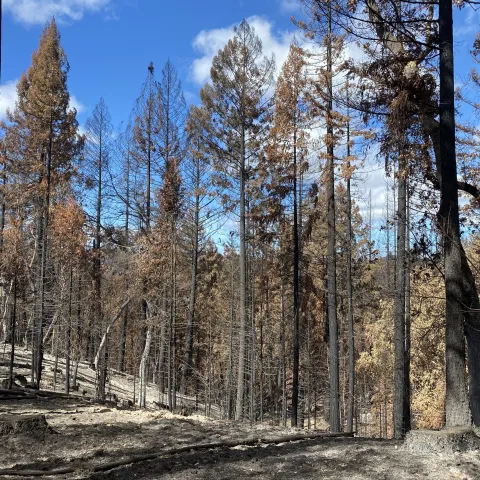
Black oak basal sprout from a fire killed tree. Fire is all but inevitable in our Mediterranean climate, and after 1000's of years, it has shaped the way plants and animals have adapted.
View Page
Mendocino County: Page

Defensible Space and Fire Safe Home

Defensible Space Defensible space is the area surrounding a structure where plants and other landscape elements are maintained to decrease fire hazard, and allow firefighters to make a stand; addressing embers and spot fires before they grow.
View Page
Mendocino County: Page

Natural Resource Issues and Concerns

Post Fire Restoration Dos and Donts A 4 page compilation by USDA-Natural Resources Conservation Service summary document giving reminders of what to do and not to do on your property after a fire.
View Page
Mendocino County: Page

Forest and Fuel Management

Forest Stewardship Information Resources This document describes information found on a CD developed by UCCE on many aspects of forest management.
View Page
Mendocino County: Page

Pomology

The Pomology Program extends useful, technical, and economic research-based information to fruit and nut producers in California. Farm Advisors provide local subject matter leadership and expertise in assigned areas to determine and evaluate grower and processor problems.
View Page
Mendocino County: Page

CE Mendocino County Water Projects

The Mendocino County office of the University of California Cooperative Extension (UCCE) was contracted by MCWA to conduct an estimate of agricultural water demand and assess the needs for irrigation technology and practices and alternative water sources.
View Page
Mendocino County: Page

Russian River Water Wise Project

Between 2006 and 2008, a multi-phase study was undertaken of agricultural water use in the Mendocino County portion of the Russian River Watershed.
View Page