A Natural Solution for California's Herds: African Catfish Peptides

California's cattle producers and agricultural communities are all too familiar with the rising challenge of antibiotic resistance, making common bacterial infections harder to treat in livestock. But imagine a future where we could tackle these infections with a natural, powerful alternative. Our research points to just that: antimicrobial peptides (AMPs) found in African catfish.

We're really excited about these peptides because African catfish thrive in pathogen-rich freshwater, naturally producing these robust immune compounds in their skin mucus as a defense. This natural origin makes them highly appealing alternatives to synthetic drugs.

Predicted Safety and Potent Action

One of the most compelling aspects of these AMPs is their predicted safety for mammals. Our initial computer analyses suggest that various catfish AMPs are generally recognized as safe (GRAS). We predict they'll be absorbed in the human intestine without causing liver, brain, or heart toxicity. Furthermore, lab tests on a promising peptide, NACAP-II, confirmed it was non-hemolytic, meaning it didn't damage rabbit red blood cells—a strong indicator of its potential safety for mammalian cells.

Beyond safety, these peptides demonstrate effectiveness against problematic bacteria. One study revealed NACAP-II's strong activity against Extended-Spectrum Beta-Lactamase (ESBL)-producing Escherichia coli—a critical concern for both animal and human health due to its resistance to many common antibiotics. Another peptide, ACAP-IV, also showed antibacterial activity against E. coli and Staphylococcus aureus. We believe these AMPs work by directly disrupting bacterial cell membranes, a mechanism that makes it harder for bacteria to develop resistance compared to how they resist traditional antibiotics.
Mendocino County: Page

THP Meeting Resources (2009)

A workshop held in Ukiah on December 10, 2008 to assist Foresters and others interested in the protection policies associated with north coast forests. Co-Sponsors - CalFire, The California Department of Fish and Game, California Geological Survey, The North Coast Regional Water Board and the U.C.
View Page
Primary Image
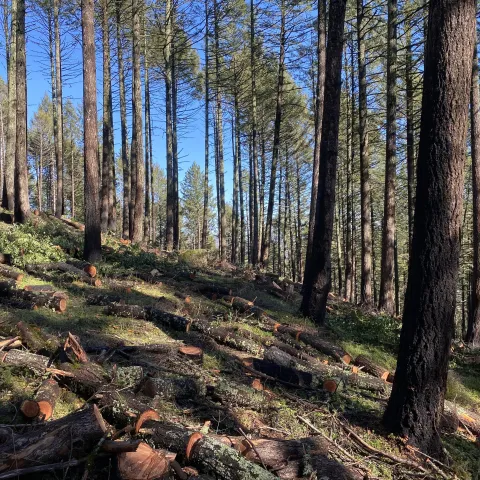
thinning ponderosa pine after wildfire
Mendocino County: Page

Forestry Resources

Educational Programs, Resources, and Publications Technical Assistance Financial Assistance Forest Stewardship Educational Series (25-parts) This educational series has been developed to provide owners of California forestland with a comprehensive source of information pertinent to the management an...
View Page
Mendocino County: Page

Climate and Wildlands

UC ANR Forest Research and Outreach Forest Adaptation Resources: Climate Change Tools and Approaches for Land Managers...
View Page
Mendocino County: Page

UCCE Mendocino 4-H Program

We acknowledge that the land on which we gather today, at 890 North Bush Street, Ukiah, California, is the traditional and ancestral territory of the Pomo people.
View Page
Mendocino County: Page

Scholarships & Leadership

Russell Preston Scholarship Application Dr. Russell Preston was a family doctor in the community of Mendocino from 1909 until his death in 1954. For his medical abilities, kindness, and humanity he was extremely well-regarded in Mendocino.
View Page
Mendocino County: Page

Record Books

A 4-H Record Book is a standard record of your activities in 4-H - your projects, activities, events, skills development and learning experiences. The 4-H Record Book helps you improve your skills in record keeping, goal management and reflection on your achievements and growth in 4-H.
View Page
Mendocino County: Page

Project Proficiencies

This program allows members to be recognized for their individual accomplishments. Project Proficiency is a way to develop your skills and project information base.
View Page
Mendocino County: Page

UCCE Mendocino County Master Gardener Program

Master Gardener trainees attend a training program comprising approximately 50+ hours of instruction in plant science and horticulture covering such topics as soils, fertilizers, irrigation, weeds, diseases, insects and other pests, fruit and landscape trees, vegetables, xeriscaping, and more.
View Page