A Natural Solution for California's Herds: African Catfish Peptides

California's cattle producers and agricultural communities are all too familiar with the rising challenge of antibiotic resistance, making common bacterial infections harder to treat in livestock. But imagine a future where we could tackle these infections with a natural, powerful alternative. Our research points to just that: antimicrobial peptides (AMPs) found in African catfish.

We're really excited about these peptides because African catfish thrive in pathogen-rich freshwater, naturally producing these robust immune compounds in their skin mucus as a defense. This natural origin makes them highly appealing alternatives to synthetic drugs.

Predicted Safety and Potent Action

One of the most compelling aspects of these AMPs is their predicted safety for mammals. Our initial computer analyses suggest that various catfish AMPs are generally recognized as safe (GRAS). We predict they'll be absorbed in the human intestine without causing liver, brain, or heart toxicity. Furthermore, lab tests on a promising peptide, NACAP-II, confirmed it was non-hemolytic, meaning it didn't damage rabbit red blood cells—a strong indicator of its potential safety for mammalian cells.

Beyond safety, these peptides demonstrate effectiveness against problematic bacteria. One study revealed NACAP-II's strong activity against Extended-Spectrum Beta-Lactamase (ESBL)-producing Escherichia coli—a critical concern for both animal and human health due to its resistance to many common antibiotics. Another peptide, ACAP-IV, also showed antibacterial activity against E. coli and Staphylococcus aureus. We believe these AMPs work by directly disrupting bacterial cell membranes, a mechanism that makes it harder for bacteria to develop resistance compared to how they resist traditional antibiotics.
Primary Image
Pest prevention tips for October.
Pests in the Urban Landscape: Article

October Pest Tips

October 1, 2024
By Lauren Fordyce
Fall is finally here! Things may be slowing down in our gardens and landscapes, but don't forget to check for pests and take steps to prevent them from returning next year. The UC IPM Seasonal Landscape IPM Checklist is a monthly guide to help you avoid common pests of landscape plants.
View Article
Nutrition Policy Institute: Article

UC ANR Household Food Waste Survey Results by Program

October 1, 2024
By Yu Meng, Marisa Neelon, Danielle Lee, Susana Matias
Preliminary Findings Report • Download PDF (456 KB)Authors: Yu Meng, Marisa Neelon, Yulia Lamoureaux, Nayoung Song, Danielle Lee, and Susana MatiasBackgroundThe UC ANR Household Food Waste Reduction project has the overall aim to reduce household food waste among Californians, and it will be implemented in…
View Article
Primary Image
Circular cutouts on leaf made by a leafcutter bee (Wikimedia)
Fresno Gardening Green: Article

Rosie’s Corner: October tasks in the rose garden

October 1, 2024
Well, we normally start to cool off somewhat in October, but Mother Nature seems to have other ideas in mind for the first few days of this month. So, when the weather is cooler, you can fertilize your roses with a good organic fertilizer and compost.
View Article
Primary Image
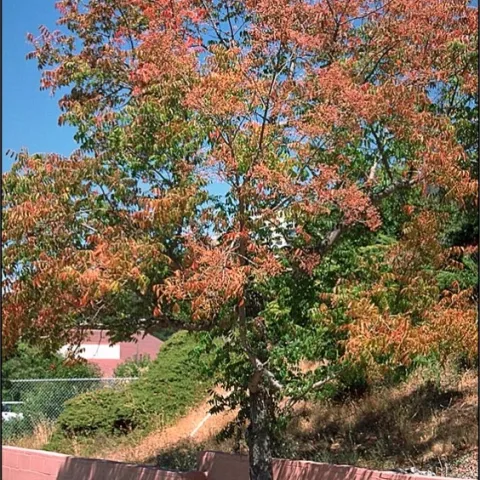
Early fall color on Chinese pistache. (Ed Perry)
The Stanislaus Sprout: Article

Early Fall Color in Trees May Mean Trouble

October 1, 2024
By Anne E Schellman
If you have an ash, Chinese pistache, crape myrtle, flowering pear, ginkgo, liquidambar or any other tree that has been showing fall color early, pay attention.
View Article
UC Cooperative Extension Imperial County: Article

UCCE Fall 2024 Big Event

October 1, 2024
Save the Date...Dec. 4, 2024 UCCE Fall 2024 Big Event The office will be hosting two workshops in December that cover various topics from irrigation and soil monitoring, pest and weed management, cover crops, plant health and diseases and much more. We will also have industry updates.
View Article
Kern County: Article

Climate Smart Newsletter - October 2024

October 1, 2024
In this Issue: Happy Harvest! Introducing Dairy Advisor Grant Opportunities! New Groundwater Sustainability Plan for Kern Subbasin Modified Insects for Pest Management Workshop Tule Subbasin put on Probation Research Highlight October Events!...
View Article